
Machine learning provides an entirely new way to tackle one of the classic problems of applied mathematics.
Category: robotics/AI – Page 2,542
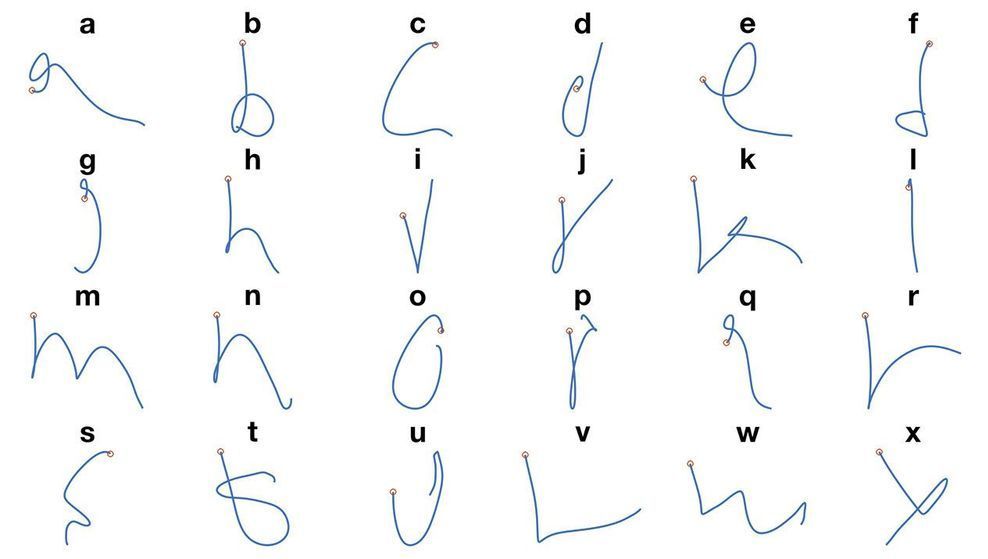
AI allows paralyzed person to ‘handwrite’ with his mind
Technology could nearly double writing speed for “locked-in” individuals.
Neural network reconstructs human thoughts from brain waves in real time
Researchers from Russian corporation Neurobotics and the Moscow Institute of Physics and Technology have found a way to visualize a person’s brain activity as actual images mimicking what they observe in real time. This will enable new post-stroke rehabilitation devices controlled by brain signals. The team published its research as a preprint on bioRxiv and posted a video online showing their “mind-reading” system at work.
To develop devices controlled by the brain and methods for cognitive disorder treatment and post-stroke rehabilitation, neurobiologists need to understand how the brain encodes information. A key aspect of this is studying the brain activity of people perceiving visual information, for example, while watching a video.
The existing solutions for extracting observed images from brain signals either use functional MRI or analyze the signals picked up via implants directly from neurons. Both methods have fairly limited applications in clinical practice and everyday life.

‘The challenge was to play like a human’: AI takes on the gamers
Google’s DeepMind beat 99.8% of humans at StarCraft II, but bigger challenge was not giving itself away.
AI becomes grandmaster in ‘fiendishly complex’ StarCraft II.

New ‘unremovable’ xHelper malware has infected 45,000 Android devices
Factory resets aren’t helping. Neither are mobile antivirus solutions. Malware keeps reinstalling itself.
Block-like robots could assemble into emergency staircases
MIT’s M-blocks don’t look like robots, but they can jump, flip and self-assemble.
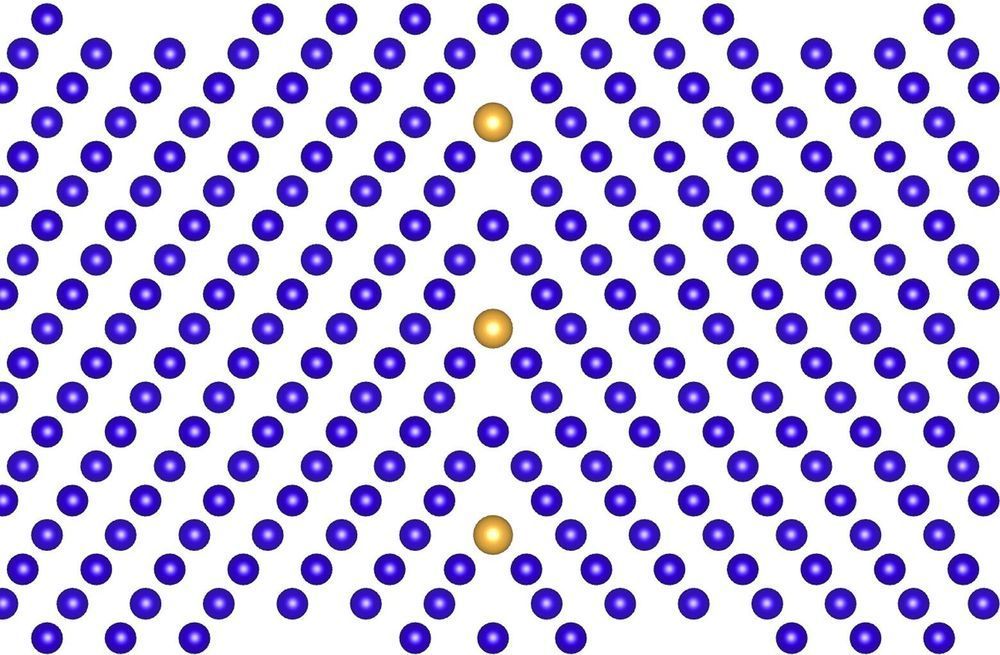
Hard as ceramic, tough as steel: Newly discovered connection could help design of nextgen alloys
A new way to calculate the interaction between a metal and its alloying material could speed the hunt for a new material that combines the hardness of ceramic with the resilience of metal.
The discovery, made by engineers at the University of Michigan, identifies two aspects of this interaction that can accurately predict how a particular alloy will behave—and with fewer demanding, from-scratch quantum mechanical calculations.
“Our findings may enable the use of machine learning algorithms for alloy design, potentially accelerating the search for better alloys that could be used in turbine engines and nuclear reactors,” said Liang Qi, assistant professor of materials science and engineering who led the research.

This AI-Powered Oral Sex Robot Puts the “Deep” in Deep Learning
If you’re willing to dial things up to 10 (unfortunately there’s no 11), you can enjoy the device’s “Full AI Experience.”

A nearly impossible to remove Android malware has infected 45,000 devices
Security researchers have been following the xHelper malware on Android with great interest, owing to the app’s seemingly incomprehensible ability to reinstall itself on an infected device despite factory resets.

AI could solve baffling three-body problem that stumped Isaac Newton
The three-body problem has vexed mathematicians and physicists for 300 years, but AI can find solutions far faster than any other method anyone has come up with.