Grim details emerge.

Meet Surena IV, an adult-size humanoid built by University of Tehran roboticists.
A little over a decade ago, researchers at the University of Tehran introduced a rudimentary humanoid robot called Surena. An improved model capable of walking, Surena II, was announced not long after, followed by the more capable Surena III in 2015.
Now the Iranian roboticists have unveiled Surena IV. The new robot is a major improvement over previous designs. A video highlighting its capabilities shows the robot mimicking a person’s pose, grasping a water bottle, and writing its name on a whiteboard.
Surena is also shown taking a group selfie with its human pals.
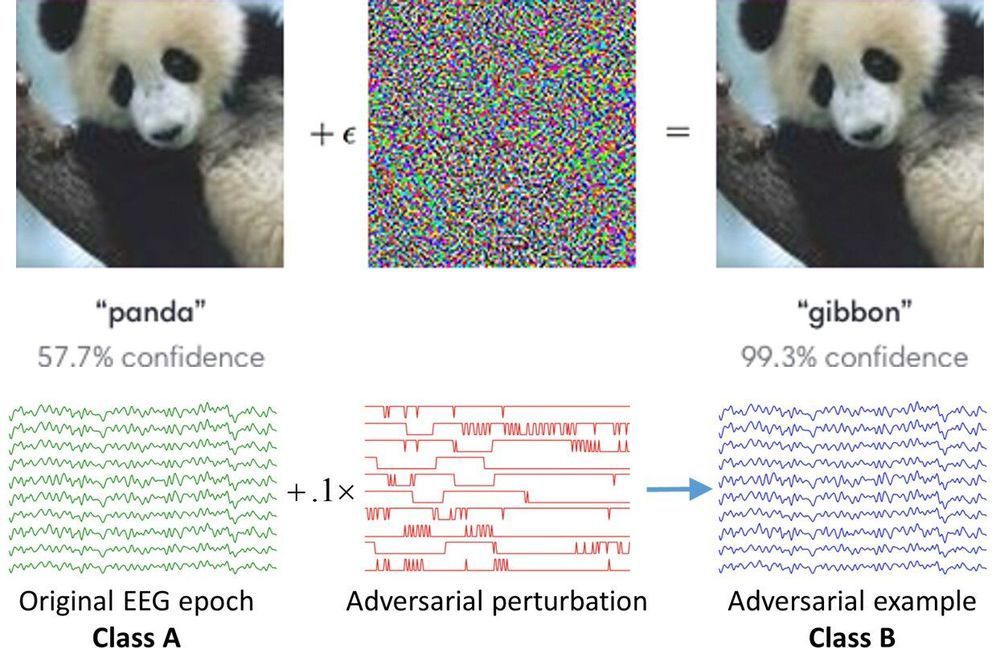
Brain-computer interfaces (BCIs) are tools that can connect the human brain with an electronic device, typically using electroencephalography (EEG). In recent years, advances in machine learning (ML) have enabled the development of more advanced BCI spellers, devices that allow people to communicate with computers using their thoughts.
So far, most studies in this area have focused on developing BCI classifiers that are faster and more reliable, rather than investigating their possible security vulnerabilities. Recent research, however, suggests that machine learning algorithms can sometimes be fooled by attackers, whether they are used in computer vision, speech recognition, or other domains. This is often done using adversarial examples, which are tiny perturbations in data that are indistinguishable by humans.
Researchers at Huazhong University of Science and Technology have recently carried out a study investigating the security of EEG-based BCI spellers, and more specifically, how they are affected by adversarial perturbations. Their paper, pre-published on arXiv, suggests that BCI spellers are fooled by these perturbations and are thus highly vulnerable to adversarial attacks.
Robotics technology continues to propel itself forward at an incredible rate. Robots have streamlined automated production, reducing worker injuries and manufacturing defects; in the health, sector robots perform precise, minimally invasive surgeries speeding recovery time and allowing surgeons to perform operations beyond their natural abilities. Now, robotic systems are moving past these stationary roles and finding their way into the agricultural fields around the world. These nimble, autonomous systems are poised to transform farming in an amazing way. Standing at the forefront of this inherent metamorphosis are 10 companies revolutionizing robotics in agriculture.
With a handful of awards in 2017, including being named one of the world’s most innovative robotics companies by Fast Company, Blue River Technology is redefining agriculture through their use of robotics.
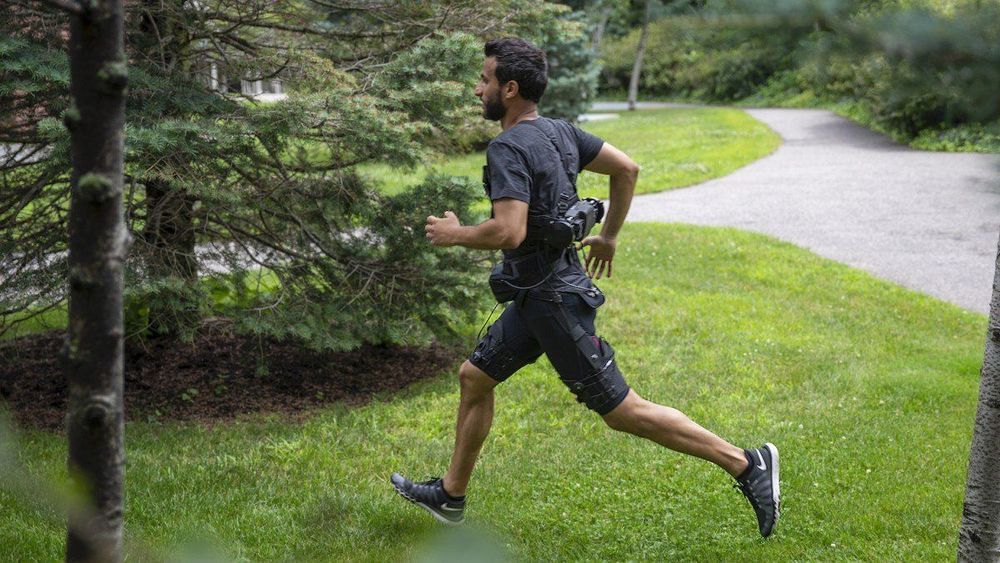
Forget the Thighmaster. Someday you might add a spring to your step when walking or running using a pair of mechanically powered shorts.
Step up: The lightweight exoskeleton-pants were developed by researchers at Harvard University and the University of Nebraska, Omaha. They are the first device to assist with both walking and running, using an algorithm that adapts to each gait.
Making strides: The super-shorts show how wearable exoskeleton technology might someday help us perform all sorts of tasks. Progress in materials, actuators, and machine learning has led to a new generation of lighter, more powerful, and more adaptive wearable systems. Bulkier and heavier commercial systems are already used to help people with disabilities and workers in some factories and warehouses.
Autonomous delivery robots join the fight against the #coronavirus epidemic in Wuhan, China.

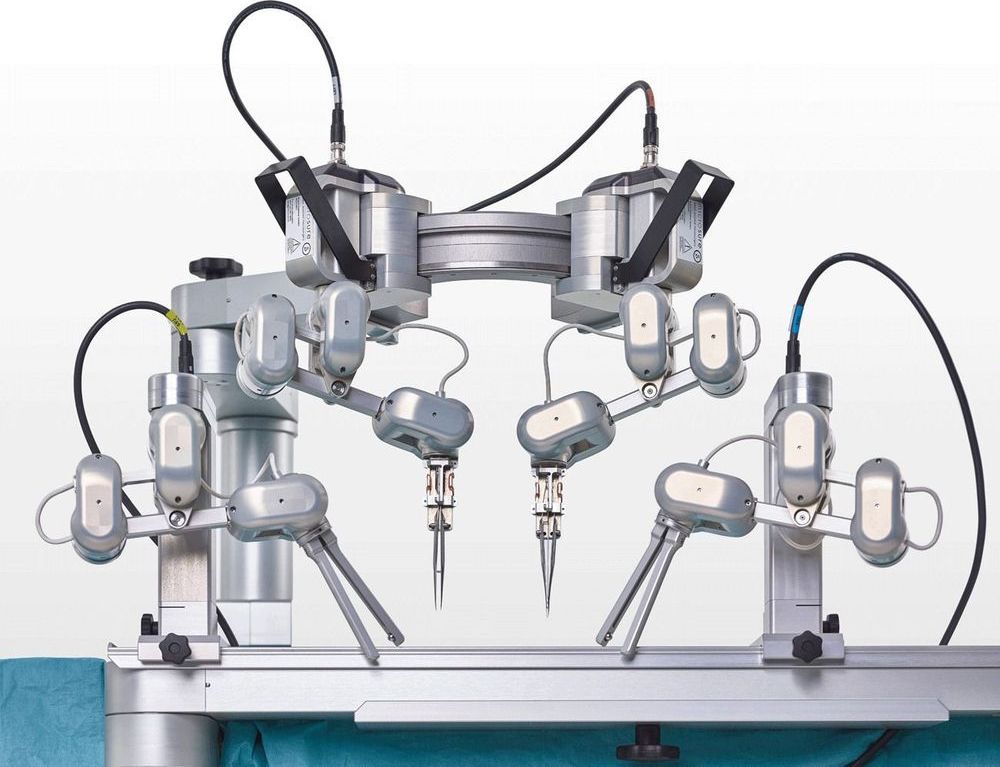
A highly precise form of reconstructive surgery, known as supermicrosurgery, seeks to connect ultra-thin blood and lymph vessels as a way of restoring them to healthy function. This requires a high level of expertise on part of the surgeons, but they may soon have a new robotic tool at their disposal called Musa, which has performed its first round of procedures with great success.
Supermicrosurgery is a relatively new medical technique that focuses on reconnecting vessels with diameters ranging from 0.3 mm to 0.8 mm. One of its primary applications is tackling lymphedema, which commonly occurs following breast cancer treatment and leads to swelling and localized fluid retention. Given the delicate nature of the process, only a small number of surgeons are currently capable of performing these operations.
Microsure is a Dutch startup spun out of Eindhoven University of Technology and Maastricht University Medical Centre, where researchers have been developing a robot to take on the task of supermicrosurgery. Called Musa, the robot is controlled by a surgeon, but translates their hand movements into more precise actions for a set of robotic hands.
Take a look at this latest Israeli-developed counter-drone technology and watch the Drone Dome laser, dubbed Light Blade, take down a number of DJI Phantoms. The video that was uploaded to YouTube today shows a truck-mounted version of Drone Dome, a Counter-Unmanned Aerial System (C-UAS) weapon. The setup includes a search radar, drone-radio command detector, an electro-optical sensor, and a command-and-control system.