Bot Sentinel conducted an analysis and found bots and trolls are using hashtags like #ReopenAmericaNow and #StopTheMadness to spread disinformation.

This robot is a drone and a generator that can go on surveillance missions. Is there anything it can’t do?
Eric klein.
If you followed the world of pop-culture or tech for some time now, then you know that advances in artificial intelligence are heating up. In reality, AI has been the talk of mainstream pop-culture and sci-fi since the first Terminator movie came out in 1984. These movies present an example of something called “Artificial General Intelligence.” So how close are we to that?
No, not how close are we to when the terminators take over, but how close are we to having an AI capable of navigating nearly any problem it’s presented with.
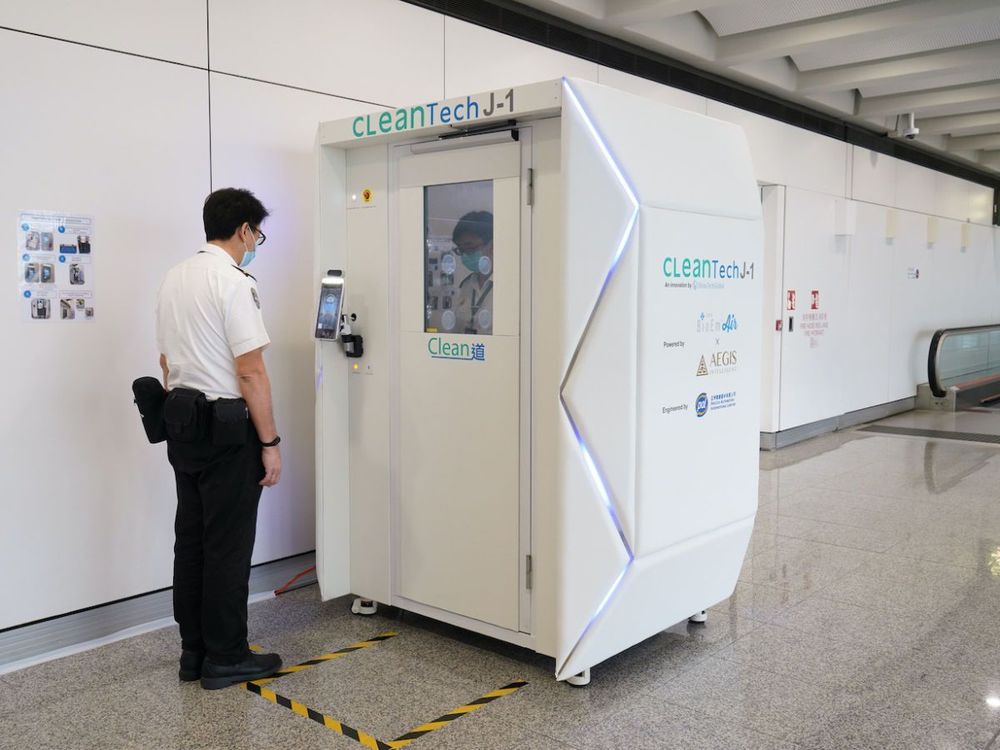
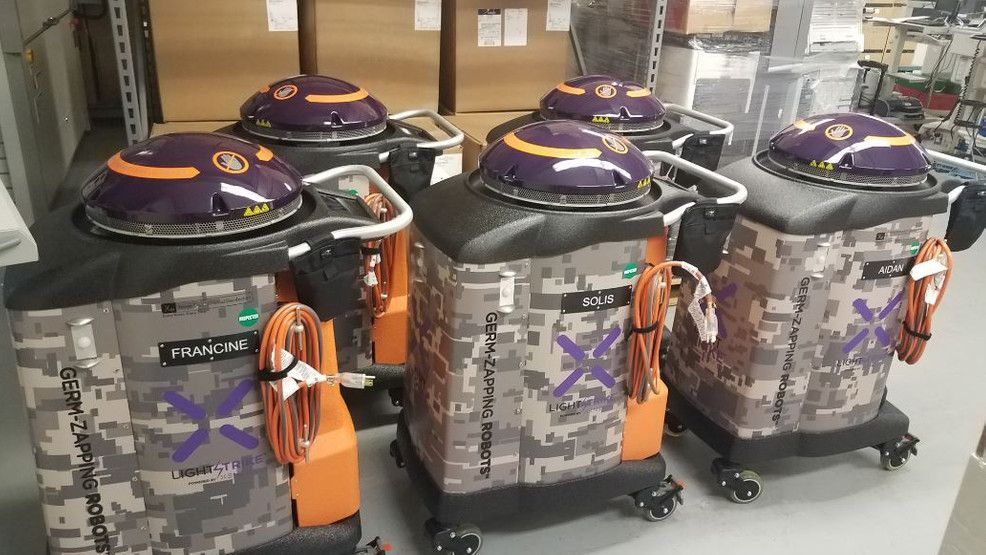
Xenex Disinfection Services found out today its ultraviolet light technology is 99.9 percent effective in eradicating the virus, according to the Texas Biomedical Research Center.
“This is what the world has been looking for„” says Xenex CEO Morris Miller, “to make sure there’s a device that can actually kill the real virus.”
Xenex robots cost $125,000 and are now being ordered by hospitals, hotels, airlines and even the Governor of Texas.
SAN ANTONIO — A local company has learned its robot completely removes COVID-19 from rooms and masks. Xenex Disinfection Services found out today its ultraviolet light technology is 99. 9 percent effective in eradicating the virus, according to the Texas Biomedical Research Center. “This is what the world has been looking for„” says Xenex CEO Morris Miller, “to make sure there’s a device that can actually kill the real virus. ”.
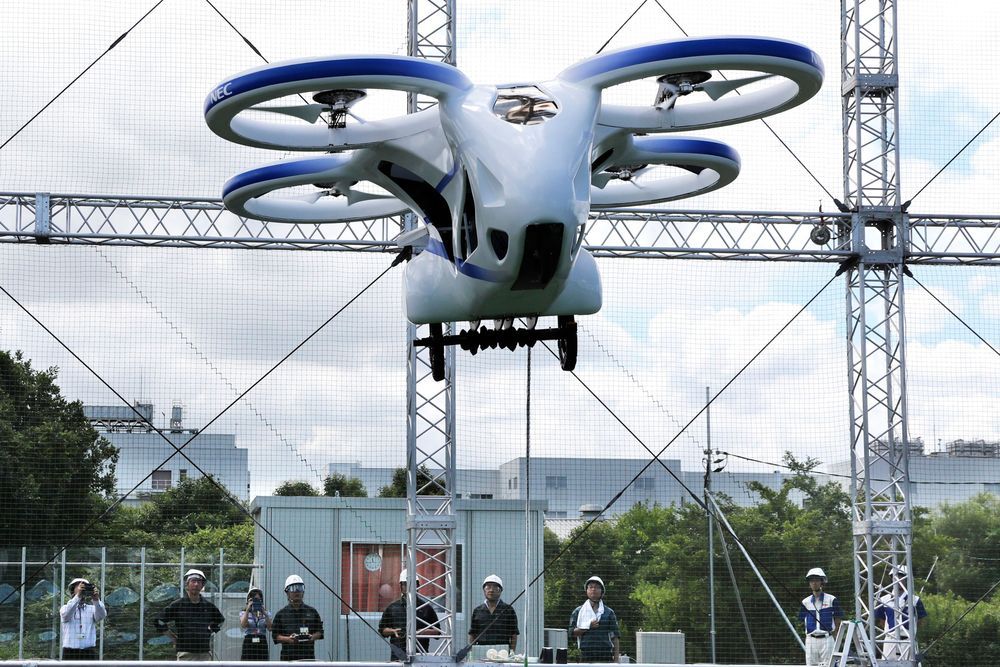
“Most of the vendors have a plan to have a pilot as well as autonomous operations,” he added.
“Since we have put our hand up and said, ‘We want to accelerate this market so that it’s dual-use, the military wants to buy the exact same vehicle that would be available domestically,’ companies have shared with us privately that they have seen the amount of investment given by venture capitalists go up,” Roper said. “And they expect that that will continue the further we go through the door on competition.”
The Air Force plans to request funding for flying car research in the fiscal 2022 budget request, in addition to the research funding the service already set aside for the experiment, he said.

The Pentagon has created top secret military artificial intelligence that has a higher intellect than humans.
A Defense Intelligence Agency experiment shows AI and humans have different risk tolerances when data is scarce.
In the 1983 movie WarGames, the world is brought to the edge of nuclear destruction when a military computer using artificial intelligence interprets false data as an imminent Soviet missile strike. Its human overseers in the Defense Department, unsure whether the data is real, can’t convince the AI that it may be wrong. A recent finding from the Defense Intelligence Agency, or DIA, suggests that in a real situation where humans and AI were looking at enemy activity, those positions would be reversed.
Artificial intelligence can actually be more cautious than humans about its conclusions in situations when data is limited. While the results are preliminary, they offer an important glimpse into how humans and AI will complement one another in critical national security fields.

Bad news.
The US Patent and Trademark Office (USPTO) has ruled that artificial intelligence systems cannot be credited as an inventor in a patent, the agency announced earlier this week. The decision came in response to two patents — one for a food container and the other for a flashing light — that were created by an AI system called DABUS.
Among the USPTO’s arguments is the fact that US patent law repeatedly refers to inventors using humanlike terms such as “whoever” and pronouns like “himself” and “herself.” The group behind the applications had argued that the law’s references to an inventor as an “individual” could be applied to a machine, but the USPTO said this interpretation was too broad. “Under current law, only natural persons may be named as an inventor in a patent application,” the agency concluded.

SEAKR Engineering, Inc. has been awarded as the prime contractor for Defense Advanced Research Projects Agency (DARPA) Pit Boss contract to further expand its contractual work supporting the Blackjack program. The award for Phase I Option II is part of a three-phase effort seeking on-orbit demonstration of full processing capability in a multi-satellite constellation. SEAKR was first awarded a DARPA Pit Boss contract in October 2019.
DARPA’s Blackjack program focuses on integrating commercial satellite technologies into a constellation of military satellites. As sole prime, SEAKR will continue developing it’s Pit Boss solution to support the Blackjack program’s mission as a next generation on-board processor.
SEAKR said the solution will leverage off-the-shelf electronics adapted through design implementation to function reliably in space. The company said this award validates its program success in seeking on-orbit demonstration of state-of-the-art processing capability incorporating autonomous operations, Artificial Intelligence (AI), machine learning techniques, and bridged terrestrial and on-orbit technologies.

ROBOTS will raise one in three children in the future, an AI expert says.
Dr Michelle Tempest says the droids will feed, exercise and teach kids.
They will also change nappies and tell stories and artificial uteruses will develop foetuses.
Dr Tempest says that by 2050 parenting will be “entirely optional”.