YouTube will start using AI to automatically add age restrictions to videos “over the coming months,” the company announced on Tuesday.
The site currently relies on content reviewers to flag videos that aren’t appropriate for viewers under 18, but will soon start using machine learning to detect content for review. Uploaders will be able to appeal the system’s decisions.
In addition, viewers who try to evade the restrictions by watching videos embedded on third-party websites will be redirected to YouTube, where they’ll have to sign-in to show they’re over 18.
Ira Pastor, ideaXme life sciences ambassador and founder of Bioquark interviews Dr Vitaly Vanchurin, PhD, Associate Professor, Theoretical Physics and Cosmology, Swenson College of Science and Engineering, at the University of Minnesota (UMN).
Dr Vanchurin’s big questions and the tools we need to answer them:
“What is the origin of our Universe? What determines our vacuum and the cosmological constant that is responsible for the observed accelerated expansion of space? What determines the onset of structure formation and the birth of galaxies in our Universe? Our innate curiosity about our beginnings has been, since time immemorial, and still is, at the heart of every human being. This age old question of our origin can now be addressed by applying the scientific method”.
Ira Pastor comments:
Today, we have a really exciting thought leader joining us on ideaXme who spends his time thinking about really BIG questions – Questions like: what is the origin of our Universe? What’s behind the cosmological constant (in Albert Einstein’s field equations of general relativity) that is responsible accelerated expansion of space? What determines the onset of structure formation and the birth of galaxies in our Universe? And many other fascinating topics.
Dr. Vitaly Vanchurin, is an Associate Professor, Theoretical Physics and Cosmology, Swenson College of Science and Engineering, at the University of Minnesota (UMN).
A project is aiming to create a “new blueprint for the future” that marries IoT and artificial intelligence, all through the adoption of blockchain technology.
The two companies are already entwined through OpenAI’s ongoing Azure cloud computing contract, with Azure being the platform on which OpenAI accesses the vast computing resources it needs to train many of its models, and a major $1 billion investment Microsoft made last year to become OpenAI’s exclusive cloud provider. Now, Microsoft is issuing yet another signal of high confidence in OpenAI’s research by acquiring the rights to GPT-3.
OpenAI released GPT-3, the third iteration of its ever-growing language model, in July, and the program and its prior iterations have helped create some of the most fascinating AI language experiments to date. It’s also inspired vigorous debate around the ethics of powerful AI programs that may be used for more nefarious purposes, with OpenAI initially refusing to publish research about the model for fear it would be misused.
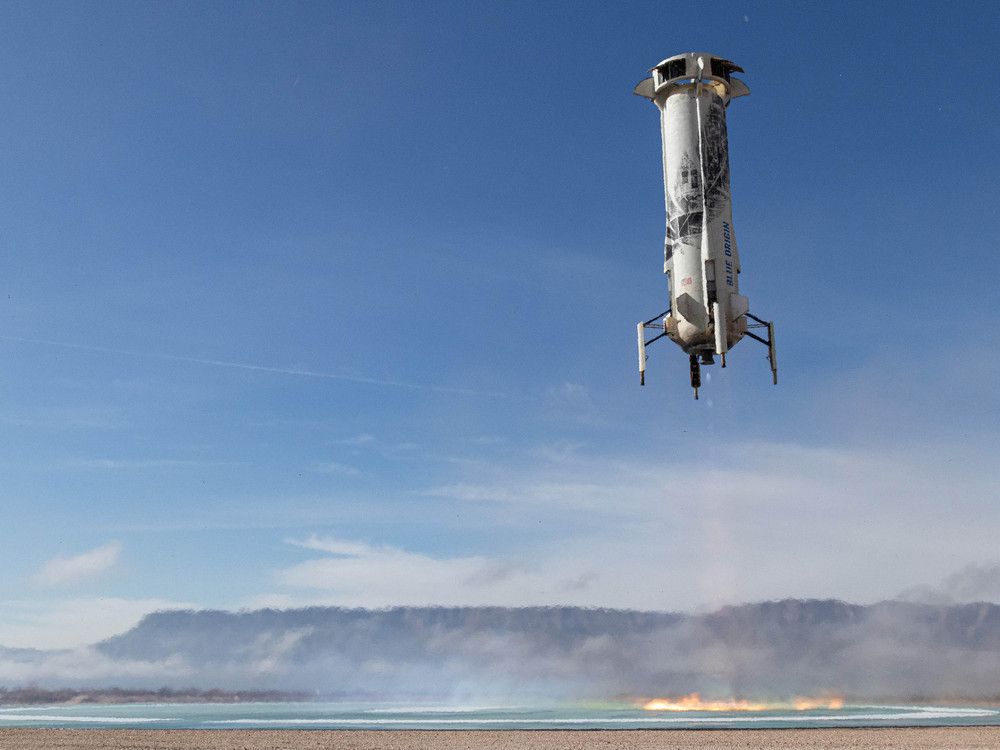
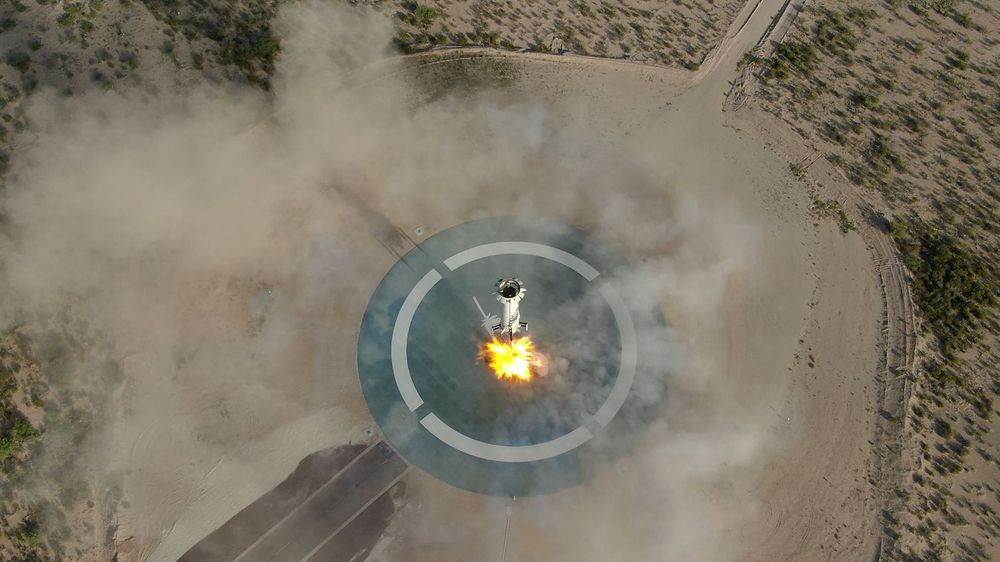
Blue Origin just announced the timing of its next rocket launch — and it’s surprisingly soon, in just two days, on Thursday, September 24. The launch of Blue Origin’s New Shepard vehicle will be its thirteenth overall for that category of launch craft, and the seventh in a row for this particular rocket. The payload will include an even dozen commercial cargo items, including a Deorbit, Descent and Landing Sensor Demonstration done in partnership with NASA — basically a highly precise automated landing system that will help NASA land on the moon and eventually Mars.
That payload is unique not just because of the technology involved in the landing system, but also because it’ll actually be mounted to the exterior of the New Shephard’s booster stage, rather than in the capsule that rides atop it. This is the first time that Blue Origin has carried a payload this way, and the company expects it could pave the way for similar future missions, enabling sensing at high altitudes, and experiments made possible through use of equipment exposed to the external environment.
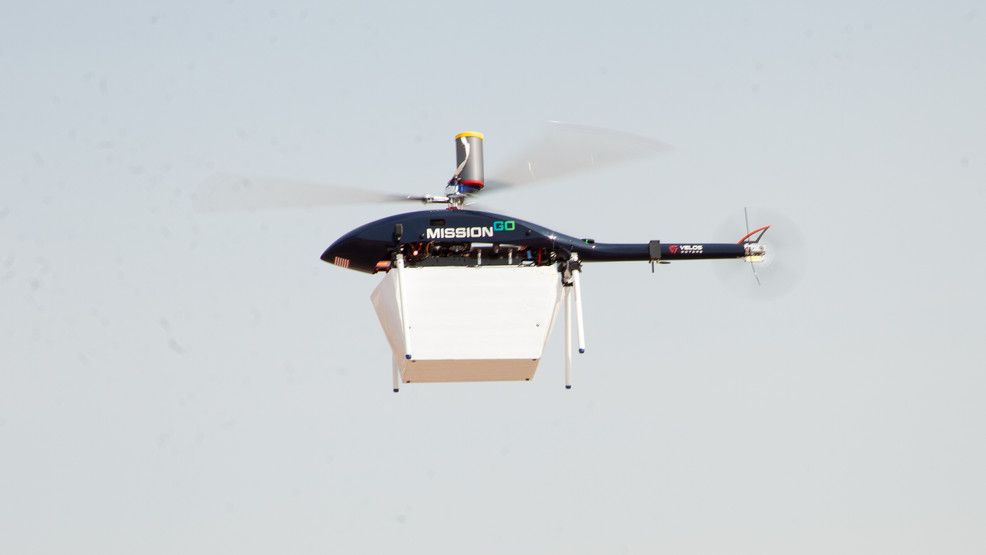
Las Vegas hosted two successful test flights using unmanned aircraft to carry human organs and tissue last week. On Sept. 17th, MissionGo, a provider of unmanned aviation solutions and Nevada Donor Network, conducted two unmanned flights — one of which was the longest organ delivery flight in Unmanned Aircraft System (UAS) history. The first flight involved transport of research corneas fromSouthern Hills Hospital and Medical Center to Dignity Health — St. Rose Dominican, San Martín Campus.
After repurposing facial recognition and deepfake tech to study galaxies and the Higgs boson, physicists think they can help shape the responsible use of AI.