Toggle light / dark theme

The Elderly May Toss Their Walkers for This Robotic Suit

No one wants to walk with a walker, but age has a way of making people compromise on their quality of life. The team behind Superflex, which spun out of SRI International in May, thinks there could be another way.

The company is building wearable robotic suits, plus other types of clothing, that can make it easier for soldiers to carry heavy loads or for elderly or disabled people to perform basic tasks. A current prototype is a soft suit that fits over most of the body. It delivers a jolt of supporting power to the legs, arms, or torso exactly when needed to reduce the burden of a load or correct for the body’s shortcomings.

A walker is a “very cost-effective” solution for people with limited mobility, but “it completely disempowers, removes dignity, removes freedom, and causes a whole host of other psychological problems,” SRI Ventures president Manish Kothari says. “Superflex’s goal is to remove all of those areas that cause psychological-type encumbrances and, ultimately, redignify the individual.”

The Shapeshifting Car Of The Future Has Airbags On The Outside

Circa 2017


This bubbly concept car protects more than the driver; its next-generation rubber exterior can save pedestrians, too.

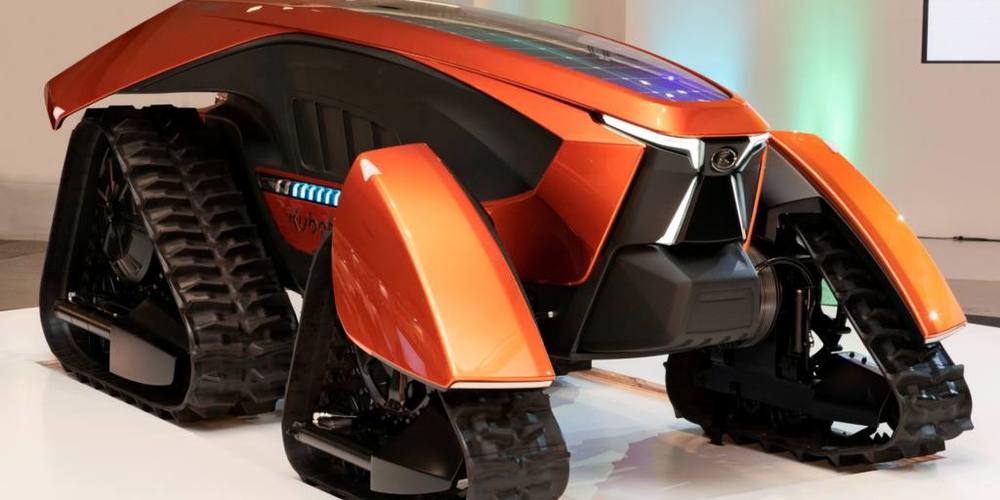
Traditional metal panels are replaced with soft rubber, which absorbs the impact of a collision. The car is also a shapeshifter, meaning that the rubber panels move and flex, forming a more aerodynamic shape.

The futuristic concept was recently showcased at the Tokyo Motor Show, which also featured artificially intelligent cars and electric vehicles. But none as adorable as this rubbery car.

Find us everywhere else:

OpenCV AI Kit aims to do for computer vision what Raspberry Pi did for hobbyist hardware

A new gadget called the OpenCV AI Kit, or OAK, looks to replicate the success of Raspberry Pi and other minimal computing solutions, but for the growing fields of computer vision and 3D perception. Its new multi-camera PCBs pack a lot of capability into a small, open-source unit and are now seeking funding on Kickstarter.

The OAK devices use their cameras and onboard AI chip to perform a number of computer vision tasks, like identifying objects, counting people, finding distances to and between things in frame and more. This info is sent out in polished, ready-to-use form.

Having a reliable, low-cost, low-power-draw computer vision unit like this is a great boon for anyone looking to build a smart device or robot that might have otherwise required several and discrete cameras and other chips (not to mention quite a bit of fiddling with software).

Humanity on Mars? Technically possible, but no voyage on horizon

Robotic landers and rovers have been touching down on Mars since the 1970s, but when will humanity finally set foot on the Red Planet?

Experts believe the technical challenges are nearly resolved, but political considerations make the future of any crewed mission uncertain.

NASA’s human lunar exploration program, Artemis, envisions sending people back to the Moon by 2024 and using the experience gained there to prepare for Mars.

Why Tesla Invented A New Neural Network

Recently, Tesla filed a patent called ‘Systems and methods for adapting a neural network on a hardware platform.’ In the patent, they described the systems and methods to select a neural network model configuration that satisfies all constraints.

According to the patent, the constraints mainly include an embodiment that computes a list of valid configurations and a constraint satisfaction solver to classify valid configurations for the particular platform, where the neural network model will run efficiently.

The Reason Behind the Patent.

This Robotic Chemist Does Over 600 Experiments a Week and Learns From Its Own Work

The 400 kilogram wheeled system moves about the lab guided by LIDAR laser scanners and has an industrial robotic arm made by German firm Kuka that it uses to carry out tasks like weighing out solids, dispensing liquids, removing air from the vessel, and interacting with other pieces of equipment.

In a paper in Nature, the team describes how they put the device to work trying to find catalysts that speed up reactions that use light to split water into hydrogen and oxygen. To do this, the robot used a search algorithm to decide how to combine a variety of different chemicals and updated its plans based on the results of previous experiments.

The robot carried out 688 experiments over 8 days, working for 172 out of 192 hours, and at the end it had found a catalyst that produced hydrogen 6 times faster than the one it started out with.

/* */