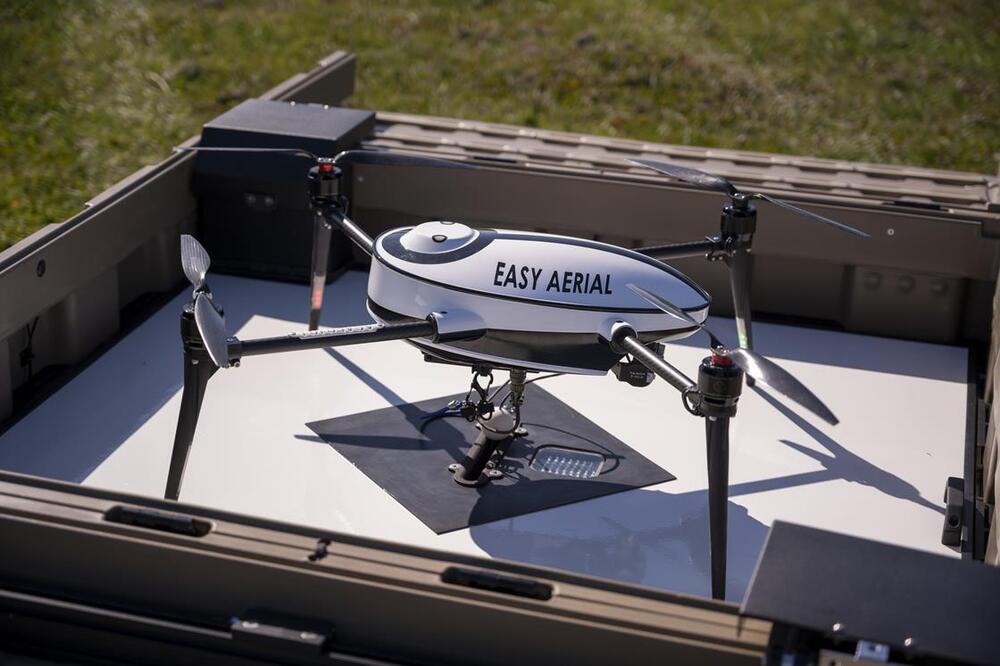
The US Air Force has deployed its first automated unmanned air vehicle security system for an airbase.
Circa 2018
Californian robotics company Iron Ox claims to be ‘reinventing farming from the ground up’, as it unveils an autonomous indoor farm that leverages the latest advancements in arable science, machine learning, and robotics.
Indoor farms see harvesting, seeding and plant inspections occur thousands of times a day – tasks perfectly suited to robots. Iron Ox is using the latest in machine learning and computer vision to enable its robots to respond to the needs of individual plants.
The farm is now in full production, thanks to its two key proprietary robotics systems – a robotic arm and a mobile transport. They work cohesively, with the latter using sensors and computer vision technology more typically seen in a self-driving car. The robotic arm, meanwhile, can analyse each plant at sub-millimetre scale.

Artificial intelligence helped co-pilot a U-2 “Dragon Lady” spy plane during a test flight Tuesday, the first time artificial intelligence has been used in such a way aboard a US military aircraft.
Mastering artificial intelligence or “AI” is increasingly seen as critical to the future of warfare and Air Force officials said Tuesday’s training flight represented a major milestone.
“The Air Force flew artificial intelligence as a working aircrew member onboard a military aircraft for the first time, December 15,” the Air Force said in a statement, saying the flight signaled “a major leap forward for national defense in the digital age.”

Summary: When convolutional neural networks are trained under experimental conditions, they are deceived by the brightness and color of a visual image in similar ways to the human visual system.
Source: UPF Barcelona.
A convolutional neural network is a type of artificial neural network in which the neurons are organized into receptive fields in a very similar way to neurons in the visual cortex of a biological brain.
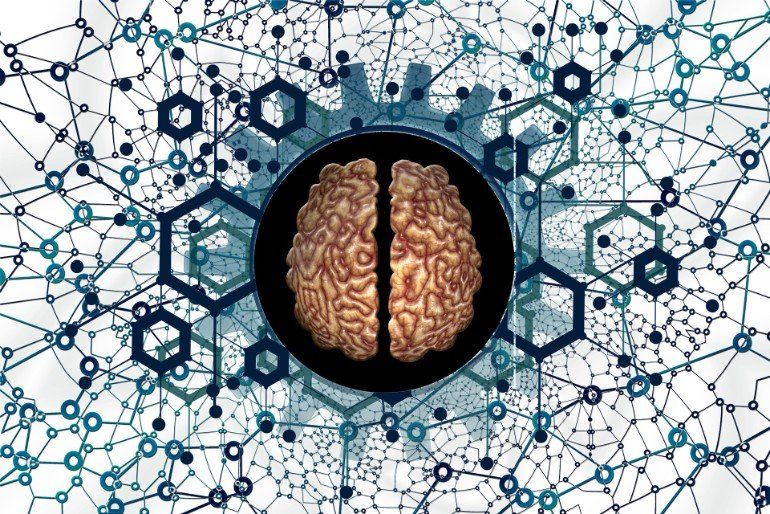
Summary: A new AI model mimics how the prefrontal cortex uses gating to control information flow between different areas of neurons. The system could help in the development of new artificial intelligence technologies that better mimic the human brain.
Source: Salk Institute.
Getting computers to “think” like humans is the holy grail of artificial intelligence, but human brains turn out to be tough acts to follow. The human brain is a master of applying previously learned knowledge to new situations and constantly refining what’s been learned. This ability to be adaptive has been hard to replicate in machines.

✨ ′′ Using a high speed 5 G network, a London surgeon has performed remote experimental surgery for a banana based in the U.S. state of California.
This evolution opens up prospects for complicated remote surgeries without going through the trouble of future travel.
#IEEE_BAU_RAS
✨باستخدام شبكة 5G فائقة السرعة قام جرّاح في لندن بإجراء عملية جراحية تجريبية عن بُعد لموزة موجودة في ولاية كاليفورنيا الأمريكية.
هذا التطور يفتح الآفاق لإجراء عمليات جراحية معقدة عن بعد دون تكبد عناء السفر مستقبلاً.” #IEEE_BAU_RAS