Toggle light / dark theme

Deep Dive Into Big Pharma AI Productivity: One Study Shaking The Pharmaceutical Industry

No industry will be spared.


The pharmaceutical business is perhaps the only industry on the planet, where to get the product from idea to market the company needs to spend about a decade, several billion dollars, and there is about 90% chance of failure. It is very different from the IT business, where only the paranoid survive but a business where executives need to plan decades ahead and execute. So when the revolution in artificial intelligence fueled by credible advances in deep learning hit in 2013–2014, the pharmaceutical industry executives got interested but did not immediately jump on the bandwagon. Many pharmaceutical companies started investing heavily in internal data science R&D but without a coordinated strategy it looked more like re-branding exercise with the many heads of data science, digital, and AI in one organization and often in one department. And while some of the pharmaceutical companies invested in AI startups no sizable acquisitions were made to date. Most discussions with AI startups started with “show me a clinical asset in Phase III where you identified a target and generated a molecule using AI?” or “how are you different from a myriad of other AI startups?” often coming from the newly-minted heads of data science strategy who, in theory, need to know the market.

However, some of the pharmaceutical companies managed to demonstrate very impressive results in the individual segments of drug discovery and development. For example, around 2018 AstraZeneca started publishing in generative chemistry and by 2019 published several impressive papers that were noticed by the community. Several other pharmaceutical companies demonstrated impressive internal modules and Eli Lilly built an impressive AI-powered robotics lab in cooperation with a startup.

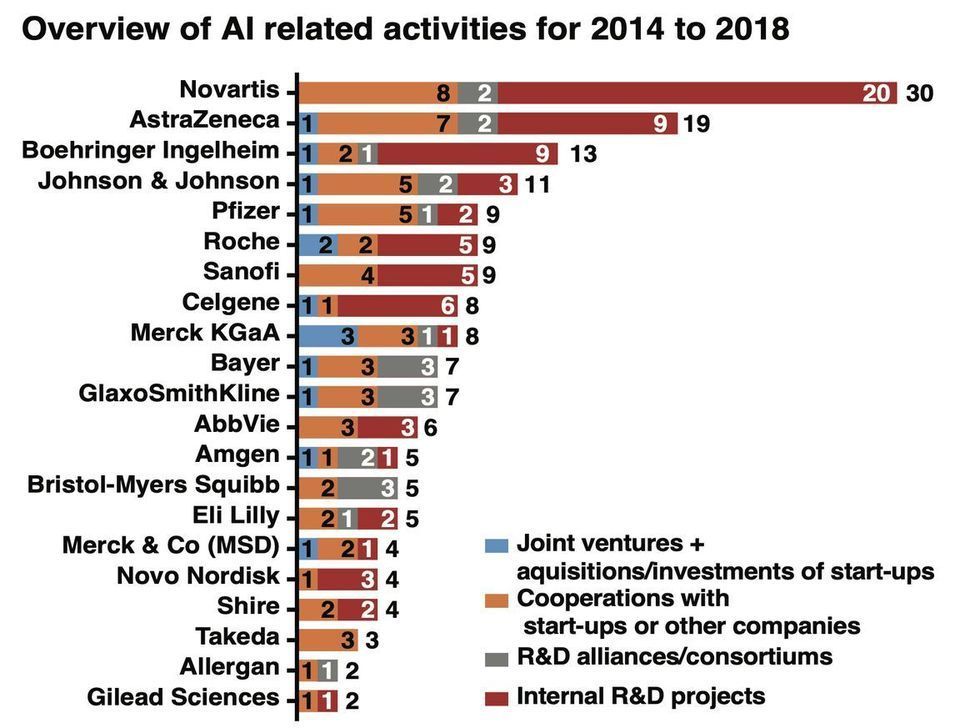
However, it was not possible to get a comprehensive overview and comparison of the major pharmaceutical companies that claimed to be doing AI research and utilizing big data in preclinical and clinical development until now. On June 15th, one article titled “The upside of being a digital pharma player” got accepted and quietly went online in a reputable peer-reviewed industry journal Drug Discovery Today. I got notified about the article by Google Scholar because it referenced several of our papers. I was about to discard the article as just another industry perspective but then I looked at the author list and saw a group of heavy-hitting academics, industry executives, and consultants: Alexander Schuhmacher from Reutlingen University, Alexander Gatto from Sony, Markus Hinder from Novartis, Michael Kuss from PricewaterhouseCoopers, and Oliver Gassmann from University of St. Gallen.
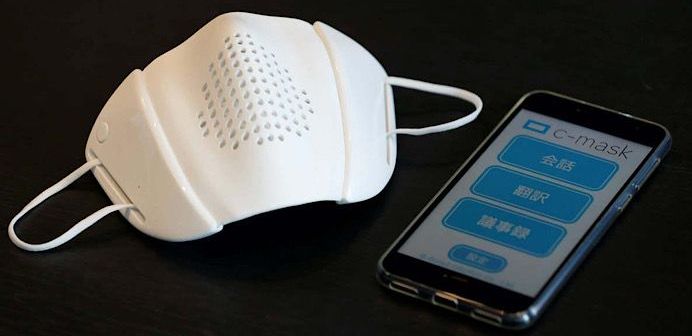
Japanese researchers have created a smart face mask that connects to your phone

Japanese researchers have created a smart face mask that has a built in speaker and can translate speech into 8 different languages.

We live in a world full of technology but it was a world without smart masks, until now!

A Japanese technology company Donut Robotics has taken the initiative to create the first smart face masks which connects to your phone. Of course, we couldn’t have battled coronavirus with a simple mask that still does the job of protecting us perfectly well. We as a race need to bring technology into everything and more so if it does an array of extremely important, life-saving things like using a speaker to amplify a person’s voice, covert a person’s speech into text and then translate it into eight different languages through a smartphone app.

The Elderly May Toss Their Walkers for This Robotic Suit

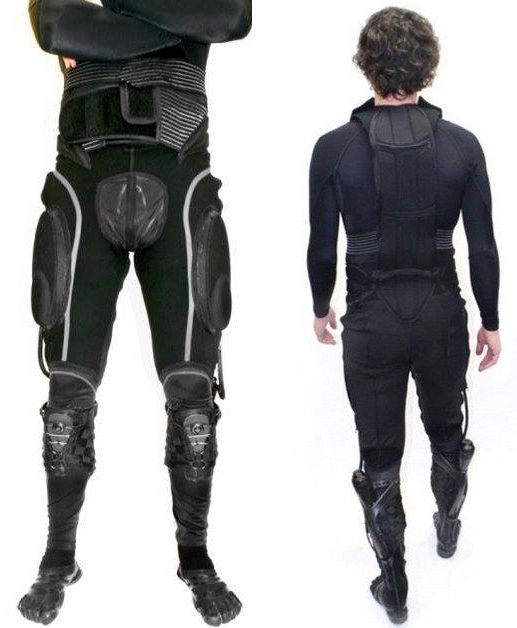
No one wants to walk with a walker, but age has a way of making people compromise on their quality of life. The team behind Superflex, which spun out of SRI International in May, thinks there could be another way.

The company is building wearable robotic suits, plus other types of clothing, that can make it easier for soldiers to carry heavy loads or for elderly or disabled people to perform basic tasks. A current prototype is a soft suit that fits over most of the body. It delivers a jolt of supporting power to the legs, arms, or torso exactly when needed to reduce the burden of a load or correct for the body’s shortcomings.

A walker is a “very cost-effective” solution for people with limited mobility, but “it completely disempowers, removes dignity, removes freedom, and causes a whole host of other psychological problems,” SRI Ventures president Manish Kothari says. “Superflex’s goal is to remove all of those areas that cause psychological-type encumbrances and, ultimately, redignify the individual.”

The Shapeshifting Car Of The Future Has Airbags On The Outside

Circa 2017


This bubbly concept car protects more than the driver; its next-generation rubber exterior can save pedestrians, too.

Traditional metal panels are replaced with soft rubber, which absorbs the impact of a collision. The car is also a shapeshifter, meaning that the rubber panels move and flex, forming a more aerodynamic shape.

The futuristic concept was recently showcased at the Tokyo Motor Show, which also featured artificially intelligent cars and electric vehicles. But none as adorable as this rubbery car.

Find us everywhere else:

OpenCV AI Kit aims to do for computer vision what Raspberry Pi did for hobbyist hardware

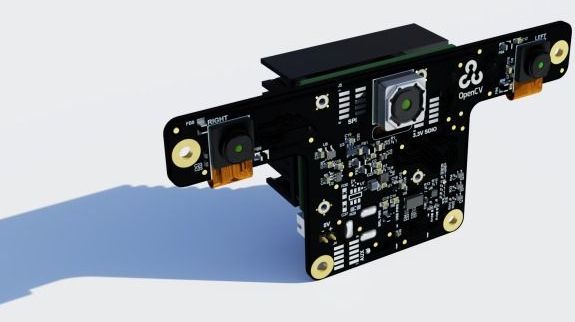
A new gadget called the OpenCV AI Kit, or OAK, looks to replicate the success of Raspberry Pi and other minimal computing solutions, but for the growing fields of computer vision and 3D perception. Its new multi-camera PCBs pack a lot of capability into a small, open-source unit and are now seeking funding on Kickstarter.

The OAK devices use their cameras and onboard AI chip to perform a number of computer vision tasks, like identifying objects, counting people, finding distances to and between things in frame and more. This info is sent out in polished, ready-to-use form.

Having a reliable, low-cost, low-power-draw computer vision unit like this is a great boon for anyone looking to build a smart device or robot that might have otherwise required several and discrete cameras and other chips (not to mention quite a bit of fiddling with software).

Humanity on Mars? Technically possible, but no voyage on horizon

Robotic landers and rovers have been touching down on Mars since the 1970s, but when will humanity finally set foot on the Red Planet?

Experts believe the technical challenges are nearly resolved, but political considerations make the future of any crewed mission uncertain.

NASA’s human lunar exploration program, Artemis, envisions sending people back to the Moon by 2024 and using the experience gained there to prepare for Mars.

/* */