Toggle light / dark theme

Is China banking on ‘disruptive technologies’ for a military edge?

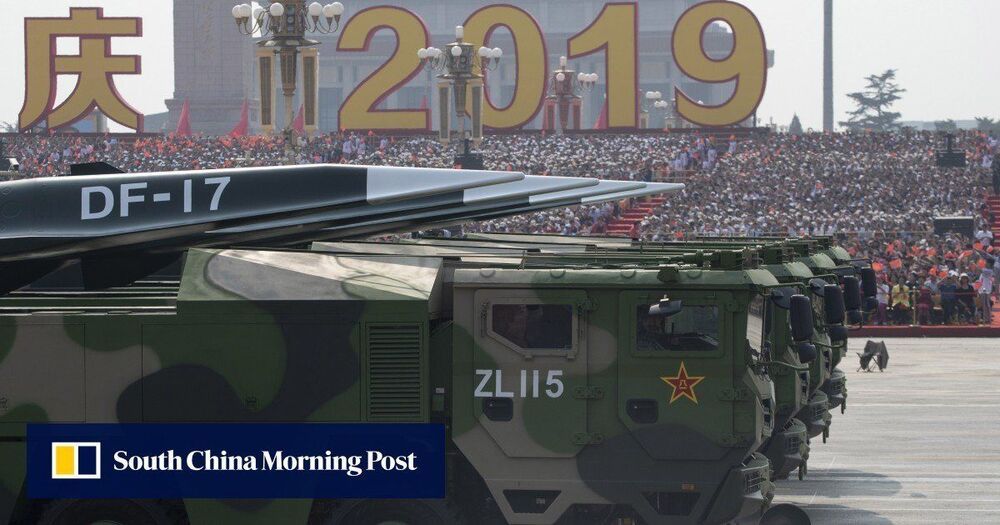
Military observers said the disruptive technologies – those that fundamentally change the status quo – might include such things as sixth-generation fighters, high-energy weapons like laser and rail guns, quantum radar and communications systems, new stealth materials, autonomous combat robots, orbital spacecraft, and biological technologies such as prosthetics and powered exoskeletons.


Speeding up the development of ‘strategic forward-looking disruptive technologies’ is a focus of the country’s latest five-year plan.

Next-generation computer chip with two heads

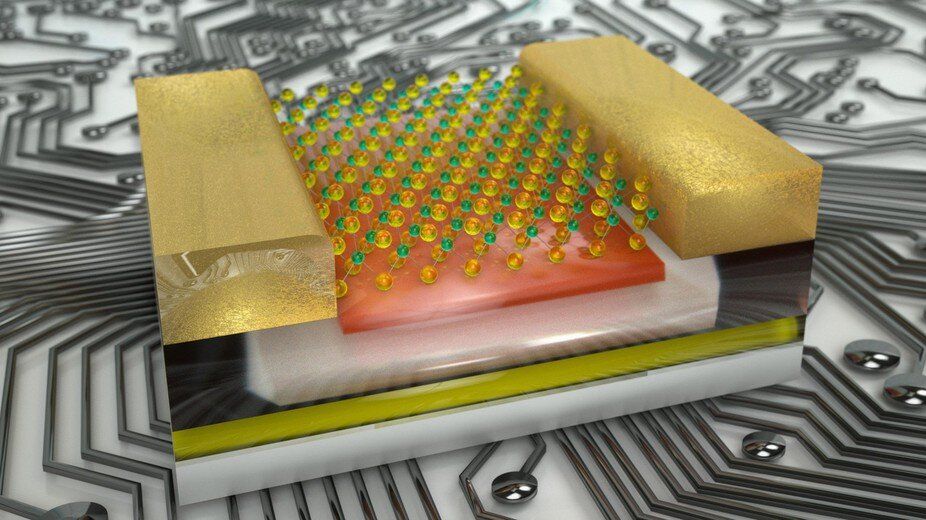
EPFL engineers have developed a computer chip that combines two functions—logic operations and data storage—into a single architecture, paving the way to more efficient devices. Their technology is particularly promising for applications relying on artificial intelligence.

It’s a major breakthrough in the field of electronics. Engineers at EPFL’s Laboratory of Nanoscale Electronics and Structures (LANES) have developed a next-generation circuit that allows for smaller, faster and more energy-efficient devices—which would have major benefits for artificial-intelligence systems. Their revolutionary technology is the first to use a 2-D material for what’s called a logic-in–, or a single architecture that combines logic operations with a memory function. The research team’s findings appear today in Nature.

Until now, the energy efficiency of has been limited by the von Neumann architecture they currently use, where and take place in two separate units. That means data must constantly be transferred between the two units, using up a considerable amount of time and energy.

Renault Float hover car

The Float is a concept car by Yunchen Chai. It won the design competition hosted by Renault and Central Saint Martins. The participants of the competition had to design a car that emphasized electric power, autonomous driving, and connected technology.

This car uses Meglev technology, is non-directional, and a magnetic belt to attach multiple pods. The Float would even come with an app. This could be the future of car design.

FACEBOOK: https://www.facebook.com/mashable/
TWITTER: https://twitter.com/mashable
INSTAGRAM: https://www.instagram.com/mashable/

Overwatch toxicity has seen an ‘incredible decrease’ thanks to machine learning, says Blizzard

Blizzard president J. Allen Brack said the system has dramatically reduced toxic chat and repeating offenses.


In April 2019, Blizzard shared some insights into how it was using machine learning to combat abusive chat in games like Overwatch. It’s a very complicated process, obviously, but it appears to be working out: Blizzard president J. Allen Brack said in a new Fireside Chat video that it has resulted in an “incredible decrease” in toxic behavior.

“Part of having a good game experience is finding ways to ensure that all are welcome within the worlds, no matter their background or identity,” Brack says in the video. “Something we’ve spoken about publicly a little bit in the past is our machine learning system that helps us verify player reports around offensive behavior and offensive language.”

Computer scientist researches interpretable machine learning, develops AI to explain its discoveries

Artificial intelligence helps scientists make discoveries, but not everyone can understand how it reaches its conclusions. One UMaine computer scientist is developing deep neural networks that explain their findings in ways users can comprehend, applying his work to biology, medicine and other fields.

Interpretable machine learning, or AI that creates explanations for the findings it reaches, defines the focus of Chaofan Chen’s research. The assistant professor of computer science says interpretable machine learning also allows AI to make comparisons among images and predictions from data, and at the same time, elaborate on its reasoning.

Scientists can use interpretable machine learning for a variety of applications, from identifying birds in images for wildlife surveys to analyzing mammograms.

The Future of AI is Artificial Sentience

How do you *feel* about that?


Much of today’s discussion around the future of artificial intelligence is focused on the possibility of achieving artificial general intelligence. Essentially, an AI capable of tackling an array of random tasks and working out how to tackle a new task on its own, much like a human, is the ultimate goal. But the discussion around this kind of intelligence seems less about if and more about when at this stage in the game. With the advent of neural networks and deep learning, the sky is the actual limit, at least that will be true once other areas of technology overcome their remaining obstructions.

For deep learning to successfully support general intelligence, it’s going to need the ability to access and store much more information than any individual system currently does. It’s also going to need to process that information more quickly than current technology will allow. If these things can catch up with the advancements in neural networks and deep learning, we might end up with an intelligence capable of solving some major world problems. Of course, we will still need to spoon-feed it since it only has access to the digital world, for the most part.

If we desire an AGI that can consume its own information, there are a few more advancements in technology that only time can deliver. In addition to the increased volume of information and processing speed, before any AI will be much use as an automaton, it will need to possess fine motor skills. An AGI with control of its own faculty can move around the world and consume information through its various sensors. However, this is another case of just waiting. It’s also another form of when not if these technologies will catch up to the others. Google has successfully experimented with fine motor skills technology. Boston Dynamics has canine robots with stable motor skills that will only improve in the coming years. Who says our AGI automaton needs to stand erect?
Teaching AI agents to communicate and act in fantasy worlds

Woah o,.o!


In recent years, artificial intelligence (AI) tools, including natural language processing (NLP) techniques, have become increasingly sophisticated, achieving exceptional results in a variety of tasks. NLP techniques are specifically designed to understand human language and produce suitable responses, thus enabling communication between humans and artificial agents.

Other studies also introduced goal-oriented agents that can autonomously navigate virtual or videogame environments. So far, NLP techniques and goal-oriented agents have typically been developed individually, rather than being combined into unified methods.

Researchers at Georgia Institute of Technology and Facebook AI Research have recently explored the possibility of equipping goal-driven agents with NLP capabilities so that they can speak with other characters and complete desirable actions within fantasy game environments. Their paper, pre-published on arXiv, shows that combined, these two approaches achieve remarkable results, producing game characters that speak and act in ways that are consistent with their overall motivations.

Deep Blue | Down the Rabbit Hole

I highly recommend checking this fantastic look at Deep Blue and the fascinating role chess has played in the ongoing development of artificial intelligence.


After an electrical engineer enters the field of computer chess, his creation captures the attention of the world as he attempts to defeat the world chess champion.

Patreon: https://www.patreon.com/fredrikknudsen

Twitter: https://twitter.com/FredInTheKnud

Music by Ryan Probert: https://twitter.com/ProbeComposer

/* */