Let theOSS Enterprise newsletterguide youropen sourcejourney!Sign up here.
Neural Magic, which provides software to facilitate deep learning deployment in edge locations, today announced a $30 million series A funding round.
The market for edge AI is exploding as more companies deploy the technology in a variety of applications across industries — including in areas like asset maintenance and monitoring, factory automation, and telehealth. The market is expected to be worth $1.83 billion by 2,026 according to a report by Markets and Markets.
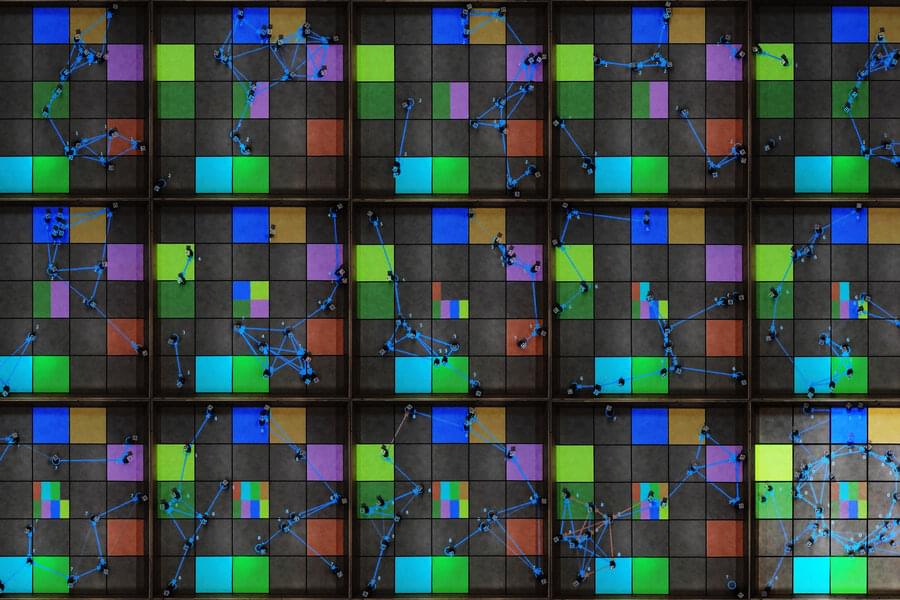
The transaction-based communications system ensures robot teams achieve their goal even if some robots are hacked.
Imagine a team of autonomous drones equipped with advanced sensing equipment, searching for smoke as they fly high above the Sierra Nevada mountains. Once they spot a wildfire, these leader robots relay directions to a swarm of firefighting drones that speed to the site of the blaze.
But what would happen if one or more leader robots was hacked by a malicious agent and began sending incorrect directions? As follower robots are led farther from the fire, how would they know they had been duped?
The use of blockchain technology as a communication tool for a team of robots could provide security and safeguard against deception, according to a study by researchers at MIT and Polytechnic University of Madrid, which was published today in IEEE Transactions on Robotics. The research may also have applications in cities where multirobot systems of self-driving cars are delivering goods and moving people across town.
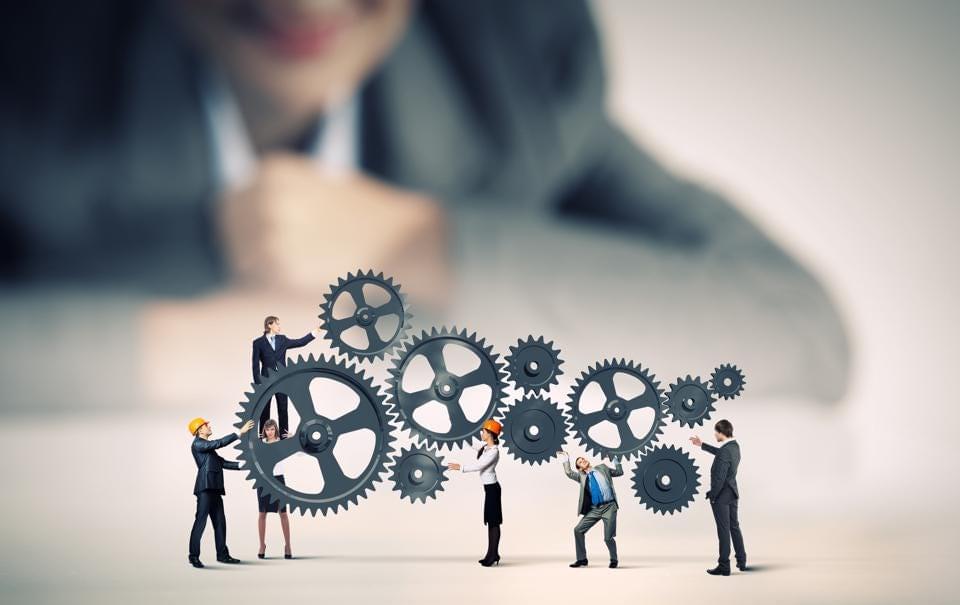
The potential for AI to deliver transformative value is almost unlimited. And yet, accessing that value is by no means a given. So how do we crack the code?
As someone who’s been in the business of deploying enterprise-grade AI solutions since the earliest days of AI—from the inside, as a CIO at Verizon, and from the outside, as an advisor to an AI company ASAPP—I know that our job as CIOs is to get transformational value out of transformational technology. And yet as recently as 2,020 McKinsey reported that less than 25 percent of companies are “seeing significant bottom-line impact” from AI.
I believe that there are at least three ways we need to shift our thinking if our organizations are going to mine the full transformational potential of AI:
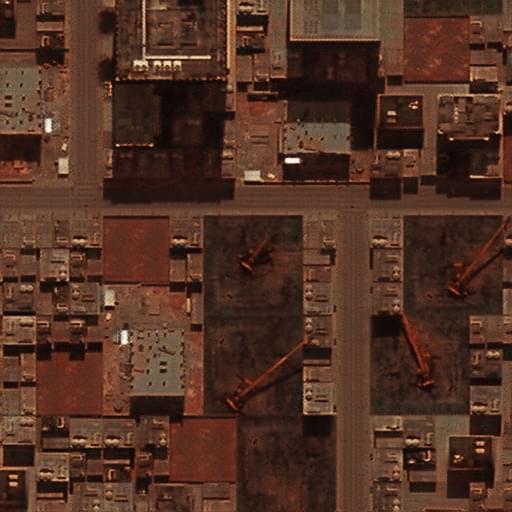
The availability of data can paralyze a company and its effort to bring software-centric products and services to market. To solve this issue, two-year-old data startup Rendered.ai is generating synthetic data for the satellite, medical, robotics and automotive industries.
At its most broad, synthetic data is manufactured rather than gathered from the real world. “When we use the term synthetic data what we really mean is engineered simulated datasets, and in particular, we focus on a physics-based simulation,” Rendered.ai CEO Nathan Kundtz explained in a recent interview with TechCrunch.
Kundtz received his PhD in physics from Duke University and cut his teeth in the space industry, heading the satellite antenna developer Kymeta Corporation. After leaving that company, he started working with other small space companies, when he noticed what he called a “chicken and egg” problem.
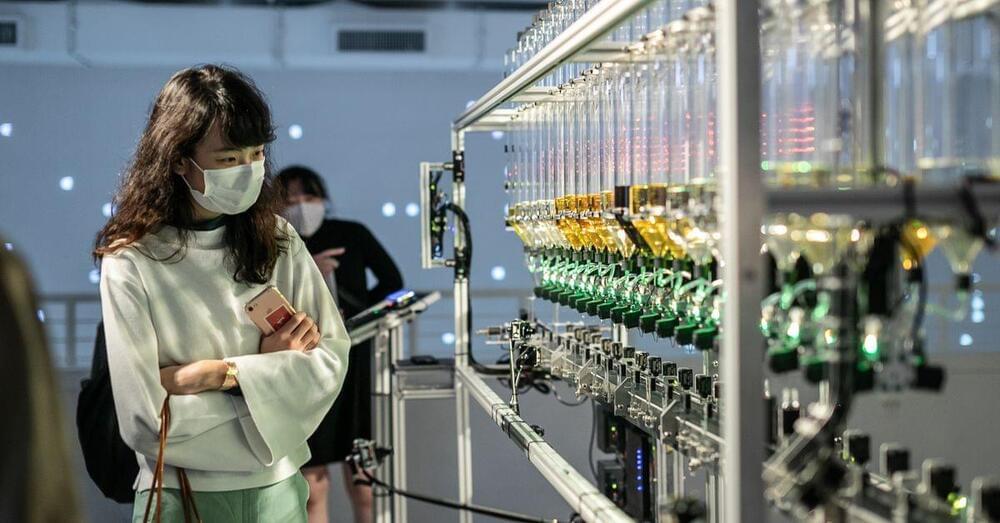
Artificial intelligence is already playing a role in the creation of smells and tastes. In this week’s Vergecast episode, the team explores how AI and machine learning might contribute to product design.
Driving this revolution has been a new breed and wave of founders and startups that merge the worlds of technology and bio — importantly, not just the old world of biotech (or a narrow definition of tech in bio as only “digital health”), but something much broader, bigger, and blending both worlds. In short, biology — enabled by technology — is eating the world. This has not only changed how we diagnose, treat, and manage disease, but has been changing the way we access, pay for, and deliver care in the healthcare system. It is now entering into manufacturing, food, and several other industries as well. Bio is becoming a part of everything.
This new era of industrialized bio — enabled by AI as well as an ongoing, foundational shift in biology from empirical science to more engineered approaches — will be the next industrial revolution in human history. And propelling it forward is an enormous new driving force, the novel coronavirus SARS-CoV-2, its ever-evolving strains, and the resulting COVID-19 disease pandemic and response — which I believe is analogous to our generation’s World War II (WW2). In other words: a massive global upheaval, but that later led to unprecedented innovation and significant new players.
As a result, we will now see the emergence of bio’s version of GAFA — playing off the “Google Amazon Facebook Apple” of the leading companies in computing, social, mobile — but for bio. And with it, a post-WW2/ post-Covid “Industrial Bio Complex”.
Researchers have made a key advancement in the development of technology to automatically analyze video of hockey games using artificial intelligence.
Engineers at the University of Waterloo combined two existing deep-learning AI techniques to identify players by their sweater numbers with 90-per-cent accuracy.
Humans find AI to be a frustrating teammate when playing a cooperative game together, posing challenges for “teaming intelligence,” study shows.
When it comes to games such as chess or Go, artificial intelligence (AI) programs have far surpassed the best players in the world. These “superhuman” AIs are unmatched competitors, but perhaps harder than competing against humans is collaborating with them. Can the same technology get along with people?
In a new study, MIT Lincoln Laboratory researchers sought to find out how well humans could play the cooperative card game Hanabi with an advanced AI model trained to excel at playing with teammates it has never met before. In single-blind experiments, participants played two series of the game: one with the AI agent as their teammate, and the other with a rule-based agent, a bot manually programmed to play in a predefined way.
The results surprised the researchers. Not only were the scores no better with the AI teammate than with the rule-based agent, but humans consistently hated playing with their AI teammate. They found it to be unpredictable, unreliable, and untrustworthy, and felt negatively even when the team scored well. A paper detailing this study has been accepted to the 2021 Conference on Neural Information Processing Systems (NeurIPS).
Trust is a very important aspect of human-robot interactions, as it could play a crucial role in the widespread implementation of robots in real-world settings. Nonetheless, trust is a considerably complex construct that can depend on psychological and environmental factors.
Understanding a robot’s decision-making processes and why it performs specific behaviors is not always easy. The ability to talk to itself while completing a given task could thus make a robot more transparent, allowing its users to understand the different processes, considerations and calculations that lead to specific conclusions.
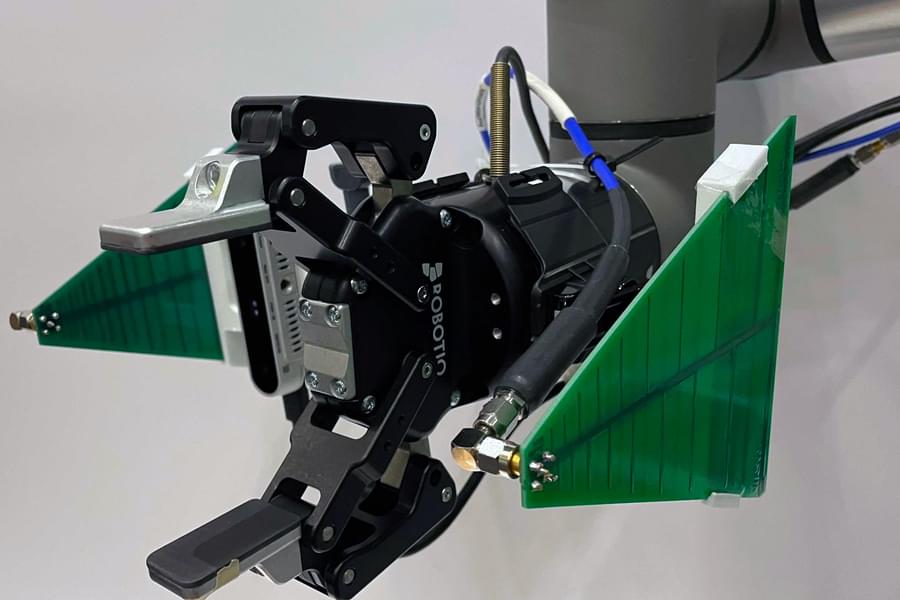
This robotic arm fuses data from a camera and antenna to locate and retrieve items, even if they are buried under a pile.
Source:
A busy commuter is ready to walk out the door, only to realize they’ve misplaced their keys and must search through piles of stuff to find them. Rapidly sifting through clutter, they wish they could figure out which pile was hiding the keys.
Researchers at MIT have created a robotic system that can do just that. The system, RFusion, is a robotic arm with a camera and radio frequency (RF) antenna attached to its gripper. It fuses signals from the antenna with visual input from the camera to locate and retrieve an item, even if the item is buried under a pile and completely out of view.
The RFusion prototype the researchers developed relies on RFID tags, which are cheap, battery-less tags that can be stuck to an item and reflect signals sent by an antenna. Because RF signals can travel through most surfaces (like the mound of dirty laundry that may be obscuring the keys), RFusion is able to locate a tagged item within a pile.