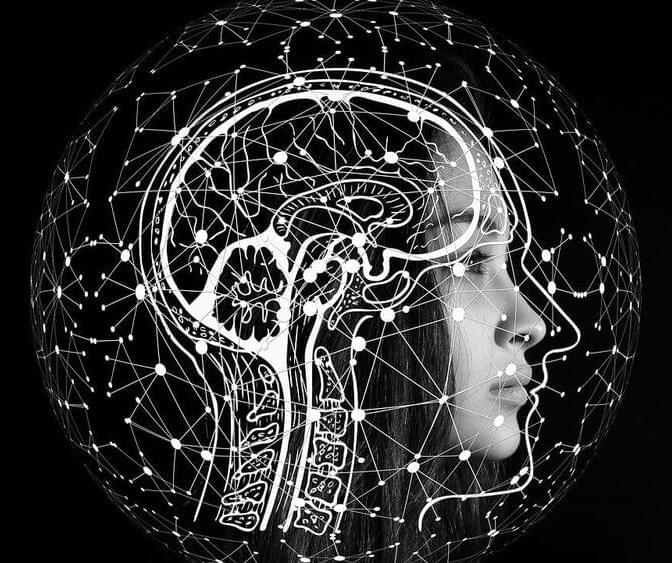
Physicists are building neural networks out of vibrations, voltages and lasers, arguing that the future of computing lies in exploiting the universe’s complex physical behaviors.

Circa 2021
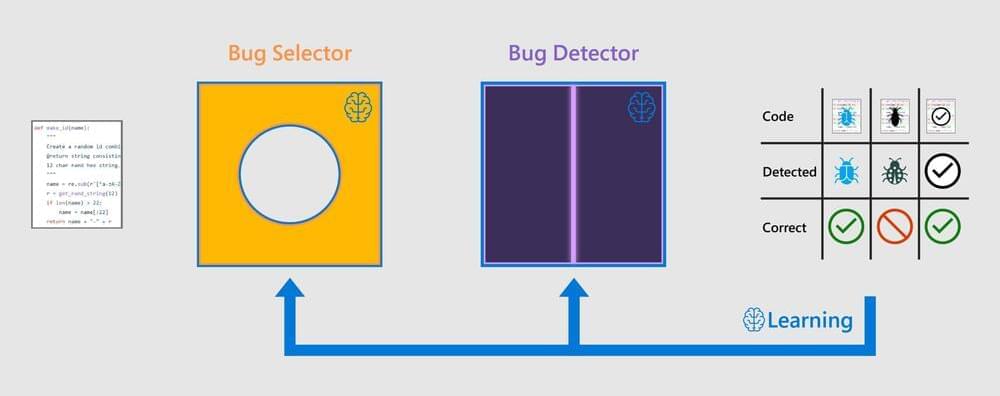
Finding and fixing bugs in code is a time-consuming, and often frustrating, part of everyday work for software developers. Can deep learning address this problem and help developers deliver better software, faster? In a new paper, Self-Supervised Bug Detection and Repair, presented at the 2021 Conference on Neural Information Processing Systems (NeurIPS 2021), we show a promising deep learning model, which we call BugLab can be taught to detect and fix bugs, without using labelled data, through a “hide and seek” game.
To find and fix bugs in code requires not only reasoning over the code’s structure but also understanding ambiguous natural language hints that software developers leave in code comments, variable names, and more. For example, the code snippet below fixes a bug in an open-source project in GitHub.
Here the developer’s intent is clear through the natural language comment as well as the high-level structure of the code. However, a bug slipped through, and the wrong comparison operator was used. Our deep learning model was able to correctly identify this bug and alert the developer.
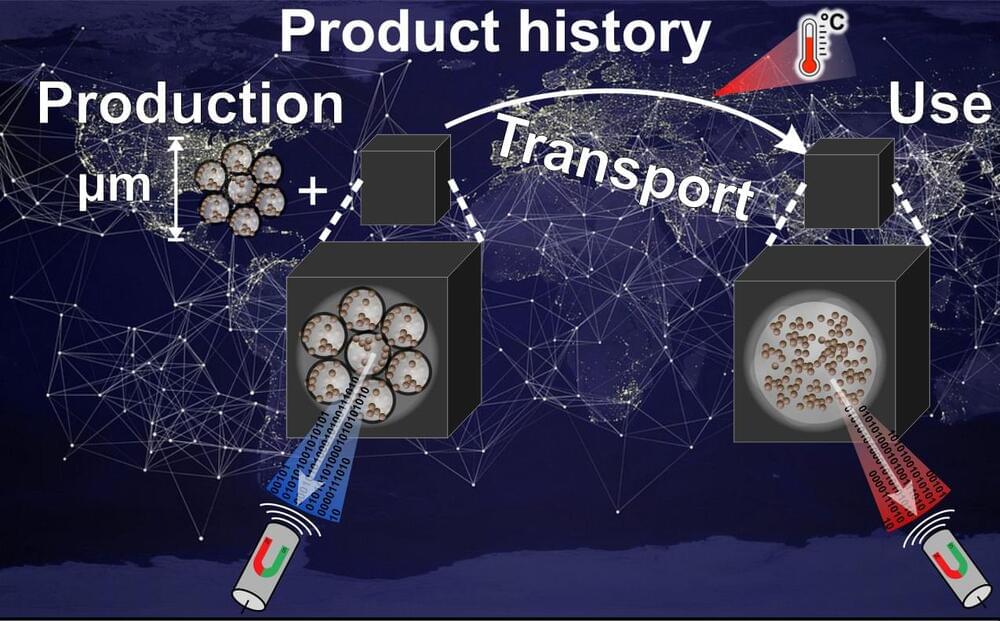
The right temperature ensures the success of technical processes, the quality of food and medicines, or affects the lifetime of electronic components and batteries. Temperature indicators enable to detect (un)desired temperature exposures and irreversibly record them by changing their signal for a readout at any later time.
Of particular interest are small-sized temperature indicators that can be easily integrated into any arbitrary object and subsequently monitor the objects’ temperature history autonomously, i.e. without power supply. Accordingly, the indicators’ signal readout permits to verify successful bonding processes, to uncover temperature peaks in global supply chains, or to localize hot spots in electronic devices.
Prof. Dr. Karl Mandel (Professorship for Inorganic Chemistry) and his research group have succeeded in developing a new type of temperature indicator in the form of a micrometer-sized particle, which differs from previously established, mostly optical indicators mainly due to its innovative magnetic readout method. The results of the research work have now been published in the journal Advanced Materials (“Recording Temperature with Magnetic Supraparticles”).
http://2045.com http://gf2045.com.
In February of 2012 the first Global Future 2045 Congress was held in Moscow. There, over 50 world leading scientists from multiple disciplines met to develop a strategy for the future development of humankind. One of the main goals of the Congress was to construct a global network of scientists to further research on the development of cybernetic technology, with the ultimate goal of transferring a human’s individual consciousness to an artificial carrier.
2012–2013. The global economic and social crises are exacerbated. The debates on the global paradigm of future development intensifies.
New transhumanist movements and parties emerge. Russia 2045 transforms into World 2045.
Simultaneously, the 2045.com international social network for open innovation is expanding. Here anyone interested may propose a project, take part in working on it, or fund it, or both. In the network, there are scientists, scholars, researchers, financiers and managers.
2013–2014. New centers working on cybernetic technologies for the development of radical life extension rise. The ‘race for immortality’ starts.
2015–2020. The Avatar is created — A robotic human copy controlled by thought via ‘brain-computer’ interface. It becomes as popular as a car.
Nvidia omniverse to predict an alternate future of the world by forecasting productivity with AI, FIFA integrates full body tracking AI to help referees make calls, and new Meta AI translates 200 languages with highest degree of accuracy.
AI News Timestamps:
0:00 Nvidia Omniverse AI Predicts Alternate Future of The World.
3:01 FIFA Uses Full Body Tracking AI
4:05 Meta AI Translates 200 Languages.
Learn more about the future of decentralized AI here:
SingularityNET AGIX Website — https://singularitynet.io/
Developer Documentation — https://dev.singularitynet.io/
Publish AI Services — https://publisher.singularitynet.io/
AGIX Community Telegram — https://t.me/singularitynet
AGIX Price Chat Telegram — https://t.me/AGIPriceTalk
#nvidia #ai #omniverse
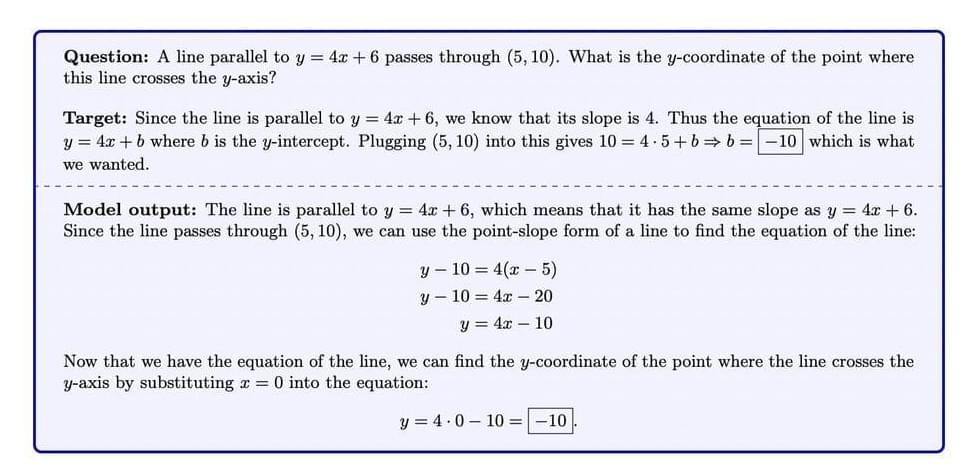
Large language models are widely adopted in a range of natural language tasks, such as question-answering, common sense reasoning, and summarization. These models, however, have had difficulty with tasks requiring quantitative reasoning, such as resolving issues in mathematics, physics, and engineering.
Researchers find quantitative reasoning an intriguing application for language models as they put language models to the test in various ways. The ability to accurately parse a query with normal language and mathematical notation, remember pertinent formulas and constants and produce step-by-step answers requiring numerical computations and symbolic manipulation are necessary for solving mathematical and scientific problems. Therefore, scientists have believed that machine learning models will require significant improvements in model architecture and training methods to solve such reasoning problems.
A new Google research introduces Minerva, a language model that uses sequential reasoning to answer mathematical and scientific problems. Minerva resolves such problems by providing solutions incorporating numerical computations and symbolic manipulation.

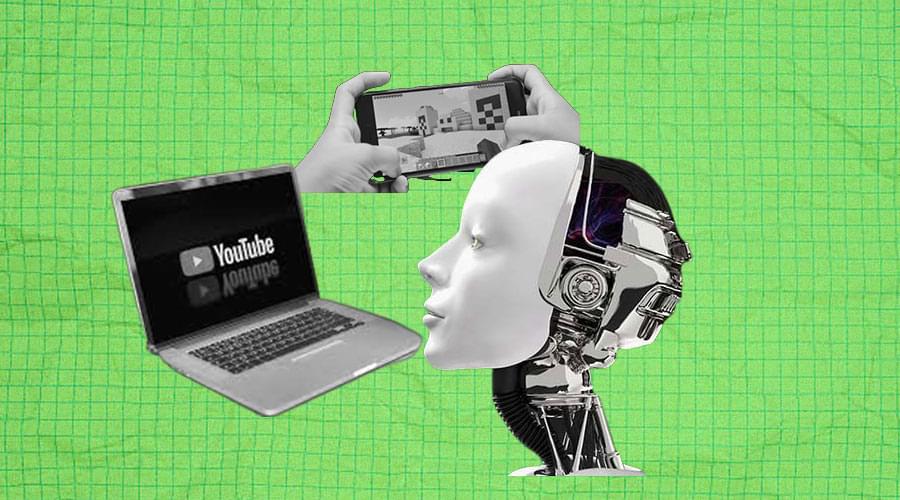
As training regimes go, being forced to watch eight years’ worth of someone else playing Minecraft feels pretty harsh. When the revolution comes I fear OpenAI could be first against the wall after the Robot uprising after what it’s put its latest AI through in order to get it to play the standard version of Minecraft.
OpenAI neural network can now craft a diamond pickaxe off its own back. The detailed blog post on the OpenAI site explains how it managed to teach the network to play Minecraft, and it’s some fascinating stuff. Not least how, of those 70,000 hours of Minecraft gameplay footage, it paid $160,000 to a team of contractors to create and tag up 2,000 hours of footage with labels so the AI could understand what it was looking at and how that related to its actions in the game.
The method is called Video PreTraining (VPT) and it claims its model can learn to craft diamond tools, which it says takes a proficient human around 20 minutes.

Meta’s AI translation work could provide a killer app for AR.
Social media conglomerate Meta has created a single AI model capable of translating across 200 different languages, including many not supported by current commercial tools. The company is open-sourcing the project in the hopes that others will build on its work.
The AI model is part of an ambitious R&D project by Meta to create a so-called “universal speech translator,” which the company sees as important for growth across its many platforms — from Facebook and Instagram, to developing domains like VR and AR. Machine translation not only allows Meta to better understand its users (and so improve the advertising systems that generate 97 percent of its revenue) but could also be the foundation of a killer app for future projects like its augmented reality glasses.