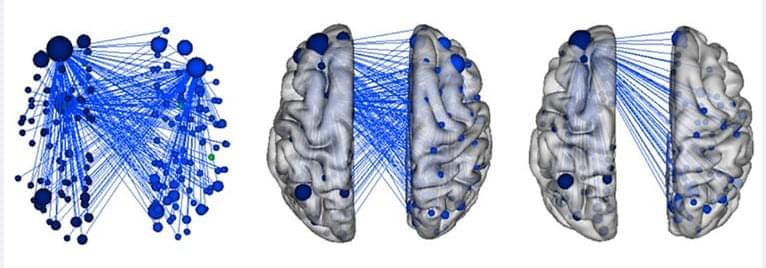
Child psychiatric disorders, such as oppositional defiant disorder and attention-deficit/hyperactivity disorder (ADHD), can feature outbursts of anger and physical aggression. A better understanding of what drives these symptoms could help inform treatment strategies. Yale researchers have now used a machine learning-based approach to uncover disruptions of brain connectivity in children displaying aggression.
In the first study of its kind, Yale researchers use machine learning to find large-scale neural connections linked to aggressive behavior in children.
Abstract: Solar Sails are at the same stage of engineering development as electric motors were in the 1830’s. Each attribute of solar flux has been examined in isolation, such as photon, proton, plasma, and electrodynamic systems. This talk recommends designing a simple baseline system that converges multiple propulsion methods into optimized systems, as is currently done with electric motors. Many convergences can come from this solution space. Once a baseline design is created, AI genetic algorithms can “flight test” and refine the designs in simulation to adjust proportions and geometry. Once a base design is refined, a second AI evolution pass would design fleet systems that flock like birds to optimize performance. These could fly as a protective shield around Mars crewed fleets, provide space based solar power, deploy rapid reaction probes for interstellar comets, and be used in NEO asteroid mining. In the long term, fleets of solar energy management vehicles can provide orbital Carrigan event protection and Martian solar wind protection for terraforming. This talk is also a case study in how technology revolutions happen, and how to accelerate the creation and democratization of technical solutions.
From the 24th Annual International Mars Society Convention, held as a Virtual Convention worldwide on the Internet from October 14–17, 2021. The four-day International Mars Society Convention, held every year since 1,998 brings together leading scientists, engineers, aerospace industry representatives, government policymakers and journalists to talk about the latest scientific discoveries, technological advances and political-economic developments that could help pave the way for a human mission to the planet Mars.
Conference Papers and some presentations will be available on www.MarsPapers.org.
For more information on the Mars Society, visit our website at www.MarsSociety.org.
Delta Air Lines expects 2.5 million passengers to move through the Atlanta airport during the Thanksgiving period. Ahead of the holiday rush, Delta is testing new facial recognition technology to reduce the time it takes between arriving at the airport and getting passengers in their seats.
The company’s senior vice president for customer experience, Ranjan Goswami, said the facial recognition technology has been years in the making and will speed up travel.
In service since 2,002 the Stryker combat vehicles have been constantly upgraded in light of changing warfare techniques. When deployed in Iraq, these combat vehicles had to be protected from the rocket-propelled grenades but were recently found to be lacking against unmanned aerial vehicles (UAVs) in Europe. As warfare moves at lightning speed from drones to drone swarms, General Dynamics, the manufacturer of Stryker vehicles, is looking to arm the vehicle with a directed energy weapon.
To accelerate the pace of this upgrade, the defense manufacturer has teamed up with Los Angeles-based Epirus Inc., which has developed a counter-electronics system, Leonidas, capable of handling single as well as multiple threats.
Laura Hiscott reviews Quantum Technology | Our Sustainable Future by The Quantum Daily.
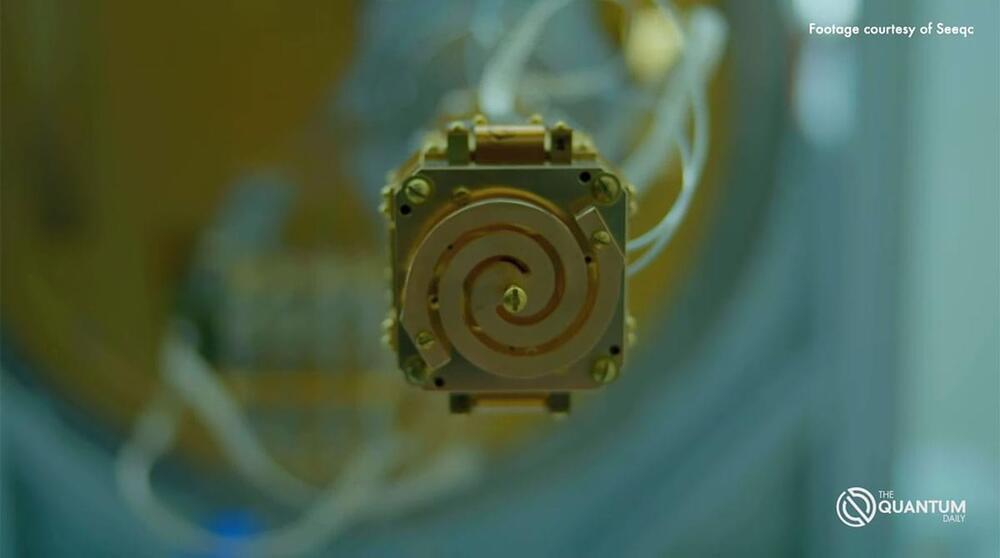
How could quantum computing help us to fix climate change? This is the question at the heart of Quantum Technology | Our Sustainable Future, a half-hour-long documentary published on YouTube in July.
Made by “The Quantum Daily”, a resource for news and information on all things quantum, the documentary consists of interviews with people working in a host of organizations in the sector, from Oxford Instruments NanoScience to Google Quantum AI. The main idea is that, since quantum computers have the potential to be much more powerful than classical ones, they could speed up the discovery of solutions, such as molecules that would be very effective at carbon capture.
For us at the OEC promoting STEM Education and Artificial Intelligence as well as preparing students with future job skills has been our focus for the past 5 years. We would not relent as we know that the robots are not just coming to take over our jobs but they are coming to be our Bosses and many in Africa are not aware of this hence OEC is poised to change the narrative by engaging in Talk shows, workshops, boot camps, seminars, etc. The job is huge but we say thank you to our wonderful partners that have also been there for us each time we call for support. These awards are clarion calls to do more and we would continue to push to see that my dear continent does not lose out in the fourth industrial revolution powered by intelligent machines.
Over the past few years, the business world has increasingly turned towards intelligent solutions to help cope with the changing digital landscape. Artificial intelligence (AI) enables devices and things to perceive, reason and act intuitively—mimicking the human brain, without being hindered by human subjectivity, ego and routine interruptions. The technology has the potential to greatly expand our capabilities, bringing added speed, efficiency and precision for tasks both complex and mundane.
To get a picture of the momentum behind AI, the global artificial intelligence market was valued at $62.35 billion in 2020 and is expected to expand at a compound annual growth rate (CAGR) of 40.2% from 2021 to 2028. Given this projection, it’s not surprising that tech giants such as AWS, IBM, Google and Qualcomm have all made significant investments into AI research, development, disparate impact testing and auditing.
My coverage area of expertise, fintech (financial technology), is no exception to this trend. The AI market for fintech alone is valued at an estimated $8 Billion and is projected to reach upwards of $27 Billion in the next five years. AI and machine learning (ML) have penetrated almost every facet of the space, from customer-facing functions to back-end processes. Let’s take a closer look at these changing dynamics.