Toggle light / dark theme

Tesla FSD About to Go Unsupervised

Tesla’s Full Self-Driving technology is on the verge of a significant breakthrough, with potential approvals and expansions in multiple states and countries, paving the way for widespread adoption in robo-taxis and personal vehicles.

Questions to inspire discussion.

FSD and Robotaxi Progress.
🚗 Q: What is the most important catalyst for Tesla investors? A: Tesla’s Robo Taxi and FSD progress, with a 10x expansion in Austin area in 2 weeks, exponential increase in service area, and unsupervised FSD available for personal use in Texas and California by year-end.

Tesla’s Biggest FSD Problem Isn’t Technical

Questions to inspire discussion.

Marketing and Promotion.

📣 Q: What marketing strategies should Tesla employ to promote FSD? A: Tesla should invest in advertising, highlighting the cost-effectiveness of their vehicles, and invite influencers and press for a special day to meet the AI team and spread the word about FSD.

Technical Advancements.

🧠 Q: What future improvements are planned for Tesla’s FSD? A: Tesla plans to expand FSD capabilities with 10x parameters in future iterations, making it an even more valuable feature and key brand differentiator.

Safety Benefits.

NVIDIA’s new AI tool enables precise editing of 3D scenes and photorealistic images

Over the past years, computer scientists have introduced increasingly sophisticated generative AI models that can produce personalized content following specific inputs or instructions. While image generation models are now widely used, many of them are unpredictable and precisely controlling the images they create remains a challenge.

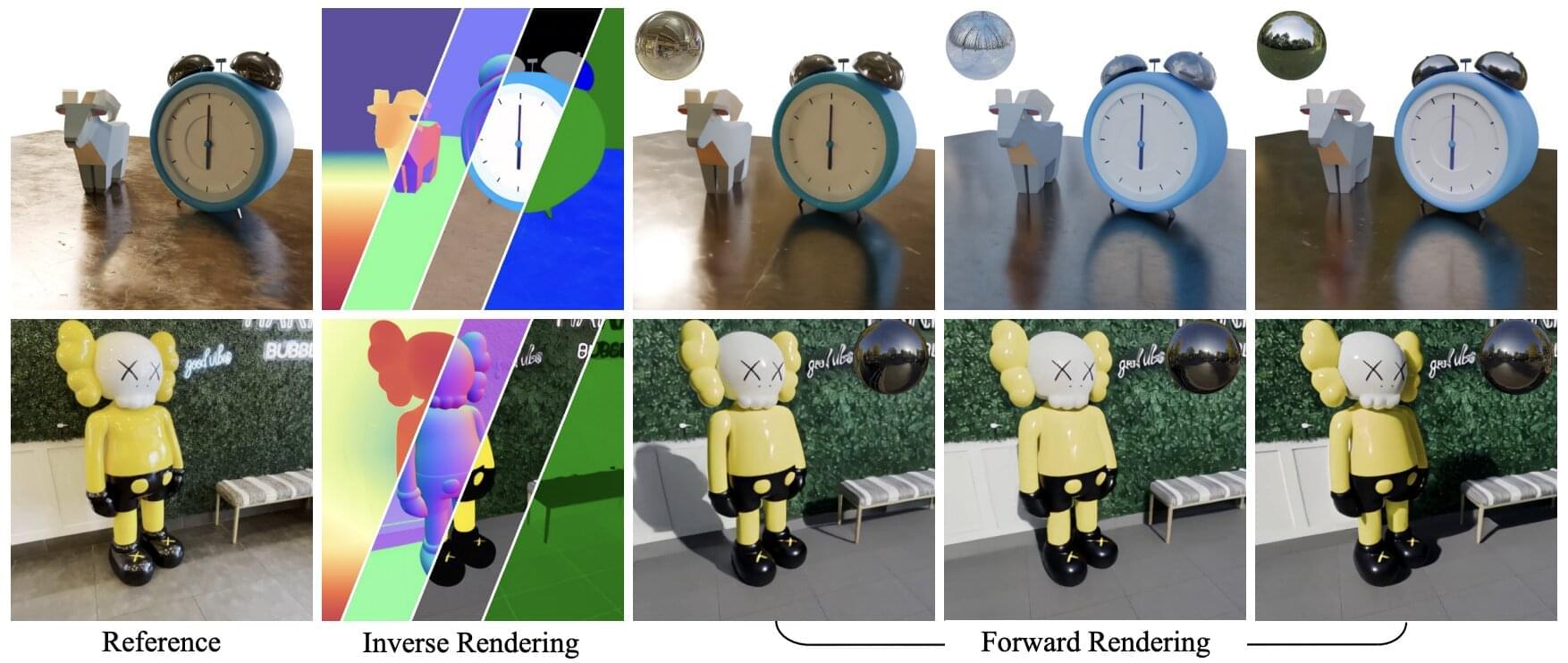
In a recent paper presented at this year’s Conference on Computer Vision and Pattern Recognition (CVPR 2025), held in Nashville, June 11–15, researchers at NVIDIA introduced DiffusionRenderer, a new machine learning approach that could advance the generation and editing of images, allowing users to precisely adjust specific image attributes.

“Generative AI has made huge strides in visual creation, but it introduces an entirely new creative workflow that differs from classic graphics and still struggles with controllability,” Sanja Fidler, VP of AI Research at NVIDIA and head of the Spatial Intelligence lab, told Tech Xplore.

Want to boost your brain as you age? Music might be the answer

Long-term musical training may mitigate the age-related decline in speech perception by enhancing cognitive reserve, according to a study published in PLOS Biology by Claude Alain from the Baycrest Academy for Research and Education, Canada, and Yi Du from the Chinese Academy of Sciences.

Normal aging is typically associated with declines in sensory and cognitive functions. These age-related changes in perception and cognition are often accompanied by increased neural activity and functional connectivity—the statistical dependence of activity between different brain regions—in widely distributed neural networks.

The recruitment of neural activity and strengthening of functional connectivity are thought to reflect a compensatory strategy employed by older adults to maintain optimal cognitive performance.

Former Google CEO Eric Schmidt warns of AI superintelligence outpacing Earth’s energy limits: ‘Chips will outrun power needs’

AIs future may be limited not by chips, but by the power to run them. Eric Schmidt highlights how data centers fueling AI models are consuming record amounts of water and electricity, risking an environmental crisis. As big tech races toward superintelligence, the looming question is whether our energy grid can handle the load.

New surveillance technology can track people by how they disrupt Wi-Fi signals

Hi-tech surveillance technologies are a double-edged sword. On the one hand, you want sophisticated devices to detect suspicious behavior and alert authorities. But on the other, there is the need to protect individual privacy. Balancing public safety and personal freedoms is an ongoing challenge for innovators and policymakers.

This debate is set to reignite with news that researchers at La Sapienza University in Rome have developed a system that can identify individuals just by the way they disrupt Wi-Fi signals.

The scientists have dubbed this new technology “WhoFi.” Unlike traditional biometric systems such as fingerprint scanners and , it doesn’t require direct physical contact or visual feeds. WhoFi can also track individuals in a larger area than a fixed-position camera, provided there is a Wi-Fi network.

Neural biomarkers identified for obsessive-compulsive disorder symptoms in deep brain networks

For the first time, researchers at the Netherlands Institute for Neuroscience and Amsterdam UMC have identified what happens in neural networks deep within the brain during obsessive thoughts and compulsive behaviors. Using electrodes implanted in the brain, they observed how specific brain waves became active. These brain waves serve as a biomarker for obsessive-compulsive disorder (OCD) and are an important step towards more targeted treatments.

OCD is a psychiatric disorder in which people suffer from obsessive thoughts (obsessions) and compulsive behaviors (compulsions). A well-known example is fear of contamination: someone is constantly afraid of becoming infected (the obsession) and feels compelled to wash their hands over and over again (the compulsion).

In OCD, communication appears to be disrupted between the , the striatum, and the thalamus, areas of the brain that together form the CSTC circuit. Normally, this circuit mainly coordinates movement and motivation.

New Koske Linux malware hides in cute panda images

A new Linux malware named Koske may have been developed with artificial intelligence and is using seemingly benign JPEG images of panda bears to deploy malware directly into system memory.

Researchers from cybersecurity company AquaSec analyzed Koske and described it as “a sophhisticated Linux threat.” Based on the observed adaptive behavior, the researchers believe that the malware was developed using large language models (LLMs) or automation frameworks.

Koske’s purpose is to deploy CPU and GPU-optimized cryptocurrency miners that use the host’s computational resources to mine over 18 distinct coins.

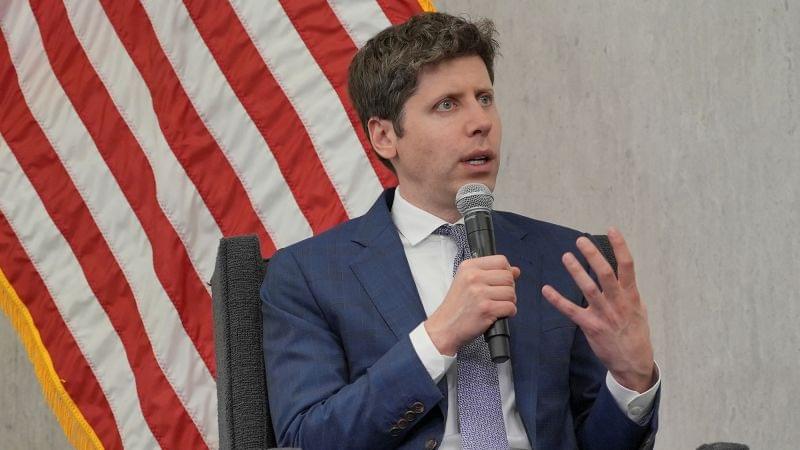
OpenAI CEO Sam Altman warns of an AI ‘fraud crisis’

OpenAI CEO Sam Altman says the world may be on the precipice of a “fraud crisis” because of how artificial intelligence could enable bad actors to impersonate other people.

“A thing that terrifies me is apparently there are still some financial institutions that will accept a voice print as authentication for you to move a lot of money or do something else — you say a challenge phrase, and they just do it,” Altman said. “That is a crazy thing to still be doing… AI has fully defeated most of the ways that people authenticate currently, other than passwords.”

The comments were part of his wide-ranging interview about the economic and societal impacts of AI at the Federal Reserve on Tuesday. He also told the audience, which included, representatives of large US financial institutions, about the role he expects AI to play in the economy.

/* */