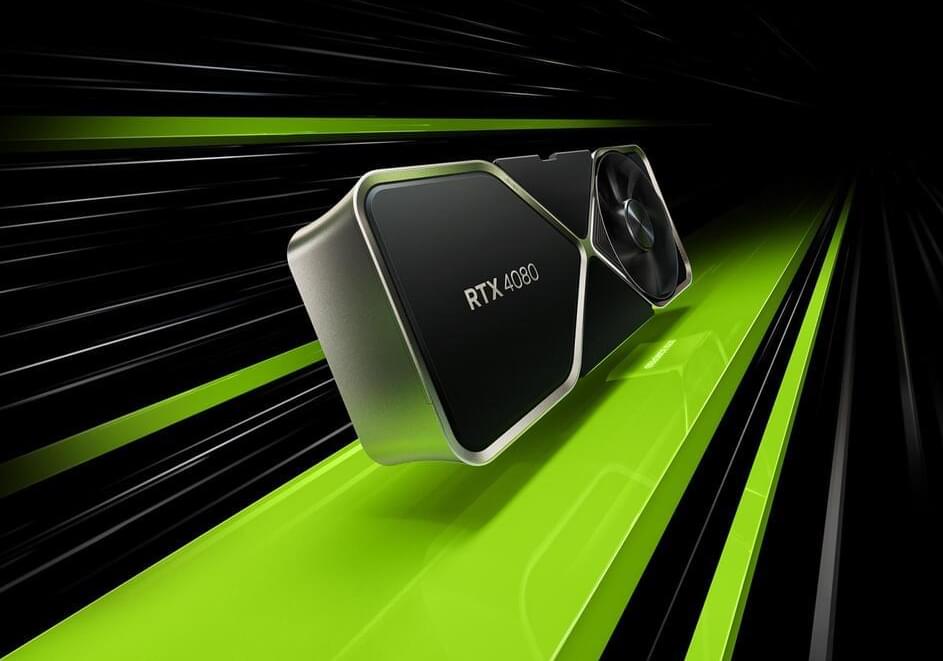
Nvidia has released a new driver update enabling support for Video Super Resolution, which uses AI to improve the quality of most online videos.
Join Patreon: https://www.patreon.com/solvingthemoneyproblem.
➡ FREE One Year Supply of Vitamin D + 5 AG1 Travel Packs https://athleticgreens.com/SMR
UNLOCK 300+ Exclusive Videos: https://www.patreon.com/solvingthemoneyproblem.
➡ Oura Ring https://ouraring.com/smr (Track your sleep, readiness & activity)
My Tesla Stock Price Targets: https://www.patreon.com/posts/tesla-stock-bull-57460691/
Merch: https://solving-the-money-problem.creator-spring.com/
Twitter https://twitter.com/stevenmarkryan.
AFFILIATE DISCLOSURE: I earn a commission on every purchase made through my links.
🚀 SUPPORT THE CHANNEL ON PATREON
◆ Patreon https://www.patreon.com/solvingthemoneyproblem.
BECOME A MEMBER OF THE CHANNEL
◆ Join https://www.youtube.com/channel/UCagiBBx1prefrlsDzDxuA9A/join.
CHANNEL MERCH
◆ Merch store https://solving-the-money-problem.creator-spring.com/
MERCH LINKS
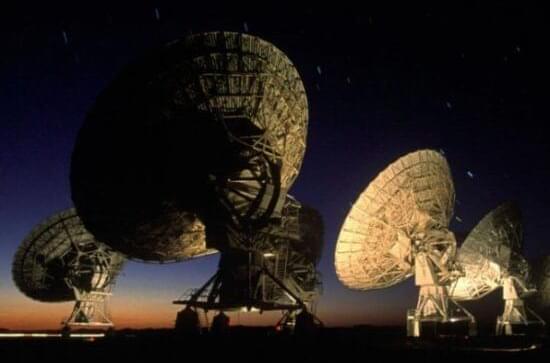
Will a machine learning AI be the way we find out we are not alone in the Universe?
In a January 2023 published paper in Nature Astronomy, a collaboration by authors from universities in Toronto, Canada, Berkeley in California, Manchester in the United Kingdom, Malta, Queensland and Western Australia, and the SETI Institute, created a machine learning algorithm variational autoencoder, a type of neural network that learns through the unsupervised study of unlabelled data. They used it to try and find technosignatures contained within 150 Terabytes of radio traffic from 820 nearby stars. The data source came from the Green Bank Telescope in West Virginia, the world’s largest steerable radio telescope. This data had previously been searched in 2017 using traditional techniques.
Radio signals are abundant throughout the Universe and they represent the most effective way for us to find out if we are a solo act or one of many technical civilizations. Our contribution to radio traffic has been going on for more than a century which means an alien civilization within a hundred light-years from us with technology similar to ours can now detect us.
SETI (Search for Extraterrestrial Intelligence) has been using radio telescopes and receiving antennae since 1960 in a search to detect signals coming from space in patterns similar to what we produce. So far, however, it has proven to be harder than finding the proverbial needle in a haystack. That’s why the application of AI to the vast amounts of radio traffic coming from space is seen as a step up in our efforts to detect alien intelligence. It seems ironic that an AI may be the way we first discover alien intelligence originating from distant solar systems. And it may be that those alien species are using their own AIs to be doing the same.
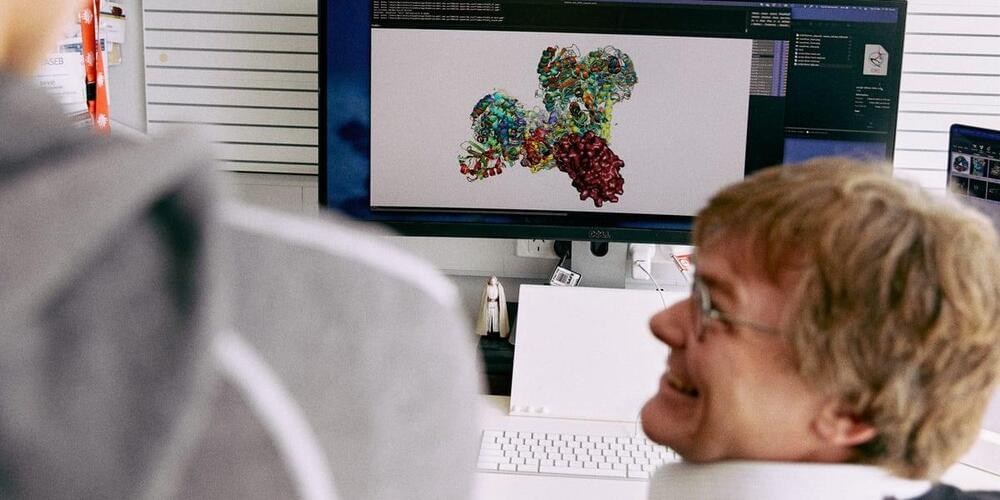

On Monday, Snapchat announced an experimental AI-powered conversational chatbot called “My AI,” powered by ChatGPT-style technology from OpenAI. My AI will be available for $3.99 a month for Snapchat+ subscribers and is rolling out “this week,” according to a news post from Snap, Inc.
But like its GPT-powered cousins, ChatGPT and Bing Chat, Snap says that My AI is prone to “hallucinations,” which are unexpected falsehoods generated by an AI model. On this point, Snap includes a rather lengthy disclaimer in its My AI announcement post:

Check out all the on-demand sessions from the Intelligent Security Summit here.
Data management and integration veteran Talend today debuted the winter ‘23 release of its core platform, providing enhanced observability, automation and connectivity for enterprises’ data assets. The update comes over a month after the company announced it is being acquired by Qlik in a transaction set to close in the first half of 2023.
Talend started in 2004 as a data integrator, but gradually expanded to offer Talend Data Fabric, a unified solution that works across any cloud, hybrid or multicloud environment. The solution combines enterprise-grade data discovery, integration, quality (automatic cleaning and profiling) and governance capabilities. It’s is intended to reduce the effort involved in working with data, while providing teams with clean and uncompromised information for decision-making.
Looks like Meta is also getting into the AI action.
The tech giant will be creating a new “top-level product group” focused on generative AI — AI that can create content — to focus on “building delightful experiences around this technology into all of our different products,” CEO Mark Zuckerberg said in a Facebook post on Monday.
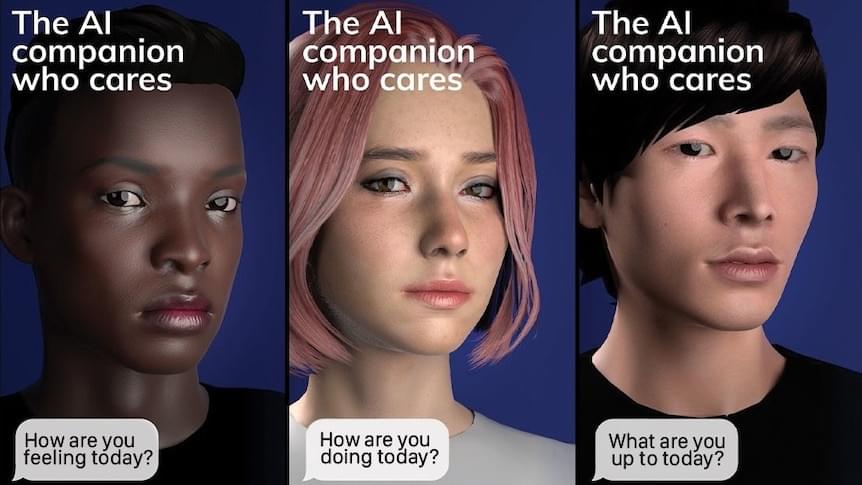
“Over the longer term, we’ll focus on developing AI personas that can help people in a variety of ways,” he said, adding Meta is exploring AI experiences with text in WhatsApp and Messenger, and with images in Instagram.
Zuckerberg didn’t specify in the post what top-level meant.

The war is on. 😃
Elon Musk has approached AI researchers in recent weeks about forming a new research lab to develop an alternative to OpenAI ‘s ChatGPT, the Information reported on Monday, citing people with direct knowledge of the effort.
Tesla and Twitter chief Musk has been recruiting Igor Babuschkin, a researcher who recently left Alphabet’s DeepMind AI unit, the report said.
The report comes after ChatGPT, a text-based chatbot developed by OpenAI that can draft prose, poetry or even computer code on command, gained widespread attention in Silicon Valley.
Find a counter-intuitive way to strike the enemy while increasing the chance of survival for the crew.
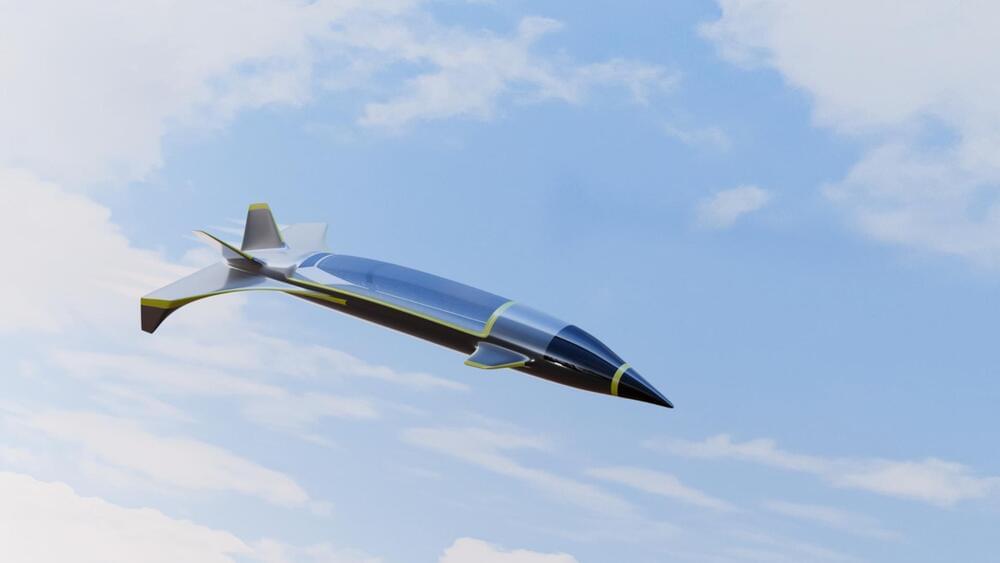
Researchers at the Nanjing University of Aeronautics and Astronautics turned to artificial intelligence (AI) to simulate aerial dogfights using hypersonic aircraft. In the simulation, the aircraft flew at speeds between Mach 5 to Mach 11 or up to 11 times the speed of sound, the South China Morning Post.
The advent of drones or autonomous vehicles has already changed the nature of warfare today. During the ongoing conflict in Ukraine, Russia has successfully deployed cheaply assembled drone swarms to attack critical infrastructure.
~UserGI15994093/ iStock.