Toggle light / dark theme

Mind-Controlled Robots: New Graphene Sensors Are Turning Science Fiction Into Reality

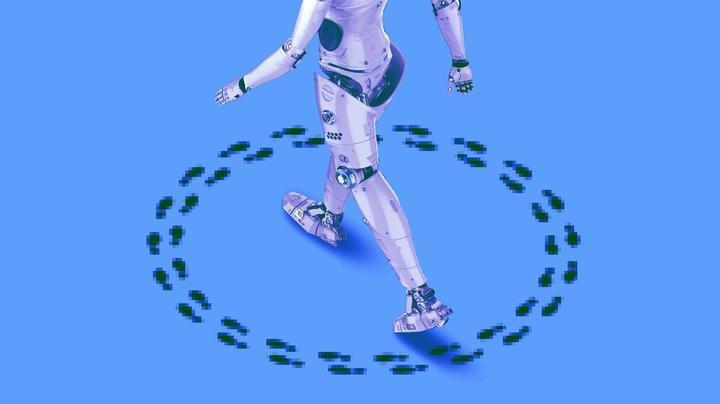
Researchers have designed a 3D-patterned, graphene.

Graphene is an allotrope of carbon in the form of a single layer of atoms in a two-dimensional hexagonal lattice in which one atom forms each vertex. It is the basic structural element of other allotropes of carbon, including graphite, charcoal, carbon nanotubes, and fullerenes. In proportion to its thickness, it is about 100 times stronger than the strongest steel.

Developing a robot that will help blind children chat with sighted friends

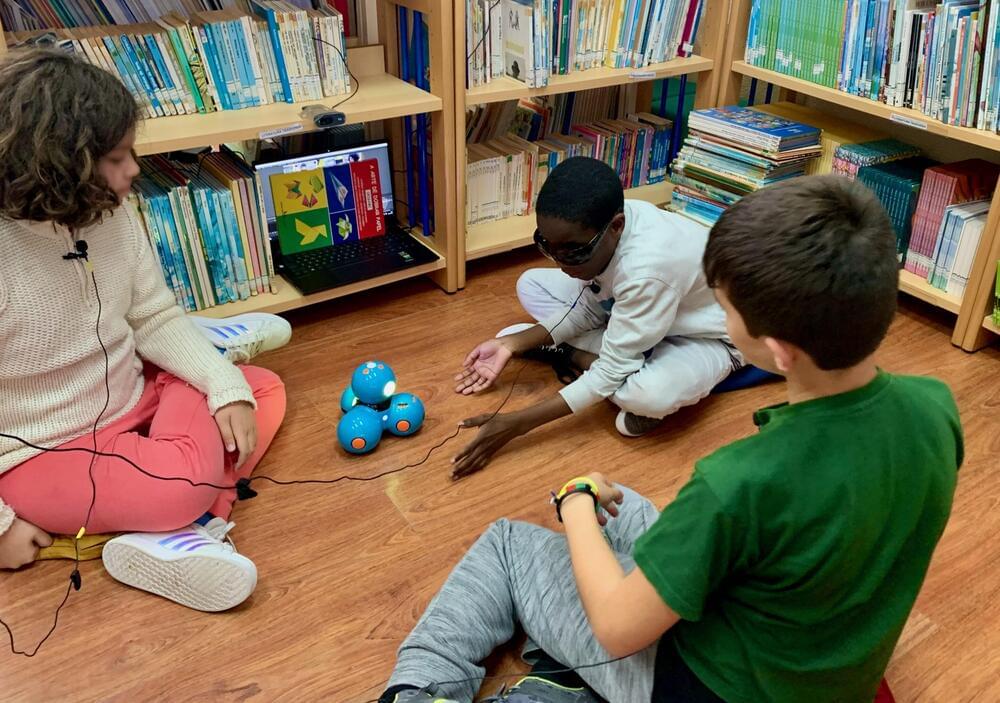
A new accessibility-focused robot under development will allow children of mixed visual abilities to have a balanced conversation where everyone participates equally.

Researchers at the Interactive Technologies Institute have recently released a study on using a robot to mediate group discussions between children with mixed–.

The team presented the study during the ACM/IEEE conference this March in Stockholm, and it’s now published as part of the Proceedings of the 2023 ACM/IEEE International Conference on Human-Robot Interaction.

I Used AI To Make A Game (ZERO Coding Experience)

Here’s a breakdown of how I used AI to make a video game.

Here’s the game: https://mreflow.com/jump-game/

🛠️ Explore hundreds of AI Tools: https://futuretools.io/
📰 Weekly Newsletter: https://www.futuretools.io/newsletter.
😊 Discord Community: https://futuretools.io/discord.
🐤 Follow me on Twitter: https://twitter.com/mreflow.
🐺 My personal blog: https://mattwolfe.com/
🌯 Buy me a burrito: https://ko-fi.com/mattwolfe.

🍭 My Backgrounds: https://www.futuretools.io/desktop-backgrounds.

Outro music generated by Mubert https://mubert.com/render.

#AIGame #gamedev #gpt4

Merging Artificial Intelligence and Physics Simulations To Design Innovative Materials

Max Planck scientists explore the possibilities of artificial intelligence in materials science and publish their review in the journal Nature Computational Science.

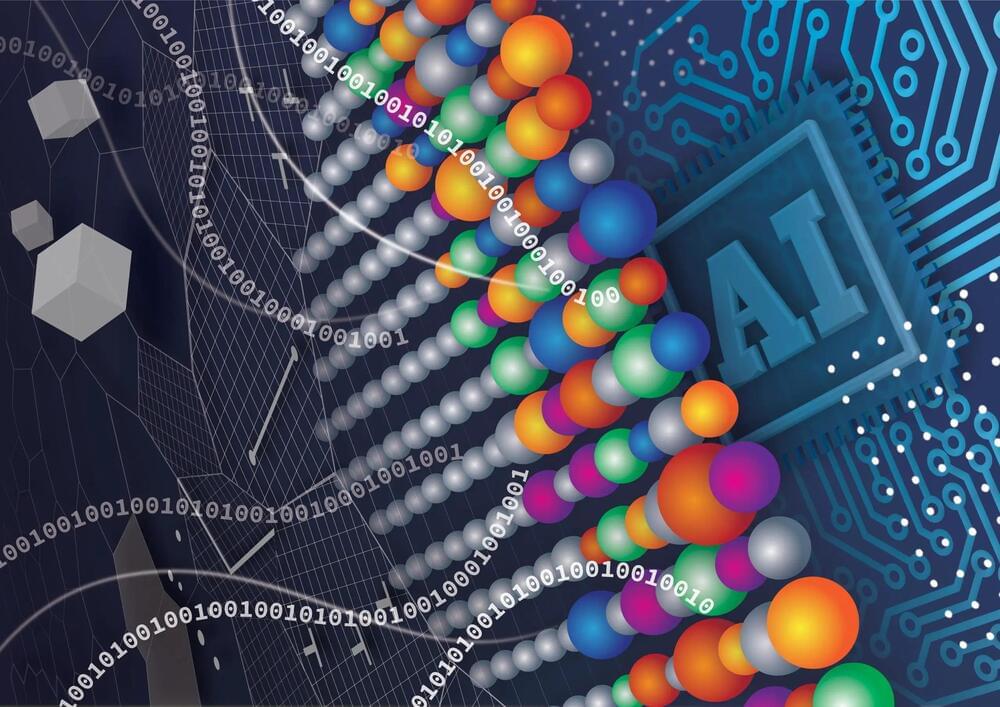
Advanced materials become increasingly complex due to the high requirements they have to fulfil regarding sustainability and applicability. Dierk Raabe, and colleagues reviewed the use of artificial intelligence in materials science and the untapped spaces it opens if combined with physics-based simulations. Compared to traditional simulation methods, AI has several advantages and will play a crucial role in material sciences in the future.

Advanced materials are urgently needed for everyday life, be it in high technology, mobility, infrastructure, green energy or medicine. However, traditional ways of discovering and exploring new materials encounter limits due to the complexity of chemical compositions, structures and targeted properties. Moreover, new materials should not only enable novel applications, but also include sustainable ways of producing, using and recycling them.

Post-Singularity Predictions — How will our lives, corporations, and nations adapt to AI revolution?

Patreon: https://www.patreon.com/daveshap.
GitHub: https://github.com/daveshap.
Discord: https://discord.gg/yqaBG5rh4j.

Reddit: https://www.reddit.com/r/ArtificialSentience/
Reddit: https://www.reddit.com/r/HeuristicImperatives/

DISCLAIMER: This video is not medical, financial, or legal advice. This is just my personal story and research findings. Always consult a licensed professional.

I work to better myself and the rest of humanity.

Artificial Intelligence: The Ethics and the Future of Humanity

Progress is speeding up even as the world barrels toward one of innumerable disasters. What lies ahead, and what should we do when we get there? In the best-case scenario, we may still have control over our direction.

BECOME A PATRON: ⁠https://www.patreon.com/TonyTalksBack
Or, make a one-time donation here: ⁠https://paypal.me/TonyTalksBack
Follow on social media for updates on new content and releases:
https://www.facebook.com/TonyTalksBack/
https://twitter.com/TonyTalksBack.

All photos made with Wonder AI:
https://www.wonder-ai.com/

Music credits:

“Half Mystery” Kevin MacLeod (incompetech.com)
Licensed under Creative Commons: By Attribution 4.0 License.
http://creativecommons.org/licenses/by/4.

“Hypnothis” Kevin MacLeod (incompetech.com)

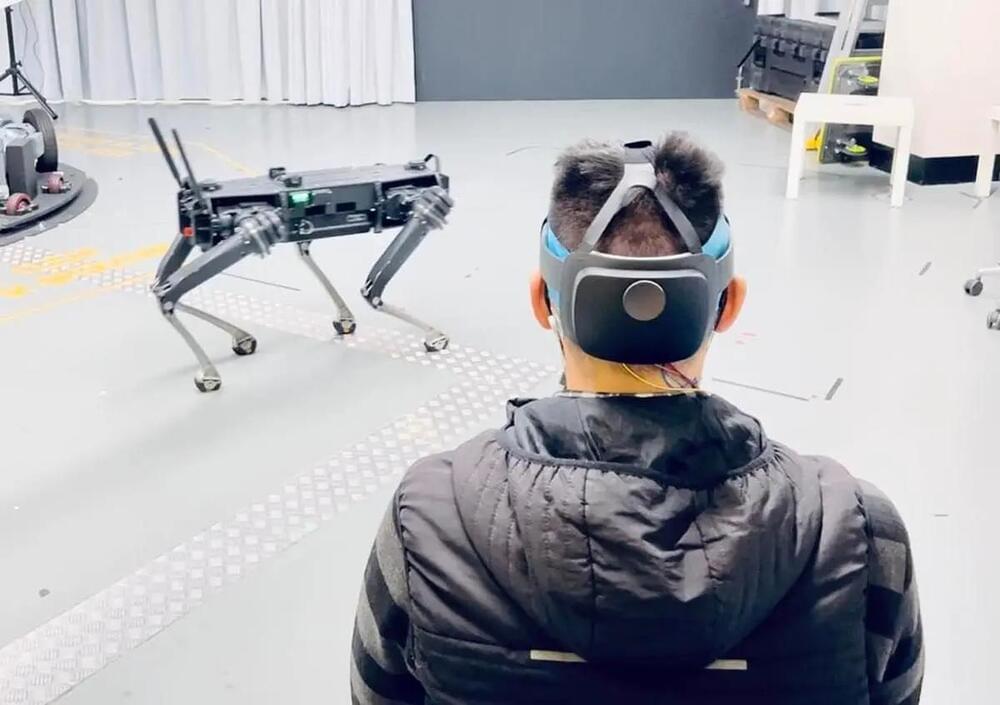
A Sensor That Might Someday Enable Mind-Controlled Robots

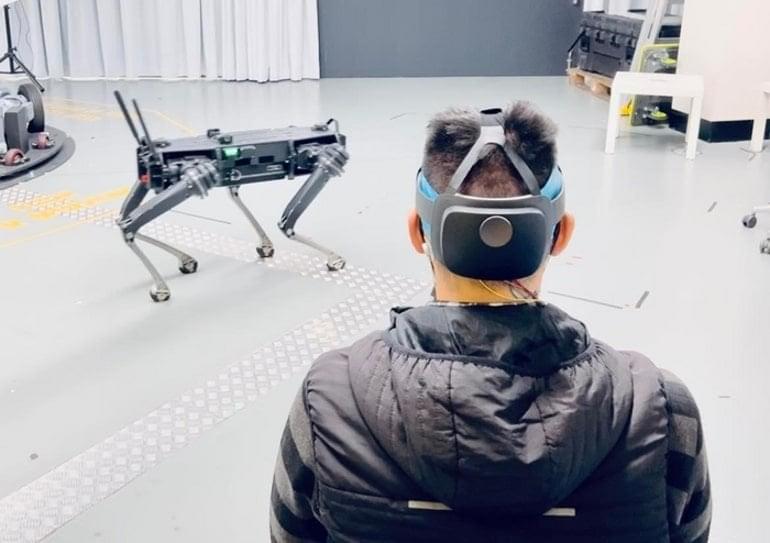
Summary: A newly designed dry sensor that can measure brain activity may someday enable mind control of robotic systems.

Source: American Chemical Society.

It sounds like something from science fiction: Don a specialized, electronic headband and control a robot using your mind. But now, recent research published in ACS Applied Nano Materials has taken a step toward making this a reality.

/* */