Toggle light / dark theme

AI-powered dance animator applies generative AI to choreography

Stanford University researchers have developed a generative AI model that can choreograph human dance animation to match any piece of music. It’s called Editable Dance GEneration (EDGE).

“EDGE shows that AI-enabled characters can bring a level of musicality and artistry to animation that was not possible before,” says Karen Liu, a professor of computer science who led a team that included two student collaborators, Jonathan Tseng and Rodrigo Castellon, in her lab.

The researchers believe that the tool will help choreographers design sequences and communicate their ideas to live dancers by visualizing 3D dance sequences. Key to the program’s advanced capabilities is editability. Liu imagines that EDGE could be used to create computer-animated dance sequences by allowing animators to intuitively edit any parts of dance motion.

Avengers’ Director Joe Russo Predicts AI Could Be Making Movies in ‘Two Years’: It Will ‘Engineer and Change Storytelling

Called it. and i said 2029/2030. Looks like will happen sooner. my prediction was AI would be able to do 100% of production start to end, with almost zero input from people, except maybe for a creative director — producer person.


As artificial intelligence continues to disrupt the entertainment industry, many moviegoers have been left wondering at what point AI will be creating full feature films. According to Joe Russo, co-director of Marvel movies such as “Avengers: Endgame” and “Avengers: Infinity War,” that time could be coming in two years.

“I’m on the board of a few AI companies,” Russo told Collider. “I’m gonna speak from my experience of being on the board of those companies, [so] there are AI companies that are developing AI to protect you from AI. And unfortunately, we’re in that world, and you will need an AI in your life because whether we want to see it developed or not, people who are not friendly to us may develop it anyways. So, we’re going to be in that future. The question is, then, how we protect ourselves in that future?”

Opinion letter from Ray Kurzweil on request for 6 month delay on large language models that go beyond GPT-4 « Kurzweil

Kurzweil says NO, on AI pause non sense.


By Ray Kurzweil April 2023

Regarding the Open Letter to “pause” research on AI “more powerful than GPT-4,” this criterion is too vague to be practical. And the proposal faces a serious coordination problem: those that agree to a pause may fall far behind corporations or nations that disagree. There are tremendous benefits to advancing AI in critical fields such as medicine and health, education, pursuit of renewable energy sources to replace fossil fuels, and scores of other fields. I didn’t sign, because I believe we can address the signers’ safety concerns in a more tailored way that doesn’t compromise these vital lines of research.

Japan firm’s pioneering Moon landing fails

A Japanese startup attempting the first private landing on the Moon said Wednesday it had lost communication with its spacecraft and assumed the lunar mission had failed.

Ispace said that it could not establish communication with the unmanned Hakuto-R after its expected landing time, a frustrating end to a mission that began with a launch from the United States over four months ago.

“We have not confirmed communication with the lander,” a company official told reporters about 25 minutes after the expected landing.

GigaChat: Russia enters AI race with its ChatGPT rival

The AI is great at Russian but not so much in foreign languages.

Russia is the latest entrant to the artificial intelligence (AI) race as, mostly state-owned, Sberbank announced the launch of GigaChat, a rival to a conversational chatbot, ChatGPT. The move could heat the competition among countries looking to assume leadership positions in the technology that has taken the world by storm.

Last November, OpenAI launched ChatGPT, an AI model that can strike human-like conversations with its users. As more and more people began using ChatGPT, AI’s versatility became known.

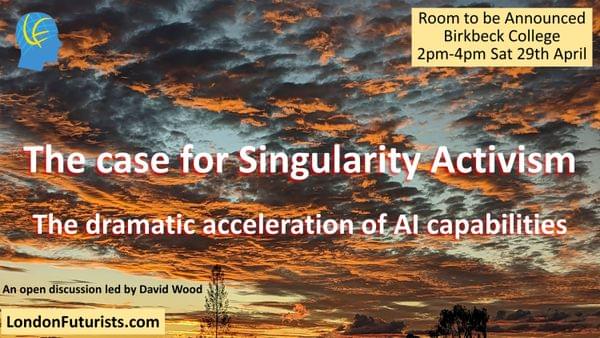
The case for Singularity Activism

New AI systems released in 2023 demonstrate remarkable properties that have taken most observers by surprise. The potential both for positive AI outcomes and negative AI outcomes seems to have been accelerated. This leads to five responses:

1.) “Yawn” — AI has been overhyped before, and is being overhyped again now. Let’s keep our attention on more tangible issues.

2.) “Full speed ahead with more capabilities” — Let’s get to the wonderful positive outcomes of AI as soon as possible, sidestepping those small-minded would-be regulators who would stifle all the innovation out of the industry.

This Harvard Law Professor is an Expert on Digital Technology

Type: departments.

careers.

Harvard.

Cybersecurity.

internet.

law.

[article elid=2659855688 data-frozen-sections=[] class= clearfix page-article sm-mb-1 quality-HD post-2659855688 data-category= Careers]

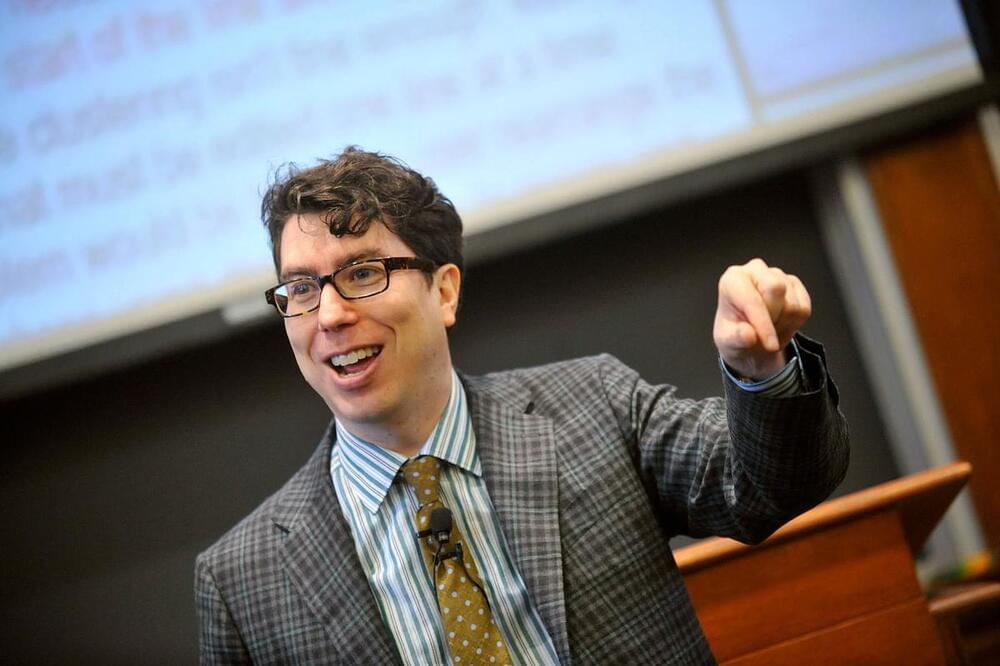
Jonathan L. Zittrain wears many hats. An expert on the Internet, digital technology, law, and public policy, he regularly contributes to public discussions about what digital tech is doing to us and what we should do about it—most recently around the governance of AI and the incentives that shape major social media platforms.

He holds several roles, all at Harvard, reflecting his many converging interests. He is a professor of international law at Harvard Law School, a professor of public policy at its Kennedy School, and a professor of computer science at the university’s John A. Paulson School of Engineering and Applied Sciences. He’s also cofounder and faculty director of Harvard’s Berkman Klein Center for Internet & Society.

In his various capacities, he has been tackling many sticky cyberpolicy issues over the past 25 years.

Internet Training Data Of ChatGPT Can Be Used For Non-Allied Purposes Including Privacy Intrusions, Frets AI Ethics And AI Law

Keep your eye on the prize, but meanwhile don’t lose sight of other nifty opportunities too. What am I talking about? During the famous Gold Rush era, eager prospectors sought the dreamy riches of unearthed gold. Turns out that very few actually struck it rich by discovering those prized gold nuggets. You might be surprised to know that while panning for gold, there was a possibility of finding other precious metals. The erstwhile feverish desire to get gold would sometimes overpower the willingness to mine silver, mercury, and other ores that were readily seen while searching for gold.


It all has to do with data, particularly data mined or scanned from the Internet that is then used principally to data train generative AI apps.

OpenAI’s ChatGPT and its successor GPT-4 would not exist if it were not for all the data training undertaken to get the AI apps into shape for doing Natural Language Processing (NLP) and performing interactive conversations with humans. The data training entailed scanning various portions of the Internet, see my explanation at the link here. In the case of text-to-text or text-to-essay generative AI, the mainstay of ChatGPT, all kinds of text were scanned to ferret out patterns of how humans use words.

I’ll say more about this in a moment.

/* */