Toggle light / dark theme

Quantum leap: How quantum sensors are revolutionizing robotics

Head over to our on-demand library to view sessions from VB Transform 2023. Register Here

The recent Ant-Man movie did a great job of putting quantum up in lights, but the future of quantum science shines even brighter than fiction. One application, quantum sensors, is already the basis of some of the most important systems and technologies in our world — global positioning systems (GPS) and magnetic resonance imaging (MRI) scanners are prime examples.

Quantum sensors and quantum AI are just the beginning: Robots are now getting the quantum sensor treatment too. Quantum sensors will supercharge the way robots work and how we apply them to important 21st-century challenges.


New acoustic attack steals data from keystrokes with 95% accuracy

A team of researchers from British universities has trained a deep learning model that can steal data from keyboard keystrokes recorded using a microphone with an accuracy of 95%.

When Zoom was used for training the sound classification algorithm, the prediction accuracy dropped to 93%, which is still dangerously high, and a record for that medium.

Such an attack severely affects the target’s data security, as it could leak people’s passwords, discussions, messages, or other sensitive information to malicious third parties.

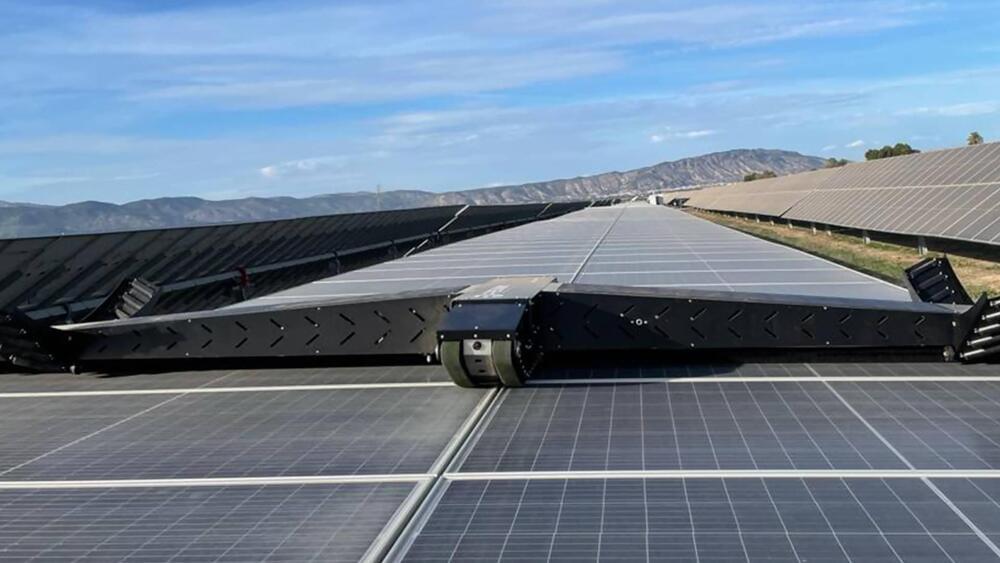
This new robot cleans solar panels without using any water

It reduces water wastage and carbon emissions.

“When it comes to photovoltaics, dust is the enemy. This is not a trivial concept, even if it may seem so at first glance; actually, the problem of soiling – the accumulation of dust, dirt or sand on PV panels – can decrease, sometimes significantly, the performance of solar power systems,” stated an Enel Green Power press release published on Friday.

Desert areas

“It’s an issue that’s particularly important in desert areas, areas with low rainfall, and those characterized by the presence of very dusty soil, where soiling can have a heavy impact on energy yield, but in any case, it’s something that concerns solar power everywhere, because regardless of location, cleaning the panels still involves costs, including environmental ones.”

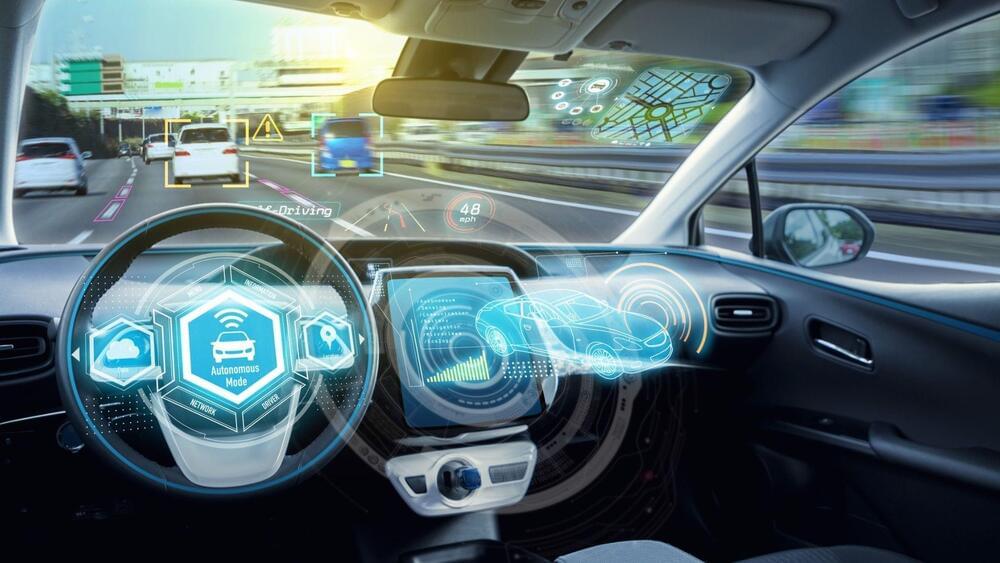
China’s top SUV maker to add ChatGPT-like bot into cars

Great Wall Motor will use Baidu’s Ernie 3.5 foundational language model which rivals OpenAI’s ChatGPT4.

Marking the entry of AI systems into mass-market cars, Chinese automaker Great Wall Motor (GWM) is set to integrate Baidu’s ChatGPT-like AI system, which enables conversation between driver and car.

According to South China Morning Post (SCMP). GMW has partnered with technology firm Baidu to produce automobiles integrated with the latter’s chatbot tool, Ernie Bot, bolstering a push to make cars more intelligent and user-friendly.

Meta to launch AI-powered chatbots with ‘personas’ in September

Mark Zuckerberg is set to enter the AI space and join the AI hype by launching chatbots on Facebook’s social media platforms.

With tech giant companies joining the artificial intelligence race to keep up with the new technology demand, Meta’s owner is all set to launch a variety of AI-backed chatbots.

Financial Times (FT) reported earlier today (2 Aug 2023) that the chatbots will launch as soon as next month. With the ambition to boost engagement, the tech giant has been designing new persona-based chatbot prototypes that can have humanlike discussions with its nearly four billion users.

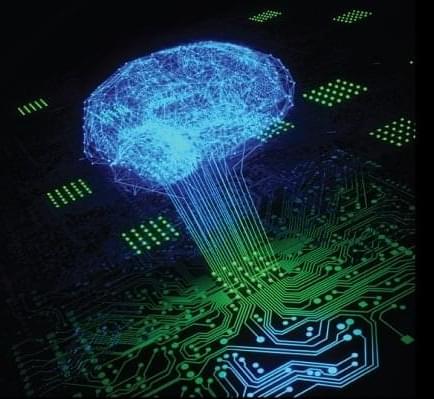
Photonic Computing System Rethinks How to Power Familiar AI Tool

Researchers from MIT have demonstrated a photonics-based computing system that could lead to machine-learning programs several orders of magnitude more powerful than the one behind ChatGPT. The researchers reported a greater than 100-fold improvement in energy efficiency and a 25-fold improvement in compute density — a measure of system power — over state-of-the-art digital computers for machine learning.

In the near term, the researchers’ experimental, laser-based system could be further developed to improve these metrics by two more orders of magnitude, the researchers said.

Future cities: Urban planners get creative | DW Documentary

The future of cities as seen by architects and urban planners. Future cities: Urban planners get creative | DW DocumentaryYOUTUBE.COMFuture cities: Urban planners get creative | DW Documentary.


Will the cities of the future be climate neutral? Might they also be able to actively filter carbon dioxide out of the air? Futurologist Vincente Guallarte thinks so. In fact, he says, our cities will soon be able to absorb CO2, just like trees do.

To accomplish this, Guallarte wants to bring sustainable industries and agriculture to our urban centers, with greenhouses atop every building. But in order for Guallarte’s proposal to work, he says, cities will have learn to submit to the laws and principles of nature.

Urban planners also have big plans for our energy supply. In the future, countries like Germany could become energy producers. In Esslingen am Neckar, residents are working on producing green hydrogen in homes, to be used as fuel for trucks. It’s a project that‘s breaking new ground, says investor Manfred Norbert.

Our future cities will be all about redefining a new normal. Architects and urban planners are expecting to see entirely new approaches to communal living, as well as new urban concepts for autonomous supply chains. The repurposing of old buildings, and the generation of food as well as energy, are other important topics.

Unleashing Photonic Power: Groundbreaking Advancements in Optical Computing

In a breakthrough for optical computing, researchers developed a nanosecond-scale volatile modulation scheme integrating a phase-change material.

Technological advancements such as autonomous driving and computer vision have spurred a significant increase in demand for computational power. Optical computing, characterized by its high throughput, energy efficiency, and low latency, has attracted significant interest from both academia and industry. However, current optical computing chips are hampered by their power consumption and size, which limit the scalability of optical computing networks.

Nonvolatile integrated photonics has emerged to address these issues, offering optical computing devices the ability to perform in-memory computing while operating with zero static power consumption. Phase-change materials (PCMs), with their high refractive index contrast between different states and reversible transitions, have become promising candidates for enabling photonic memory and nonvolatile neuromorphic photonic chips. This makes PCMs ideally suited for large-scale nonvolatile optical computing chips.

Chinese tech giant Alibaba challenges Meta with open-sourced A.I. model launch

In April, Alibaba launched its large language model (LLM) called Tongyi Qianwen. A LLM is an artificial intelligence model trained on huge amounts of data. It is also the basis for generative AI applications, such as ChatGPT — which generate human-like responses to user prompts.

Tongyi Qianwen allows AI content generation in English and Chinese and has different model sizes, including seven billion parameters and above. A model’s parameters refer to its power.

Alibaba will be open-sourcing the seven-billion-parameter model called Qwen-7B, along with a version designed for conversational apps, called Qwen-7B-Chat. This means that researchers, academics and companies globally can use the model to create their own generative AI apps without needing to train their own systems, saving time and expense. Companies with more than 100 million monthly active users will require a royalty-free license from Alibaba to do so.

/* */