Toggle light / dark theme

AI just beat a human test for creativity. What does that even mean?

Large language models are getting better at mimicking human creativity. That doesn’t mean they’re actually being creative, though.

AI is getting better at passing tests designed to measure human creativity. In a study published in Nature Scientific Reports today, AI chatbots achieved higher average scores than humans in the Alternate Uses Task, a test commonly used to assess this ability.

This study will add fuel to an ongoing debate among AI researchers about what it even means for a computer to pass tests devised for humans. The findings do not necessarily indicate that AIs are developing an ability to do something uniquely human. It could just be that AIs can pass creativity tests, not that… More.

Chuck Schumer says he asked Musk, Gates and others about whether to regulate AI: ‘Every single person raised their hands’

Among the ideas discussed was whether there should be an independent agency to oversee certain aspects of the rapidly-developing technology, how companies could be more transparent and how the United States can stay ahead of China and other countries.

“The key point was really that it’s important for us to have a referee,” said Elon Musk, CEO of Tesla and X, during a break in the daylong forum. “It was a very civilized discussion, actually, among some of the smartest people in the world.”

Schumer will not necessarily take the tech executives’ advice as he works with colleagues on the politically difficult task of ensuring some oversight of the burgeoning sector. But he invited them to the meeting in hopes that they would give senators some realistic direction for meaningful regulation.

Bing, Bard, and ChatGPT: How AI is rewriting the internet

Meta is reportedly planning to train a new model that it hopes will be as powerful as OpenAI’s latest and greatest chatbot.

Meta has been snapping up AI training chips and building out data centers in order to create a more powerful new chatbot it hopes will be as sophisticated as OpenAI’s GPT-4, according to * The Wall Street Journal.* The company reportedly plans to begin training the new large language model early in 2024, with CEO Mark Zuckerberg evidently pushing for it to once again be free for companies to create AI tools with.

The *Journal *writes that Meta has been buying more Nvidia H100 AI-training chips and is beefing up its infrastructure so that, this time around, it won’t need to rely on Microsoft’s Azure cloud platform to train the new chatbot. The company reportedly assembled a group earlier this year to build the model, with the goal of speeding up the creation of AI tools that can emulate human expressions. company aims to release its new model next year.

Loukia Papadopoulos Editor at Interesting Engineering

The versatile robot will help create a virtual representation of the facilities.

In a first for the UK’s National Trust, Boston Dynamics’ robotic dog Spot is being used to survey two Cold War weapons testing sites located in Orford Ness, Suffolk.

This is according to a report by the *BBC* published on Thursday.

Spot, a versatile quadruped robot, has drawn a lot of interest as well as clients in recent years for its cutting-edge capabilities and its many potential uses.

## Efficiency and speed.

The machine has been designed to tackle a variety of tasks with efficiency and speed. Its lightweight and agile design allow it to navigate rough terrains, climb stairs, and function effectively both indoors and outdoors.

Spot can change its speed and posture to adjust to different environments, can execute dynamic movements and can trot, walk, and crawl.

Generative AI in Software Development (April 2023)

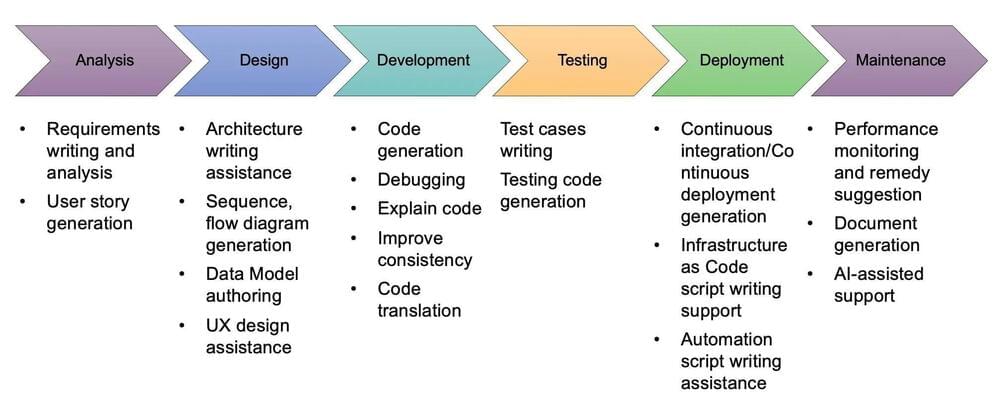
“Here is how Generative AI can help in the Overall Generative AI in Software Development Life Cycle (SDLC) stages. Overall, we want to treat Generative AI as senior developer/architect with more accessibility.

- Requirements gathering: ChatGPT can significantly simplify the requirements gathering phase by building quick prototypes of complex applications. It also can minimize the risks of miscommunication in the process since the analyst and customer can align on the prototype before proceeding to the build phase.

- Design: DALL-E, another deep learning model developed by OpenAI to generate digital images from natural language descriptions, can contribute to the design of applications. In addition to providing user interface (UI) templates for common use cases, it also may eventually be deployed to ensure that the design of a given application meets regulatory criteria such as accessibility.

- Build: ChatGPT has the capability to generate code in different languages. It could be used to supplement developers by writing small components of code, thus enhancing the productivity of developers and software quality. It even can enable citizen developers to write code without the knowledge of programming language.

- Test: ChatGPT has a major role in the testing phase. It can be used to generate various test cases and to test the application just by giving prompts in natural language. It can be leveraged to fix any vulnerabilities that could be identified through processes such as Dynamic Code Analysis (DCA) and perform chaos testing to simulate worst-case scenarios to test the integrity of the application in a faster and cost-effective way.

- Maintenance: ChatGPT can significantly improve First Contact Resolution (FCR) by helping clients with basic queries. In the process, it ensures that issue resolution times are significantly reduced while also freeing up service personnel to focus their attention selectively on more complex cases.

https://medium.com/mlearning-ai/generative-ai-in-software-de…90e466eb91

Sony energy harvesting module generates power from electromagnetic wave noise

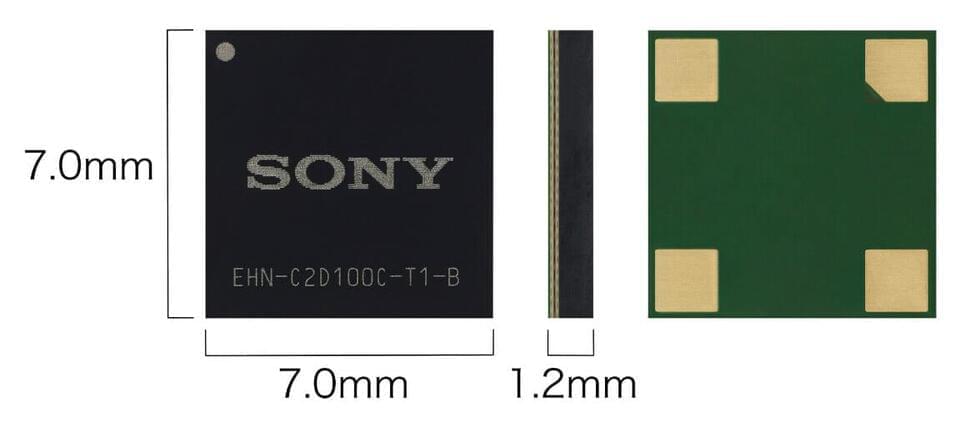
Sony Semiconductor Solutions Corporation (SSS) has developed an energy harvesting module that uses electromagnetic wave noise energy to power IoT devices.

The new module leverages Sony’s tuner development process to generate power from electromagnetic wave noise from robots inside factories, monitors and lighting in offices, monitors and TVs in stores and homes, etc. in order to provide a stable power supply needed to run low-power IoT sensors and communications equipment.

GA-ASI Poised to Begin LongShot Flight Testing Phase

“We are extremely excited to get in the air!” said Mike Atwood, Vice President of Advanced Aircraft Programs at GA-ASI. “Flight testing will validate digital designs that have been refined throughout the course of the project. General Atomics is dedicated to leveraging this process to rapidly deliver innovative unmanned capabilities for national defense.”

About GA-ASI

General Atomics Aeronautical Systems, Inc. (GA-ASI), an affiliate of General Atomics, is a leading designer and manufacturer of proven, reliable RPA systems, radars, and electro-optic and related mission systems, including the Predator® RPA series and the Lynx® Multi-mode Radar. With more than eight million flight hours, GA-ASI provides long-endurance, mission-capable aircraft with integrated sensor and data link systems required to deliver persistent situational awareness. The company also produces a variety of sensor control/image analysis software, offers pilot training and support services, and develops meta-material antennas.

Customized diets: The future of disease management revealed in gut study

In a recent study published in Nutrients, a group of researchers investigated the interactions between individual diets and the gut microbiome in seven volunteers, leveraging technological advancements and machine learning to inform personalized nutrition strategies and potential therapeutic targets.

Study: Unraveling the Gut Microbiome–Diet Connection: Exploring the Impact of Digital Precision and Personalized Nutrition on Microbiota Composition and Host Physiology. Image Credit: ART-ur/Shutterstock.com.

/* */