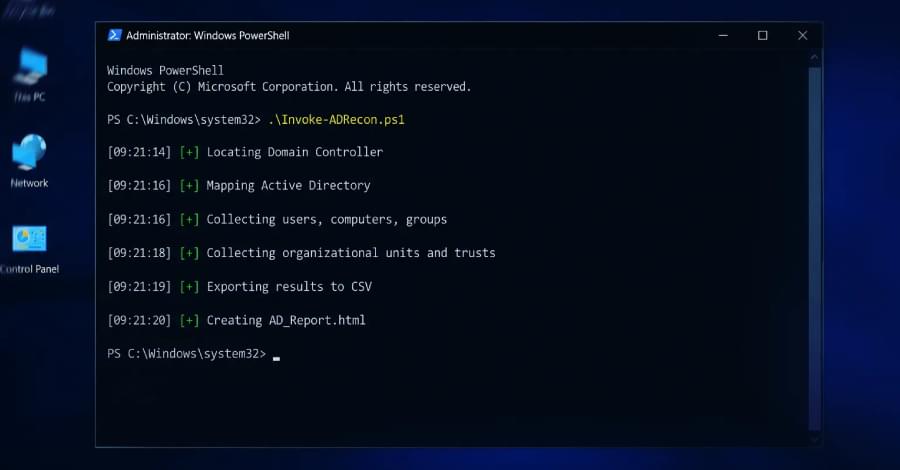
A likely AI-generated PowerShell script mapped Active Directory after an attacker gained RDP access to a Windows Server with compromised credentials.
Category: robotics/AI – Page 100

RedHook Android malware now uses Wireless ADB for shell access
A new version of the RedHook Android malware abuses the Android Wireless Debugging (Wireless ADB) mechanism in a novel way to gain shell-level privileges without requiring a computer connection.
Researchers at cybersecurity company Group-IB analyzed the new release of the mobile malware and say that it significantly expands its capabilities compared to the previous variant documented in 2025.
At the same time, the malware retains its remote access trojan (RAT) features, allowing it to stream the screen, intercept keystrokes, automate UI interactions, and steal credentials.
Physics doesn’t explain the universe. Computation does | Stephen Wolfram: Full Interview
Darwin spent his life trying to find the law that governs evolution. He knew it existed — he just never found it. Stephen Wolfram thinks he has. And it explains a lot more than evolution.
❍ Subscribe to The Well on YouTube: https://bit.ly/welcometothewell.
Stephen Wolfram is a mathematician, complexity theorist, and the mind behind Wolfram Alpha and Mathematica — someone who has spent his career finding the hidden rules underneath reality itself.
The same principle that explains why evolution never gets stuck, why you have free will despite living in a deterministic universe, and why the laws of physics are the way they are turns out to say something profound about what it means to be alive.
0:00 Intro.
1:08 Chapter 1: The limits of theoretical physics.
5:50 Chapter 2: A computational understanding of the world.
12:03 Rule 30: a simple program that outputs pure randomness.
15:48 Evolution and machine learning are the same trick.
18:19 What computational irreducibility means for science.
25:00 Chapter 3: A new kind of theory of everything.
31:36 The ruliad: every possible computation, in one object.
35:03 The second law, explained by the limits of our minds.
38:38 Why the universe exists isn’t the real question — why we do is.
42:53 Chapter 4: If the universe is a program, what is the meaning of life?
44:59 Free will as a side effect of computational irreducibility.
48:06 AI as a civilization we’re learning to coexist with.
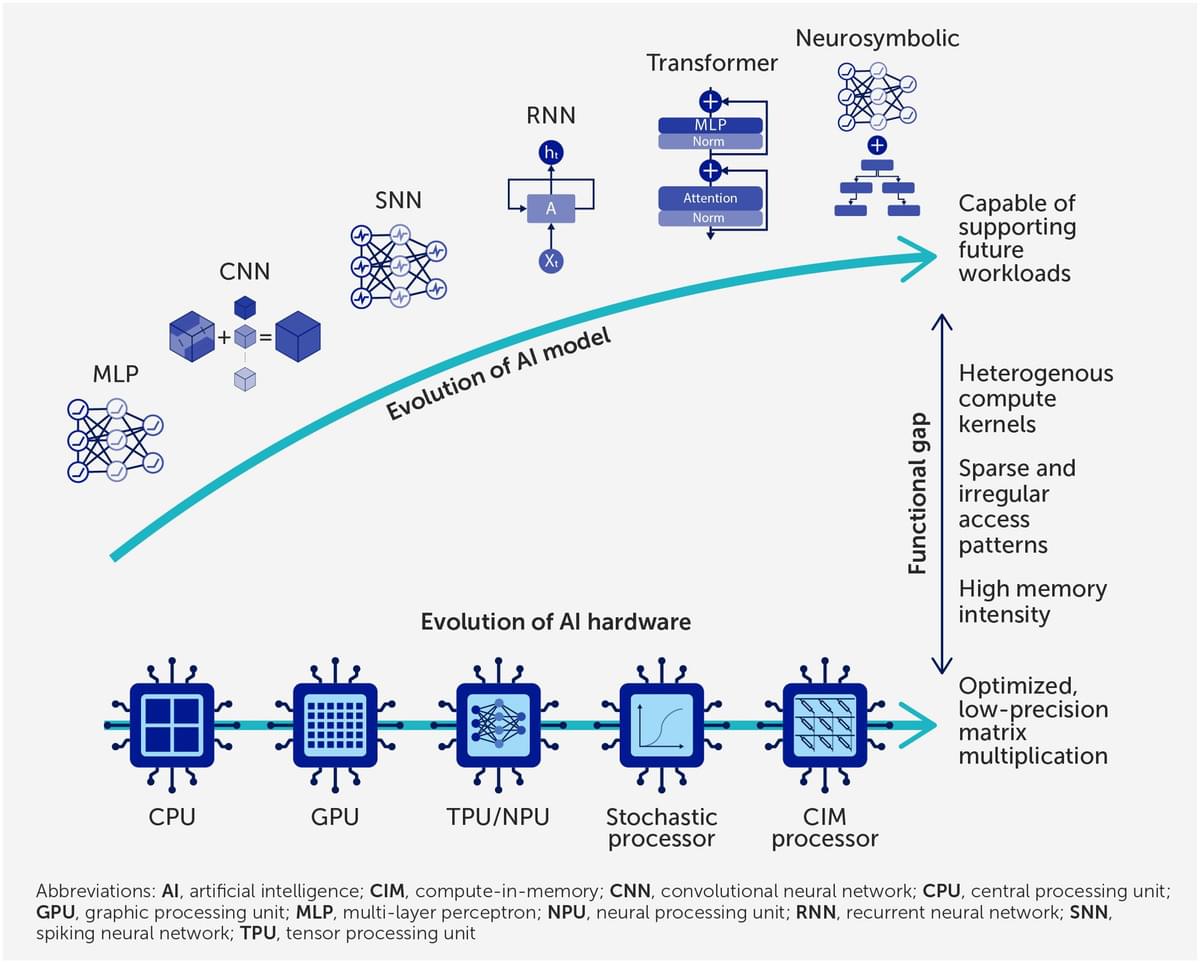
Frontiers: The relentless advancement of artificial intelligence (AI) across sectors such as healthcare
The automotive industry, and social media necessitates the development of more efficient hardware solutions that can implement diverse learning algorithms. This lead article explores the evolution of AI learning algorithms and their computational demands, using autonomous drone navigation as a case study to highlight the limitations of traditional hardware. Traditional hardware, based on the von Neumann architecture, suffers from limited computational efficiency due to the separation of compute units and memory, also known as the “memory wall” problem. To overcome this barrier, this article discusses novel approaches to AI hardware design, focusing on compute-in-memory (CIM) techniques and stochastic hardware.

Nobel laureates among more than 200 experts urging action on AI’s economic impact
More than 200 researchers and economists, including 15 Nobel laureates and researchers at OpenAI, Anthropic and Google, have called for governments and technology leaders to urgently create policies and institutions to address the economic impact of AI.
Apple files lawsuit accusing ChatGPT maker OpenAI of stealing trade secrets
Sam Altman has repeatedly suggested that today’s smartphones are not the ideal interface for advanced AI. The ambition is to create what some observers describe as an “AI-native” device—one that could eventually become as important as the smartphone itself.
Apple on Friday accused OpenAI of stealing trade secrets as it seeks to build its own hardware for ChatGPT, a major rupture in a partnership between the iPhone maker and the artificial intelligence company.
Apple said in the lawsuit filed in a California federal court that OpenAI encouraged Apple employees it was recruiting to share confidential information, even guiding how to avoid scrutiny when taking jobs at the other company.
“This case is about Apple’s former employees stealing Apple’s trade secrets for the benefit of OpenAI,” the filing says. “Apple brings this suit to put a stop to it.”
Tracking The AI Revolution: Innovation And Cyber Risks
Artificial intelligence is rapidly transforming global economies, governments, and daily life in an “acceleration era.” AI is also broadening the cyber risk landscape.
NVIDIA Nemotron Achieves Benchmark-Leading Performance With LangChain Deep Agents Harness
NVIDIA Nemotron 3 Ultra is offering leading performance at lower cost than top closed models with the largest and most widely adopted AI agent orchestration platform. LangChain tuned its Deep Agents harness for NVIDIA Nemotron 3 Ultra, achieving the highest accuracy among open models, while completing more tasks at higher throughput and running at 10x
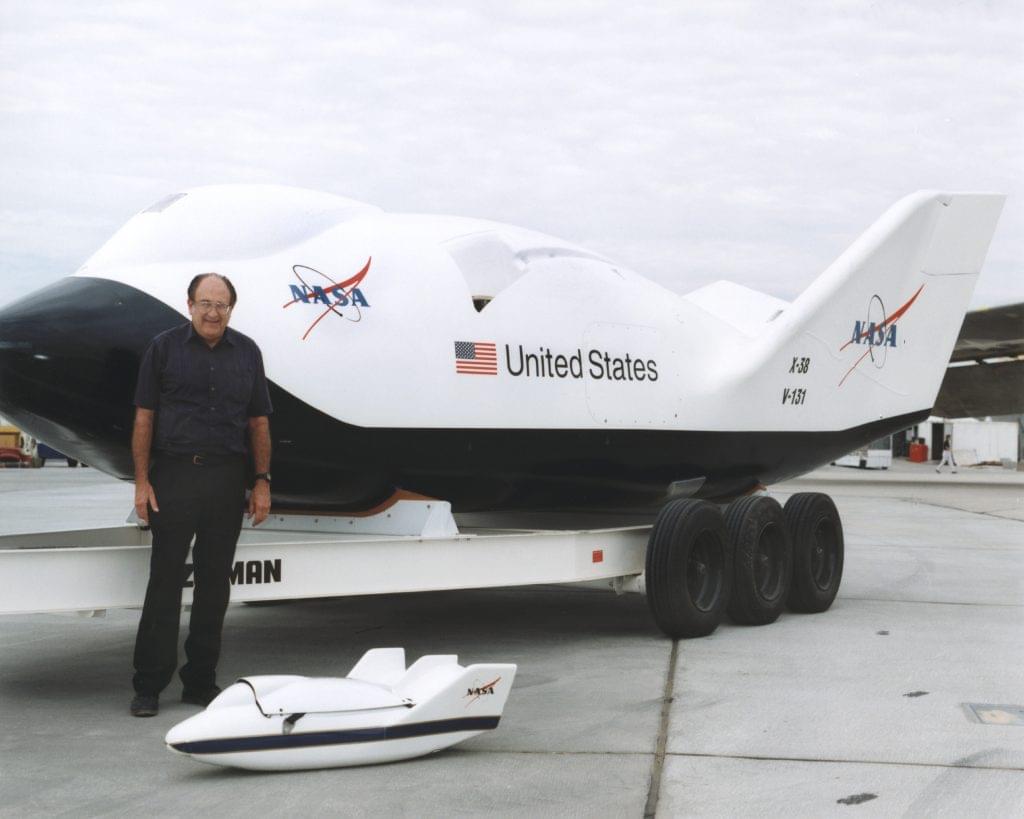
Pioneers of Aeronautical Engineering: Dale Reed — Father of the Lifting Bodies
Dale Reed transformed aerospace research through his pioneering work on lifting bodies and remotely piloted research vehicles. His innovations laid the foundation for the Space Shuttle’s design and advanced unmanned flight testing, making him one of NASA’s most influential flight research engineers.
Coining the Technological Singularity
Everybody writes about the Singularity now. Almost nobody knows where the word was born.
Not in a lab. Not in a think tank. In the January 1983 issue of Omni magazine, where a mathematician and science fiction writer named Vernor Vinge put a name to the thing the rest of us are still trying to survive.
Think about that. Four decades before ChatGPT, before the AI arms race, before every futurist and their algorithm started forecasting the end of the human era, the framework already existed. Vinge saw the curve. He just needed a word for the point where it goes vertical.
Today, that word is inescapable. Write about AI, about the future of work, about what happens to humanity when the machines get smarter than us, and you are writing about the Singularity, whether you use the term or not. Refuse to, and you owe your reader an explanation for why not. So you are still writing about it.
Thanks to Josh Calder, who dug out and scanned the original page, you can see the exact moment the term entered our vocabulary. A little piece of digital history, hiding in plain sight for 40 years.
Where do you think we are on Vinge’s curve right now? #Singularity #ArtificialIntelligence #Futurism.