Anti gravity can be made from gravitons.
New calculations show how hypothetical particles called gravitons would give rise to a special kind of noise.

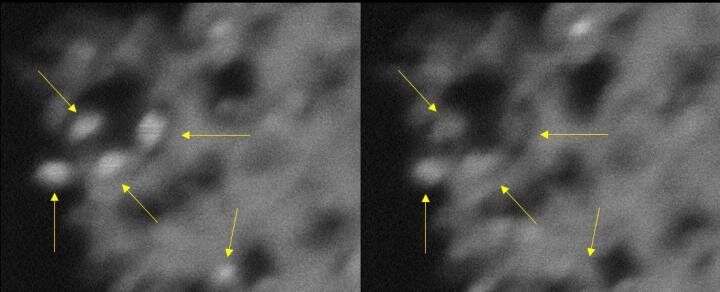
Imagine tiny crystals that “blink” like fireflies and can convert carbon dioxide, a key cause of climate change, into fuels.
A Rutgers-led team has created ultra-small titanium dioxide crystals that exhibit unusual “blinking” behavior and may help to produce methane and other fuels, according to a study in the journal Angewandte Chemie. The crystals, also known as nanoparticles, stay charged for a long time and could benefit efforts to develop quantum computers.
“Our findings are quite important and intriguing in a number of ways, and more research is needed to understand how these exotic crystals work and to fulfill their potential,” said senior author Tewodros (Teddy) Asefa, a professor in the Department of Chemistry and Chemical Biology in the School of Arts and Sciences at Rutgers University-New Brunswick. He’s also a professor in the Department of Chemical and Biochemical Engineering in the School of Engineering.
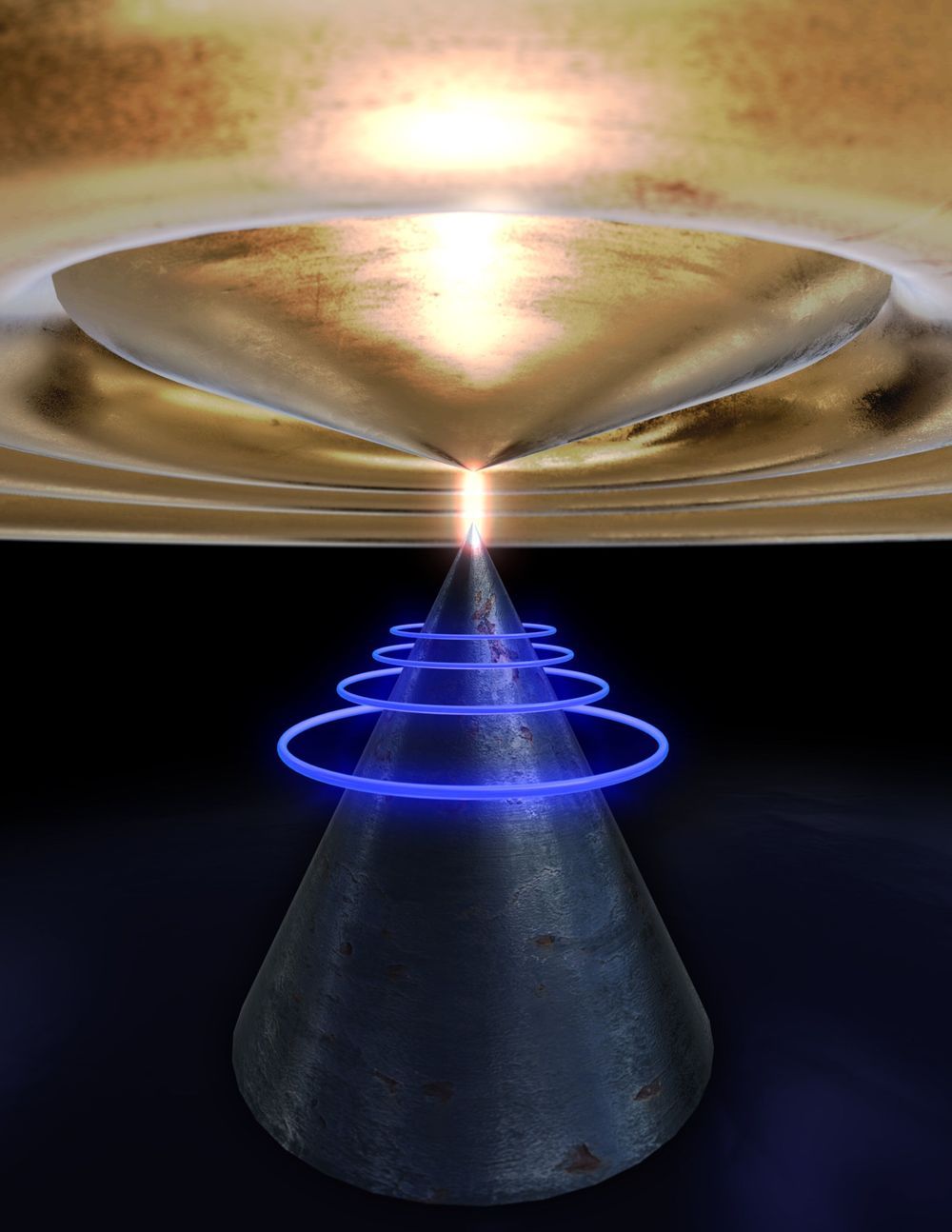
A collaboration between researchers from the University of Western Australia and the University of California Merced has provided a new way to measure tiny forces and use them to control objects.
The research, published today in Nature Physics, was jointly led by Professor Michael Tobar, from UWA’s School of Physics, Mathematics and Computing and Chief Investigator at the Australian Research Council Centre of Excellence for Engineered Quantum Systems and Dr. Jacob Pate from the University of Merced.
Professor Tobar said that the result is a new way to manipulate and control macroscopic objects in a non-contacting way, allowing enhanced sensitivity without adding loss.
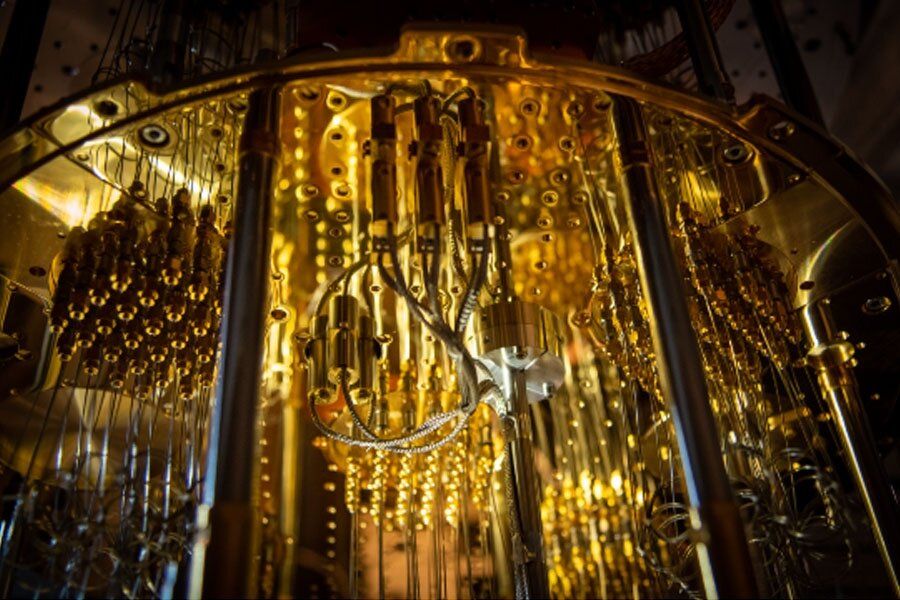
A quintillion calculations a second. That’s one with 18 zeros after it. It’s the speed at which an exascale supercomputer will process information. The Department of Energy (DOE) is preparing for the first exascale computer to be deployed in 2021. Two more will follow soon after. Yet quantum computers may be able to complete more complex calculations even faster than these up-and-coming exascale computers. But these technologies complement each other much more than they compete.
It’s going to be a while before quantum computers are ready to tackle major scientific research questions. While quantum researchers and scientists in other areas are collaborating to design quantum computers to be as effective as possible once they’re ready, that’s still a long way off. Scientists are figuring out how to build qubits for quantum computers, the very foundation of the technology. They’re establishing the most fundamental quantum algorithms that they need to do simple calculations. The hardware and algorithms need to be far enough along for coders to develop operating systems and software to do scientific research. Currently, we’re at the same point in quantum computing that scientists in the 1950s were with computers that ran on vacuum tubes. Most of us regularly carry computers in our pockets now, but it took decades to get to this level of accessibility.
In contrast, exascale computers will be ready next year. When they launch, they’ll already be five times faster than our fastest computer —Summit, at Oak Ridge National Laboratory’s Leadership Computing Facility, a DOE Office of Science user facility. Right away, they’ll be able to tackle major challenges in modeling Earth systems, analyzing genes, tracking barriers to fusion, and more. These powerful machines will allow scientists to include more variables in their equations and improve models’ accuracy. As long as we can find new ways to improve conventional computers, we’ll do it.
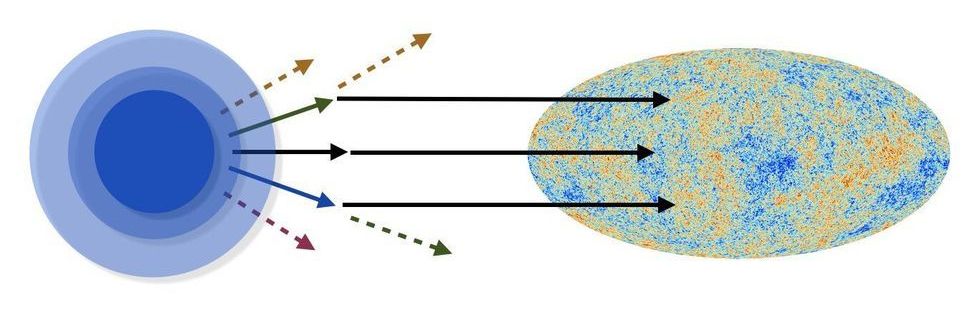
Many cosmologists believe that the universe’s structure is a result of quantum fluctuations that occurred during early expansion. Confirming this hypothesis, however, has proven highly challenging so far, as it is hard to discern between quantum and classical primordial fluctuations when analyzing existing cosmological data.
Two researchers at University of California and Deutsches Elektronen-Synchrotron DESY in Germany have recently devised a test based on the notion of primordial non-Gaussianity that could help to ascertain the origin of cosmic structure. In their paper, published in Physical Review Letters, they argue that detecting primordial non-Gaussanity could help to determine whether the patterns of the universe originated from quantum or classical fluctuations.
“One of the most beautiful ideas in all of science is that the structure we observed in the cosmos resulted from quantum fluctuations in the very early universe that were then stretched by a rapid accelerated expansion,” Rafael Porto, one of the researchers who carried out the study, told Phys.org. “This ‘inflationary’ paradigm makes a lot of predictions which have been corroborated by data, yet the quantum nature of the primordial seed is extremely difficult to demonstrate directly.”
PNNL quantum algorithm theorist and developer Nathan Wiebe is applying ideas from data science and gaming hacks to quantum computing.
Everyone working on quantum computers knows the devices are error prone. The basic unit of quantum programming – the quantum gate – fails about once every hundred operations. And that error rate is too high.
While hardware developers and programming analysts are fretting over failure rates, PNNL’s Nathan Wiebe is forging ahead writing code that he is confident will run on quantum computers when they are ready. In his joint appointment role as a professor of physics at the University of Washington, Wiebe is training the next generation of quantum computing theorists and programmers.

Strange metals have surprising connections to high-temperature superconductors and black holes.
Even by the standards of quantum physicists, strange metals are just plain odd. The materials are related to high-temperature superconductors and have surprising connections to the properties of black holes. Electrons in strange metals dissipate energy as fast as they’re allowed to under the laws of quantum mechanics, and the electrical resistivity of a strange metal, unlike that of ordinary metals, is proportional to the temperature.
Generating a theoretical understanding of strange metals is one of the biggest challenges in condensed matter physics. Now, using cutting-edge computational techniques, researchers from the Flatiron Institute in New York City and Cornell University have solved the first robust theoretical model of strange metals. The work reveals that strange metals are a new state of matter, the researchers report July 22 in the Proceedings of the National Academy of Sciences.

In a press conference at the University of Chicago, the U.S. Department of Energy (DOE) unveiled a report that lays out a blueprint strategy for the development of a national quantum internet, bringing the United States to the forefront of the global quantum race and ushering in a new era of communications. This report provides a pathway to ensure the development of the National Quantum Initiative Act, which was signed into law by President Trump in December 2018.
Around the world, consensus is building that a system to communicate using quantum mechanics represents one of the most important technological frontiers of the 21st century. Scientists now believe that the construction of a prototype will be within reach over the next decade.
In February of this year, DOE National Laboratories, universities and industry met in New York City to develop the blueprint strategy of a national quantum internet, laying out the essential research to be accomplished, describing the engineering and design barriers and setting near-term goals.
On the heels of IBM’s quantum news last week come two more quantum items. D-Wave Systems today announced the name of its forthcoming 5000-qubit system, Advantage (yes the name choice isn’t serendipity), at its user conference being held this week in Newport, RI. Last week a Google draft paper, discovered by the Financial Times, claimed attaining Quantum Supremacy using a 53-qubit superconducting processor. The paper found on NASA’s website was later withdrawn. Conversation around it has been bubbling in the QC community since.
More on D-Wave’s announcements later – the Advantage system isn’t expected to be broadly available until mid-2020 which is roughly in keeping with its stated plans. The Google work on quantum supremacy is fascinating. Google has declined to comment on the paper. How FT became aware of the paper isn’t clear. A few observers suggest it looks like an early draft.
Quantum supremacy, of course, is the notion of a quantum computer doing something that classical computers simply can’t reasonably do. In this instance, the reported Google paper claimed it was able to perform as task (a particular random number generation) on its QC in 200 seconds versus what would take on the order 10,000 years on a supercomputer. In an archived copy of the draft that HPCwire was able to find, the authors say they “estimated the classical computational cost” of running supremacy circuits on Summit and on a large Google cluster. (For an excellent discussion of quantum supremacy see Scott Aaronson’s (University of Texas) blog yesterday, Scott’s Supreme Quantum Supremacy FAQ)

Researchers devise an on-off system that allows high-fidelity operations and interconnection between processors.
MIT researchers have introduced a quantum computing architecture that can perform low-error quantum computations while also rapidly sharing quantum information between processors. The work represents a key advance toward a complete quantum computing platform.
Previous to this discovery, small-scale quantum processors have successfully performed tasks at a rate exponentially faster than that of classical computers. However, it has been difficult to controllably communicate quantum information between distant parts of a processor. In classical computers, wired interconnects are used to route information back and forth throughout a processor during the course of a computation. In a quantum computer, however, the information itself is quantum mechanical and fragile, requiring fundamentally new strategies to simultaneously process and communicate quantum information on a chip.