Toggle light / dark theme

ISRO is developing a nano satellite to monitor suspended particles in polluted Indian cities

Nano Satellite could be interesting and even expanded upon especially as we look to expand the usage of Quantum Technology across various wireless devices in the future as well as microbot technology to enable connectivity to the cloud and other wireless devices.


The nano-satellite, which is among ISRO’s important missions, will monitor air pollutants that pollute cities including Delhi, Lucknow, Amritsar and Allahabad.

The nano-satellite will weigh 15kg and placed 500 km above the earth.

SAC director Tapan Misra told ET the mission is designed to cover, each day, up to 50,000 sq km area of the country’s 32.87 lakh sq km.

Read more

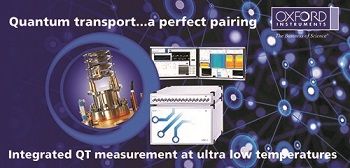
Oxford Instruments and SPECS Surface Nano Analysis GmbH sign agreement for Nanonis Tramea quantum transport measurement system

This agreement places Oxford in a very nice position.


Quantum transport measurements are widely used in characterising new materials and devices for emerging quantum technology applications such as quantum information processing (QIP), quantum computing (QC) and quantum sensors. Such devices hold the potential to revolutionise future technology in high performance computing and sensing in the same way that semiconductors and the transistor did over half a century ago.

Physicists have long used standard electrical transport measurements such as resistivity, conductance and the Hall effect to gain information on the electronic properties and structure of materials. Now quantum transport measurements such as the quantum Hall effect (QHE) and fractional quantum Hall effect (FQHE) in two-dimensional electron gases (2DEG) and topological insulators – along with a range of other more complex measurements – inform researchers on material properties with quantum mechanical effects.

The ultra low temperatures and high magnetic fields provided by Oxford Instruments’ TritonTM dilution refrigerator make it a key research tool in revealing the quantum properties of many materials of interest. SPECS’ Nanonis Tramea QTMS is a natural complementary partner to the Triton, with its fast, multi-channel measurements.

Read more

Could LIGO Discovery Of Gravitational Waves Unlock Secrets Of Quantum Gravity?

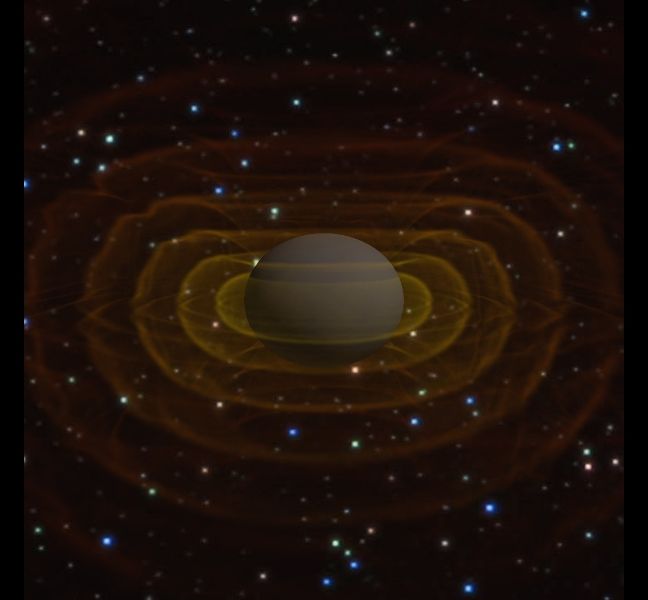
This gravitational wave model has been created with the quantum gravity theory in mind, which has been predicted for decades. What else could the discovery of gravitational waves by the Laser Interferometer Gravitational-Wave Observatory uncover and reveal about this theory? (Photo : Henze | NASA)

Quantum gravity is a theory that has been the target of decades of study by physicists worldwide. If this idea is proven, it would tie together the General Theory of Relativity (which governs gravitational fields) with quantum mechanics, and the bizarro-world of subatomic particles.

Gravitational waves, produced by accelerating objects, ripple through space-time, according to most interpretations of the General Theory of Relativity penned by famed physicist Albert Einstein. Researchers at the Laser Interferometer Gravitational-Wave Observatory (LIGO) have announced they detected these disturbances in the fabric of time and space for the first time.

Read more

Whitewood Encryption Systems Announces the Awarding of a Third Patent Arising From Los Alamos National Laboratory Technology Transfer

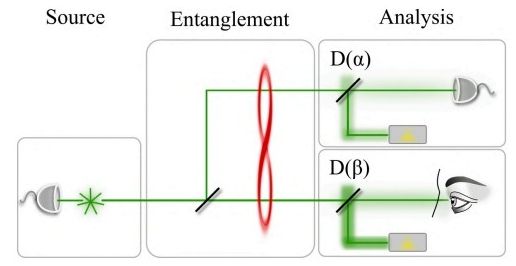
I have mentioned in my previous posts about the Quantum Internet work that Los Alamos has been leading; today Los Alamos has been awarded a patent on their Quantum Communication (QC) Optical Fiber.


Whitewood received a Notice of Allowance for a patent application that addresses issues that arise when employing quantum communications techniques to share cryptographic material over fiber networks.

ArcPoint Strategic Communications.

Read more

Controlling lasers to a millionth of a percent for trapped ion quantum computer

Jungsang Kim is trying to create a quantum computer by controlling the frequency of a laser to within a millionth of a percent.

According to David DiVincenzo, a prominent computer scientist at IBM, researchers must meet five criteria to create a true quantum computing device.

First, Kim needs a well-defined system that can represent different states. For example, classical computers use small electrical switches made out of semiconductors to indicate a 1 or a 0. But because an atom’s quantum spin can point in an infinite number of directions, controlling its state with a high degree of reliability is very difficult. Kim’s group has demonstrated this feat with an accuracy on par with anyone in the world.

Read more

Could microwaves finally crack quantum computing?

Radiation works as a ‘tuning fork’ to control the spin of electrons.

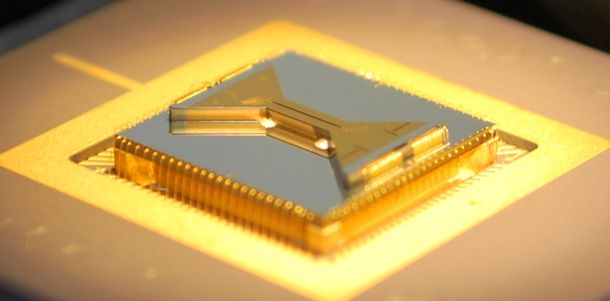
Scientists have found a new way of moving information between quantum bits in a computer. They used a highly purified sample of silicon doped with bismuth atoms (left) before fitting a superconducting aluminium resonator to it (middle and right).

http://www.dailymail.co.uk/sciencetech/article-3448052/Could…z40IRYjbXK
Follow us: @MailOnline on Twitter | DailyMail on Facebook.


Scientists at the French Atomic Energy Commission may have found a way of obtaining information from the spin of electrons on demand by using microwaves to change their spin state.

Read more