Toggle light / dark theme

How To Improve Internet Security — 20th Century Radio Technology

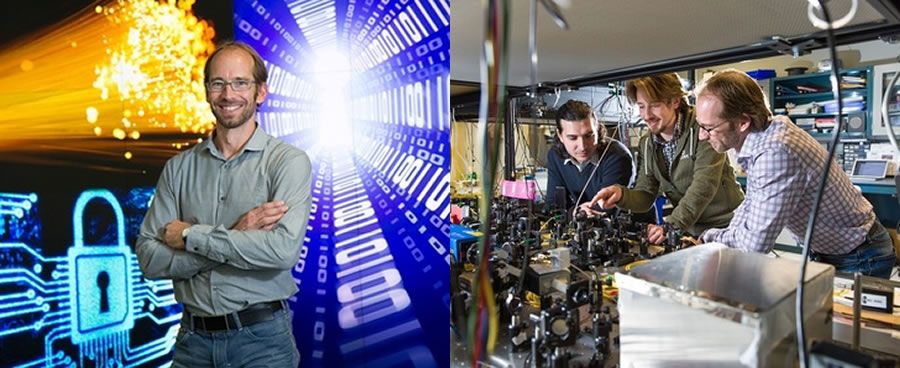
Quantum Internet — this has been in development and testing for a while now at Los Alamos and I am looking forward to it been expanded to the commercial sector. It has seen some challenges; however, every month we’re seeing the challenges knocked out such as the Quantum Light Source technology.


Imagine communicating with your bank, the IRS or your doctor by way of an Internet that was actually secure, where if any bad actor were to try to eavesdrop you would know immediately. Such is the promise of secure quantum communication, and has been since it was ‘almost ready’ starting in the 1990s.

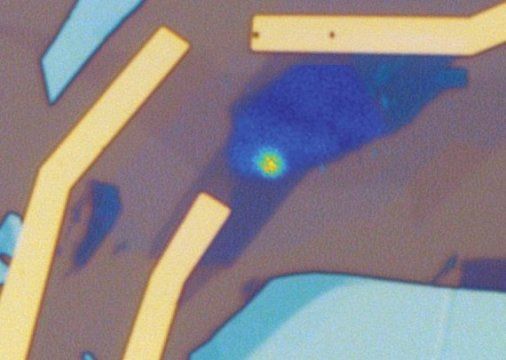
For quantum communication to become the standard, technical challenges still lie ahead. To make progress toward devices that can send and receive quantum data, researchers at Stanford University have created a novel quantum light source.

The physics of quantum communication is admittedly complex. Standard lasers are actually not useful for secure communication because they emit what is called “classical” light. Data eavesdroppers could extract any data being carried via classical light without detection. In contrast, a quantum Internet would be based on “quantum” light, in which a single unit of light — a single photon — cannot be measured without being destroyed. Therefore, an efficient source of quantum light would enable perfectly secure communication.

Read more

Israel Hit with Massive Cyberattack Targeting Electrical Grid

Cyber attacks on our power grids — As I have highlighted in my Jan 10th Pulse positing “Quantum Computing – things that need to be considered for our future Quantum Computing” we mush get our funding and special projects under way to prevent a possible Quantum hack by overseas hackers. Russia and China are both ramping up their infrastructures to be Quantum to protect their citizens and we must do the same.


Israel’s Electric Authority has revealed its systems have been the target of a “severe cyberattack” which, while under control, is yet to be fully repelled.

“We had to paralyze numerous computers of the Israeli electricity authorities”, he said.

Minister of National Infrastructure says: ‘We are handling the situation and I hope that soon, this very serious event will be over ‘.

Steinitz, meanwhile, told information security conference attendees that the attack against the Electricity Authority is a reminder of “the sensitivity of infrastructure to cyber-attacks, and the importance of preparing ourselves in order to defend ourselves against such attacks”.

Read more

New record in nanoelectronics at ultralow temperatures

Another Quantum Breakthrough through ultra- low temp nanoelectronics- Sub-millikelvin nanoelectronic circuits and is another step on the way to develop new quantum technologies including quantum computers and sensors.


The first ever measurement of the temperature of electrons in a nanoelectronic device a few thousandths of a degree above absolute zero was demonstrated in a joint research project performed by Lancaster University, VTT Technical Research Centre of Finland Ltd, and Aivon Ltd.

The team managed to make the electrons in a circuit on a silicon chip colder than had previously been achieved.

Dr Rich Haley, Head of Ultra Low Temperature Physics at Lancaster, said: “This is a notable achievement in that the team has finally broken through the 4 millikelvin barrier, which has been the record in such structures for over 15 years.”

Read more

Super-fast computing breakthrough: Light-based optical chips possible with plasmonic cooling

And, another breakthrough for Quantum by Russian Scientists. Russian scientists have developed a new way to solve a key problem with cooling plasmonic components, which makes optical chips and super-fast light-based computers a definite possibility. https://lnkd.in/b9kuiSa


Russian scientists discover how to cool plasmonic components to make light-based transistors possible.

Read more

Big Data And Quantum Computers

Luv the whole beautiful picture of a Big Data Quantum Computing Cloud. And, we’re definitely going to need it for all of our data demands and performance demands when you layer in the future of AI (including robotics), wearables, our ongoing convergence to singularity with nanobots and other BMI technologies. Why we could easily exceed $4.6 bil by 2021.


From gene mapping to space exploration, humanity continues to generate ever-larger sets of data—far more information than people can actually process, manage, or understand.

Machine learning systems can help researchers deal with this ever-growing flood of information. Some of the most powerful of these analytical tools are based on a strange branch of geometry called topology, which deals with properties that stay the same even when something is bent and stretched every which way.

Such topological systems are especially useful for analyzing the connections in complex networks, such as the internal wiring of the brain, the U.S. power grid, or the global interconnections of the Internet. But even with the most powerful modern supercomputers, such problems remain daunting and impractical to solve. Now, a new approach that would use quantum computers to streamline these problems has been developed by researchers at MIT, the University of Waterloo, and the University of Southern California…

Read more

Quantum Dots To Fight Drug Resistant Bacteria

Researchers at the University of Colorado have created a unique, light-activated nanotherapy to destroy antibiotic resistant bacteria

The pursuit of longevity requires continued, effective antibiotics. Otherwise, you could be as fit as a fiddle at 100 and still be downed by a nasty, resistant strain.

While bacterial strains resistant to current drugs are rapidly rising across the globe, infecting 2 million people last year, researchers are turning to increasingly innovative ways to destroy these populations. Nanotechnology is one such, increasingly promising technology.

Read more

These 4 Cosmic Phenomena Travel Faster Than The Speed Of Light

Dreaming of wormholes: Kaku said “The only feasible way to break the light barriers is through general relativity and warping of space-time”. We call this warping as wormholes, theoretically, these allow something to break the cosmic speed limit by travelling huge distance in a short time. These wormholes have some exotic matter, holding them open. This exotic matter has been made in laboratories but in a small quantity. In 1988, Kip Thorne proposed a theory of Stable Wormholes to find out the possibility of a wormhole in the presence of that exotic matter (like the one in Interstellar Movie). Thorne says “After 30 years, the answer is still unknown and we are still away from the final answer.”

Read more

Robots ‘will be able to read your thoughts within a generation’ — and hackers could steal your innermost secrets

This all sounds extremely familiar to me for some reason. And, really ties in well with my recent articles on “AI holding your data hostage” and “Quantum Computing — things that need to be considered” — glad more folks are speaking up.


Speaking at the World Economic Forum in the Swiss Alps, Nita Farahany, a professor of law and philosophy, said the device reading brain activity could be accessed by ‘not good Samaritans’.

Read more

/* */