The firm will pit its Bristlecone quantum processor against a classical supercomputer early next year and see which comes out on top.

Exploring alternatives to electron qubits.

So-called “topological insulators” could revolutionize computing.

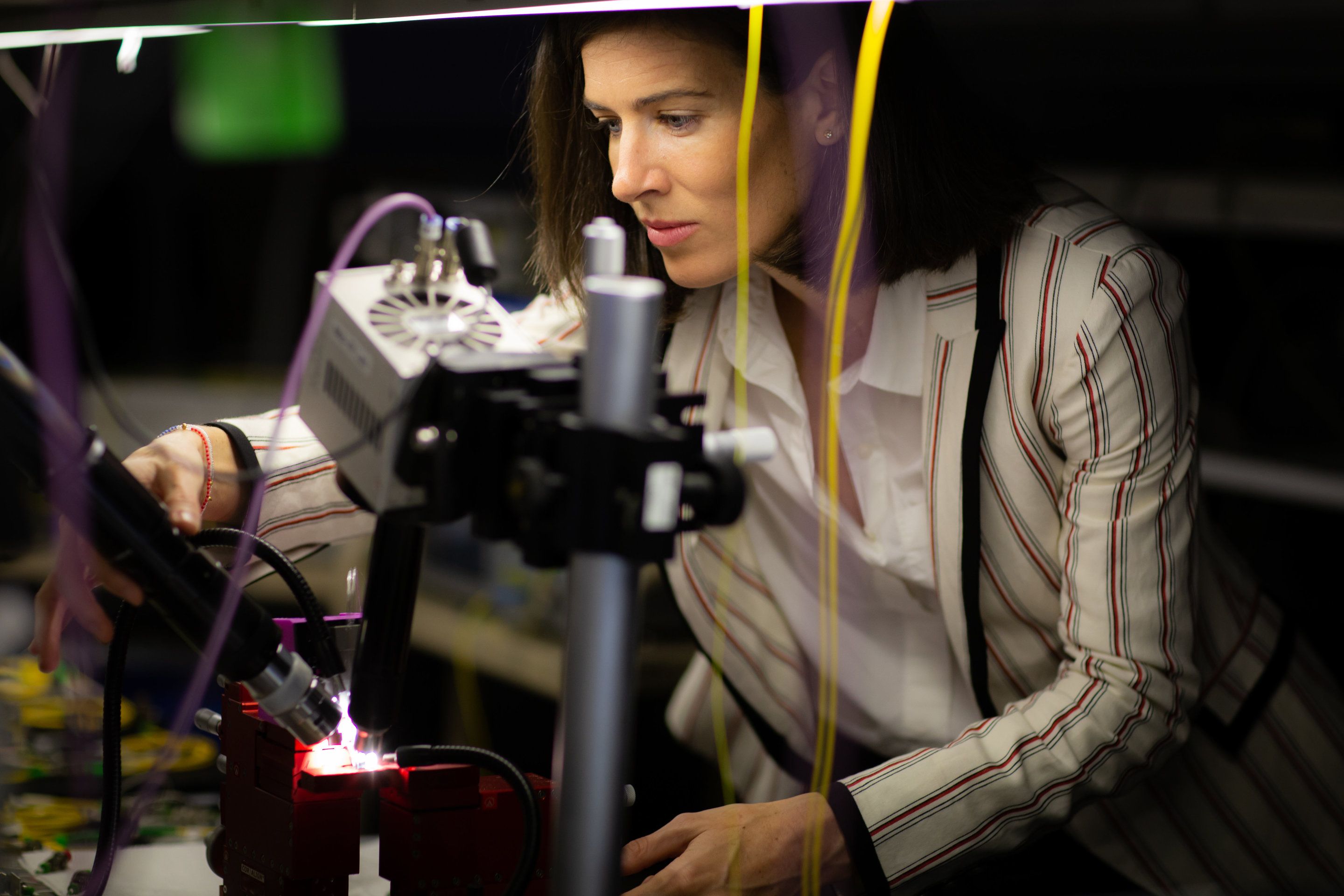
Scientists in Australia have for the first time demonstrated the protection of correlated states between paired photons—packets of light energy—using the intriguing physical concept of topology. This experimental breakthrough opens a pathway to build a new type of quantum bit, the building blocks for quantum computers.
The research, developed in close collaboration with Israeli colleagues, is published today in the prestigious journal, Science, a recognition of the foundational importance of this work.
“We can now propose a pathway to build robust entangled states for logic gates using protected pairs of photons,” said lead author Dr. Andrea Blanco-Redondo at the University of Sydney Nano Institute.
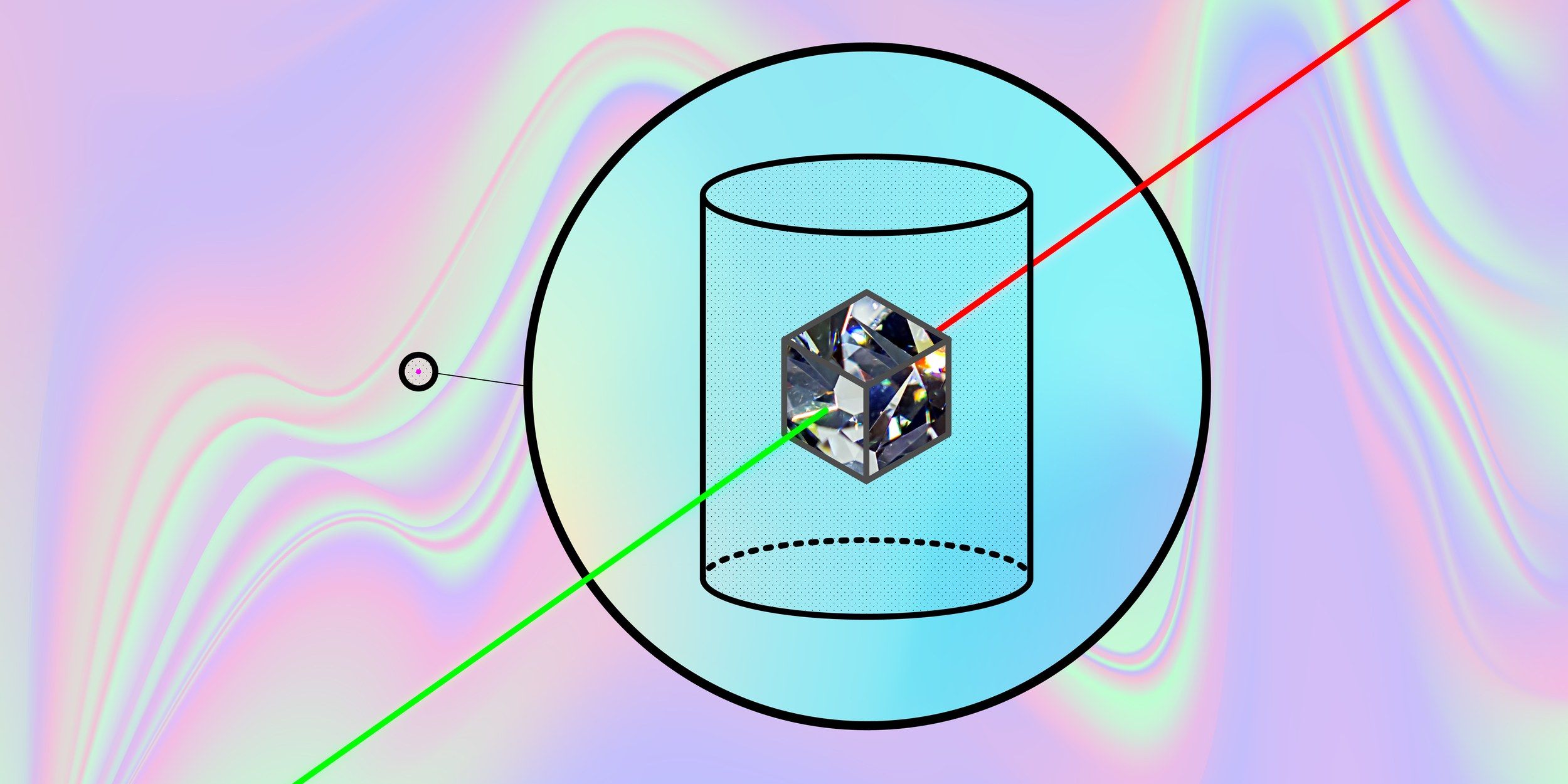

The Quantum Flagship was first announced in 2016, and on 29 October, the commission announced the first batch of fund recipients. The 20 international consortia, each of which includes public research institutions as well as industry, will receive a total of €132 million over 3 years for technology-demonstration projects.
One of the most ambitious EU ‘Flagship’ schemes yet has picked 20 projects, aiming to turn weird physics into useful products.
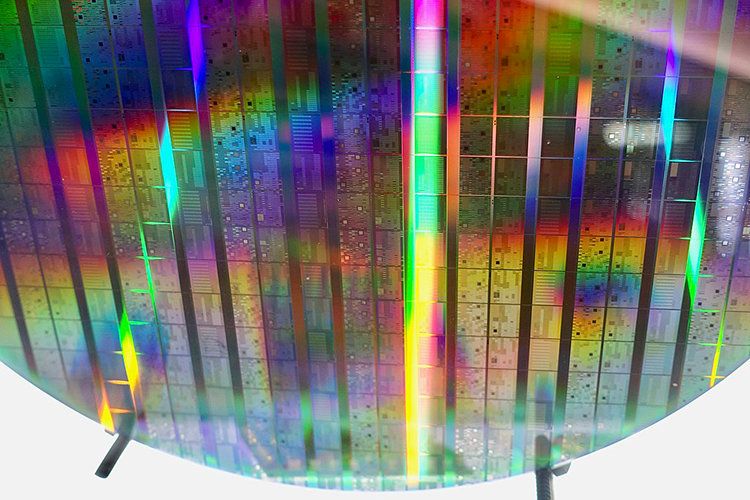
As multiple research groups around the world race to build a scalable quantum computer, questions remain about how the achievement of quantum supremacy will be verified.
Quantum supremacy is the term that describes a quantum computer’s ability to solve a computational task that would be prohibitively difficult for any classical algorithm. It is considered a critical milestone in quantum computing, but because the very nature of quantum activity defies traditional corroboration, there have been parallel efforts to find a way to prove that quantum supremacy has been achieved.
Researchers at the University of California, Berkeley, have just weighed in by giving a leading practical proposal known as random circuit sampling (RCS) a qualified seal of approval with the weight of complexity theoretic evidence behind it. Random circuit sampling is the technique Google has put forward to prove whether or not it has achieved quantum supremacy with a 72-qubit computer chip called Bristlecone, unveiled earlier this year.

Two teams demonstrate that they can count the number of quantized vibrations, or phonons, in cold mechanical oscillators by measuring the energy in the vibrations.
At the origin of every musical note is a mechanical oscillator that resonates at a specific frequency. But what the ear cannot distinguish is that the energy of these vibrations is discretized into an integer number of quanta of motion, or phonons. Most vibrating objects contain an uncountable number of phonons, but researchers have, for some time now, been able to prepare massive mechanical oscillators in their quantum ground state, where the average phonon number is smaller than one. This hard-won accomplishment not only involved getting rid of all thermal excitations in the oscillator through intense cooling, but it also required inventing a system of motion detection with a sensitivity at the quantum level [1]. An emerging technique consists of coupling the oscillator motion to another quantum object: a superconducting qubit, which can serve a role in the detection as well as the manipulation of states of motion [2–4].

A recent experiment may have placed living organisms in a state of quantum entanglement.