Toggle light / dark theme

Team builds first quantum cascade laser on silicon

Very nice; Silicon based Quantum Laser has been achieved. Imagine what this does for ISPs and other communications. smile


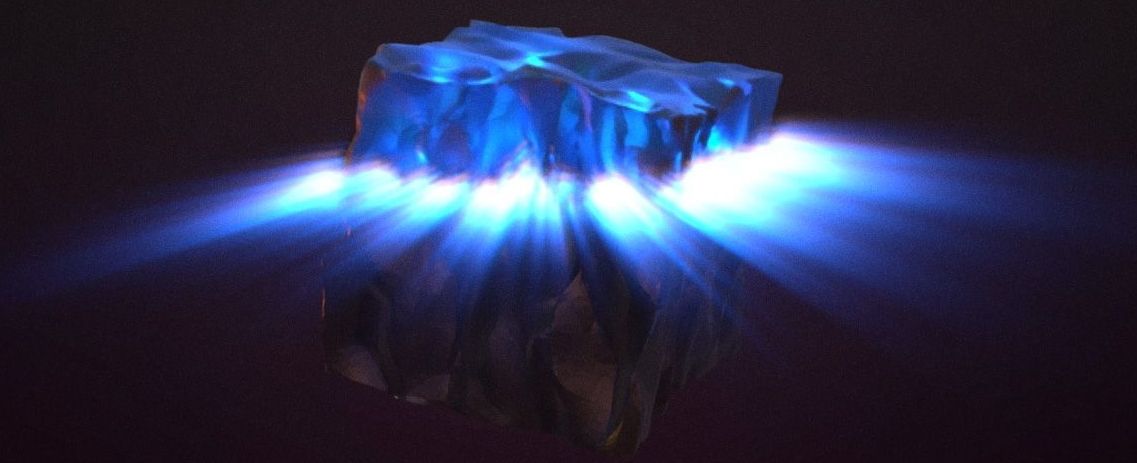
A team of researchers from across the country, led by Alexander Spott, University of California, Santa Barbara, USA, have built the first quantum cascade laser on silicon. The advance may have applications that span from chemical bond spectroscopy and gas sensing, to astronomy and free-space communications.

Integrating lasers directly on chips is challenging, but it is much more efficient and compact than coupling external light to the chips. The indirect bandgap of silicon makes it difficult to build a laser out of silicon, but diode lasers can be built with III-V materials such as InP or GaAs. By directly bonding an III-V layer on top of the silicon wafer and then using the III-V layers to generate gain for the laser, this same group has integrated a multiple quantum well laser on silicon that operates at 2 µm. Limitations in diode lasers prevent going to longer wavelengths where there are many more applications, so the group turned their attention to using quantum cascade lasers instead.

Building a on silicon was a challenging task made more difficult by the fact that becomes heavily absorptive at longer wavelengths in the mid-infrared.

Zip software can detect the quantum-classical boundary (w/video)

Quantum physics has a reputation for being mysterious and mathematically challenging. That makes it all the more surprising that a new technique to detect quantum behaviour relies on a familiar tool: a “zip” program you might have installed on your computer.

“We found a new way to see a difference between the quantum universe and a classical one, using nothing more complex than a compression program,” says Dagomir Kaszlikowski, a Principal Investigator at the Centre for Quantum Technologies (CQT).

Dag worked with other researchers from CQT and collaborators at the Jagiellonian University and Adam Mickiewicz University in Poland to show that compression software, applied to experimental data, can reveal when a system crosses the boundary of our classical picture of the Universe into the quantum realm. The work is published in the March issue of New Journal of Physics (“Probing the quantum–classical boundary with compression software”).

A ‘big science’ approach for Australian cybersecurity research?

Australia should go “Big Science” on addressing Cyber Security. I believe Australia is already making strides in Cyber Security with their own advancements in Quantum.


Australia’s Cyber Security Strategy, to be released this Thursday, will include an emphasis on research and development, as well as education. How might that unfold?

General Motors to double size of Israel R&D center

Regulation is not the immediate problem with autonomous cars. Example, is Google car has been deemed approved by existing regs. However, the issue is the broader public’s trust due to the various reports of hacking of connected cars such as the Nissan Leaf, etc. Until we put in place a more resilient net infrastructure such as Quantum; slow down will happen. I suggest GM to read the news more because everything that I stated has been well communicated in the news and research for the past 4 months.


GM Ventures president Lauckner believes regulation will not halt the advance of the autonomous car.

Large Hadron Collider(LHC) Could Detect Extra Dimensions

Large Hadron Collider (LHC) Could Detect Extra Dimensions.

A recent paper published in Physics Letters B has raised the prospect that the Large Hadron Collider (LHC) could mark a discovery that would put its earlier achievements with the #HiggsBoson in the shade. The authors of the recent published paper propose it could spot mini black holes. Such a discovery would be a matter of massive importance on its own, but might be a sign of even more significant things. Few notions from theoretical physics capture the public imagination as much as the “many-worlds theory,” which suggests an infinite number of universes that vary from our own in ways large and small. The notion has delivered great fodder for science fiction novelists and comedians. Nevertheless, according to Professor Mir Faizal from the University of Waterloo, “Normally, when people think of the multiverse, they think of the many-worlds interpretation of quantum mechanics, where every possibility is actualized,” he told Phys.org. “This cannot be tested and so it is philosophy and not science.” Nonetheless, Faizal reflects the test for a different type of parallel universes nearly within our reach. Faizal says “What we mean is real universes in extra dimensions. As gravity can flow out of our universe into the extra dimensions, such a model can be tested by the detection of mini black holes at the LHC.”

#ParticlePhysics #Extradimensions #LHC #CERN #TheoreticalPhysics #BlackHoles

Dartmouth-led team devises new technique to probe ‘noise’ in quantum computing

Fine tuning QC.


HANOVER, N.H. — Dartmouth College and Griffith University researchers have devised a new way to “sense” and control external noise in quantum computing.

Quantum computing may revolutionize information processing by providing a means to solve problems too complex for traditional computers, with applications in code breaking, materials science and physics, but figuring out how to engineer such a machine remains elusive.

The findings appear in the journal Physical Review Letters. A PDF is available on request.

/* */