
Physics World represents a key part of IOP Publishing’s mission to communicate world-class research and innovation to the widest possible audience. The website forms part of the Physics World portfolio, a collection of online, digital and print information services for the global scientific community.
Category: physics – Page 365
Physicists create world’s smallest engine
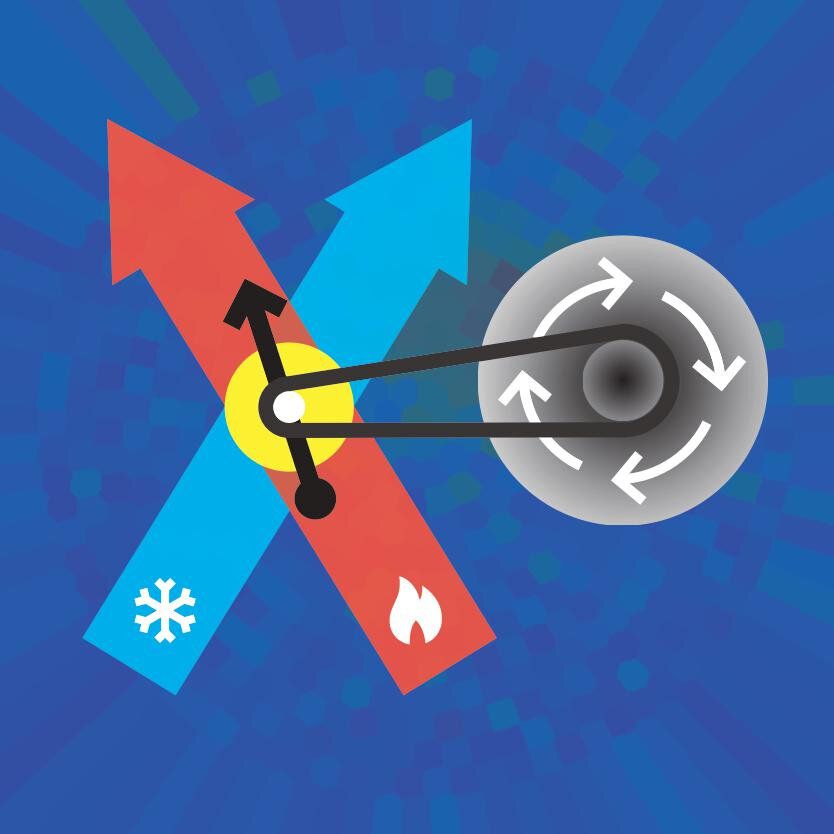
Theoretical physicists at Trinity College Dublin are among an international collaboration that has built the world’s smallest engine—which, as a single calcium ion, is approximately ten billion times smaller than a car engine.
Work performed by Professor John Goold’s QuSys group in Trinity’s School of Physics describes the science behind this tiny motor. The research, published today in international journal Physical Review Letters, explains how random fluctuations affect the operation of microscopic machines. In the future, such devices could be incorporated into other technologies in order to recycle waste heat and thus improve energy efficiency.
The engine itself—a single calcium ion—is electrically charged, which makes it easy to trap using electric fields. The working substance of the engine is the ion’s “intrinsic spin” (its angular momentum). This spin is used to convert heat absorbed from laser beams into oscillations, or vibrations, of the trapped ion.

Scientists find a way to create long-life, fast-charging batteries
A group of researchers led by Skoltech Professor Pavel Troshin studied coordination polymers, a class of compounds with scarcely explored applications in metal-ion batteries, and demonstrated their possible future use in energy storage devices with a high charging/discharging rate and stability. The results of their study were published in the journal Chemistry of Materials.
The charging/discharging rate is one of the key characteristics of lithium-ion batteries. Most modern commercial batteries need at least an hour to get fully charged, which certainly limits the scope of their application, in particular, for electric vehicles. The trouble with active materials, such as the most popular anode material, graphite, is that their capacity decays significantly, as their charging rate increases. To retain the battery capacity at high charging rates, the active electrode materials must have high electronic and ionic conductivity, which is the case with the newly-discovered coordination polymers that are derived from aromatic amines and salts of transition metals, such as nickel or copper. Although these compounds hold a great promise, their application in lithium-ion batteries remains virtually unexplored.
A recent study undertaken by a group of scientists from Skoltech and the Institute for Problems of Chemical Physics of RAS led by Professor P. Troshin in collaboration with the University of Cologne (Germany) and the Ural Federal University, focused on tetraaminobenzene-based linear polymers of nickel and copper. Although the linear polymers exhibited much lower initial electronic conductivity as compared to their two-dimensional counterparts, it transpired that they can be used as anode materials that get charged/discharged in less than a minute, because their conductivity increases dramatically after the first discharge due to lithium doping.
Mathematical framework turns any sheet of material into any shape using kirigami cuts
This could lead to self-healing cars.
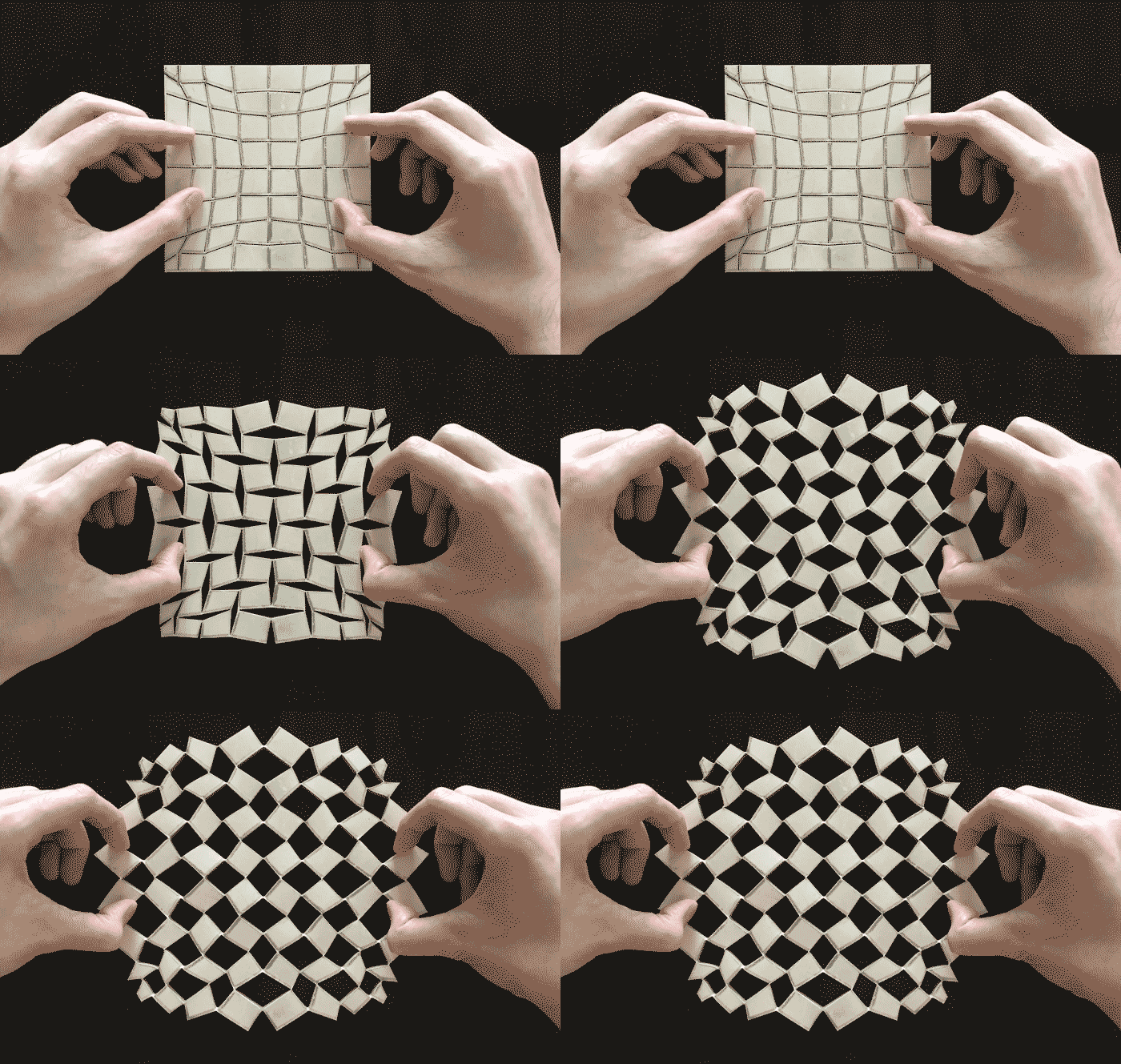
Researchers from the Harvard John A. Paulson School of Engineering and Applied Sciences (SEAS) have developed a mathematical framework that can turn any sheet of material into any prescribed shape, inspired by the paper craft termed kirigami (from the Japanese, kiri, meaning to cut and kami, meaning paper).
Unlike its better-known cousin origami, which uses folds to shape paper, kirigami relies on a pattern of cuts in a flat paper sheet to change its flexibility and allow it to morph into 3D shapes. Artists have long used this artform to create everything from pop-up cards to castles and dragons.
“We asked if it is possible to uncover the basic mathematical principles underlying kirigami and use them to create algorithms that would allow us to design the number, size and orientation of the cuts in a flat sheet so that it can morph into any given shape,” said L. Mahadevan, de Valpine Professor of Applied Mathematics, Physics, and Organismic and Evolutionary Biology, the senior author on the paper.
A 127-year-old physics riddle solved
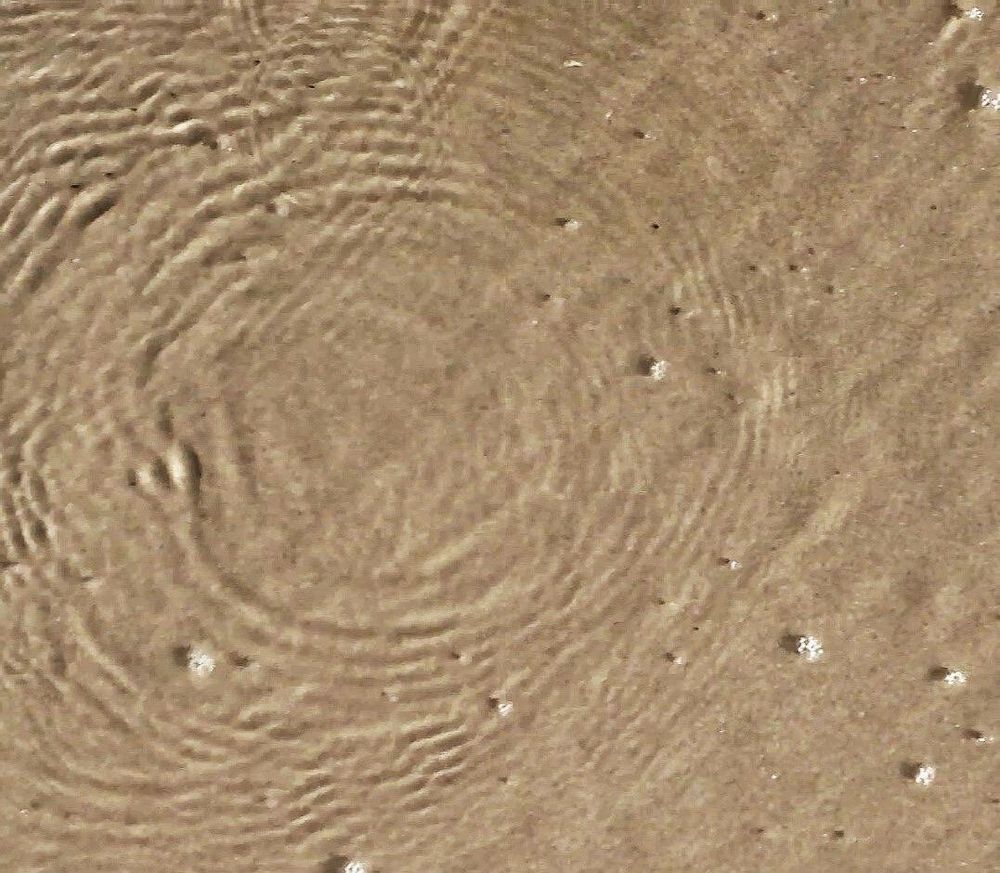
He solved a 127-year-old physics problem on paper and proved that off-centered boat wakes could exist. Five years later, practical experiments proved him right.
“Seeing the pictures appear on the computer screen was the best day at work I’ve ever had,” says Simen Ådnøy Ellingsen, an associate professor at NTNU’s Department of Energy and Process Engineering.
That was the day that Ph.D. candidate Benjamin Keeler Smeltzer and master’s student Eirik Æsøy had shown in the lab that Ellingsen was right and sent him the photos from the experiment. Five years ago, Ellingsen had challenged accepted knowledge from 1887, armed with a pen and paper, and won.

Black hole gobbles up neutron star, causing ripples in space and time
In the same decade when gravitational waves and a neutron star merger have been observed, astronomers have now observed what they believe to be the first detection of a black hole swallowing a neutron star.
Last Wednesday, gravitational wave detectors in Italy and the US, called LIGO and Virgo, detected telltale ripples in space and time, traced to an event that happened 8,550 million trillion kilometers away from Earth.
Astronomers are analyzing the data from the detection to confirm the size of the two objects that came together to form such cataclysmic ripples, but the event is likely a black hole eating a neutron star.

With open data, scientists share their work
Cranmer is a member of ATLAS, one of the two general-purpose experiments that, among other things, co-discovered the Higgs boson at the Large Hadron Collider at CERN. He and other CERN researchers recently published a letter in Nature Physics titled “Open is not enough,” which shares lessons learned about providing open data in high-energy physics. The CERN Open Data Portal, which facilitates public access of datasets from CERN experiments, now contains more than two petabytes of information.
It could be said that astronomy, one of the oldest sciences, was one of the first fields to have open data. The open records of Chinese astronomers from 1054 A.D. allowed astronomer Carlo Otto Lampland to identify the Crab Nebula as the remnant of a supernova in 1921. In 1705 Edward Halley used the previous observations of Johannes Kepler and Petrus Apianus—who did their work before Halley was old enough to use a telescope—to deduce the orbit of his eponymous comet.
In science, making data open means making available, free of charge, the observations or other information collected in a scientific study for the purpose of allowing other researchers to examine it for themselves, either to verify it or to conduct new analyses.
Scientists continue to use open data to make new discoveries today. In 2010, a team of scientists led by Professor Doug Finkbeiner at Harvard University found vast gamma-ray bubbles above and below the Milky Way. The accomplishment was compared to the discovery of a new continent on Earth. The scientists didn’t find the bubbles by making their own observations; they did it by analyzing publicly available data from the Fermi Gamma Ray Telescope.
The physics of cell-size regulation across timescales
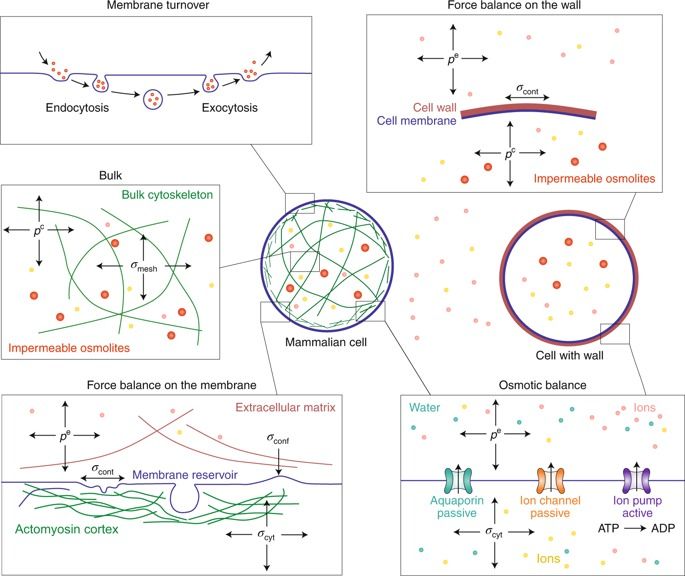
The size of a cell is determined by a combination of synthesis, self-assembly, incoming matter and the balance of mechanical forces. Such processes operate at the single-cell level, but they are deeply interconnected with cell-cycle progression, resulting in a stable average cell size at the population level. Here, we examine this phenomenon by reviewing the physics of growth processes that operate at vastly different timescales, but result in the controlled production of daughter cells that are close copies of their mothers. We first review the regulatory mechanisms of size at short timescales, focusing on the contribution of fundamental physical forces. We then discuss the multiple relevant regulation processes operating on the timescale of the cell cycle. Finally, we look at how these processes interact: one of the most important challenges to date involves bridging the gap between timescales, connecting the physics of cell growth and the biology of cell-cycle progression.
Future of Physics
Great discuss of time travel by Dr. Brain greene.

Physicists solve 2,000-year-old optical problem
A trio of physicists from the National Autonomous University of Mexico and Tec de Monterrey has solved a 2,000-year-old optical problem—the Wasserman-Wolf problem. In their paper published in the journal Applied Optics, Rafael González-Acuña, Héctor Chaparro-Romo, and Julio Gutiérrez-Vega outline the math involved in solving the puzzle, give some examples of possible applications, and describe the efficiency of the results when tested.
Over 2,000 years ago, Greek scientist Diocles recognized a problem with optical lenses—when looking through devices equipped with them, the edges appeared fuzzier than the center. In his writings, he proposed that the effect occurs because the lenses were spherical—light striking at an angle could not be focused because of differences in refraction. Isaac Newton was reportedly stumped in his efforts to solve the problem (which became known as spherical aberration), as was Gottfried Leibniz.
In 1949, Wasserman and Wolf devised an analytical means for describing the problem, and gave it an official name—the Wasserman-Wolf problem. They suggested that the best approach to solving the problem would be to use two aspheric adjacent surfaces to correct aberrations. Since that time, researchers and engineers have come up with a variety of ways to fix the problem in specific applications—most particularly cameras and telescopes. Most such efforts have involved creating aspherical lenses to counteract refraction problems. And while they have resulted in improvement, the solutions have generally been expensive and inadequate for some applications.