In Brief:
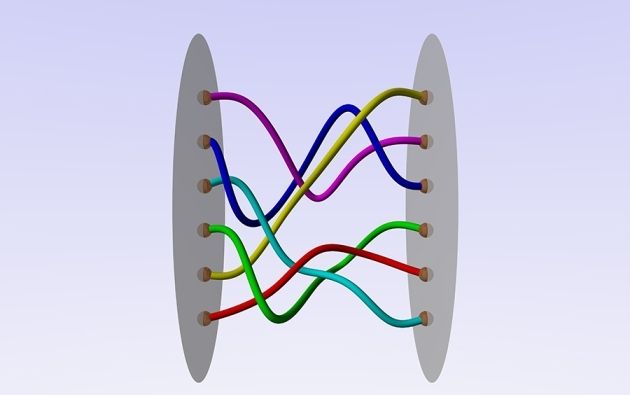
- 80 years after it was first theorized, researchers have found more evidence for the existence of a fermion that’s its own antiparticle.
- The discovery of Majorana fermions could be the key to developing usable quantum computers.

To all those who said it couldn’t happen for another 10+ years; this article is definitely for you.
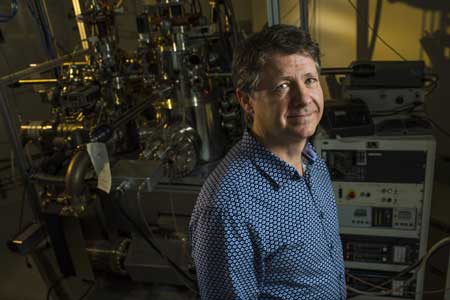
Robert Wolkow, University of Alberta physics professor and the Principal Research Officer at Canada’s National Institute for Nanotechnology, has developed a technique to switch a single-atom channel.
What does it all mean? With applications for practical systems like silicon semi-conductor electronics, it means smaller, more efficient, more energy-conserving computers, as just one example of the technology revolution that is unfolding right before our very eyes (if you can squint that hard).

Just WOW!
PULLMAN, Wash., Oct. 26 — Washington State University and NASA scientists are set to begin an investigation into the strange world of quantum physics on the International Space Station.
WSU physicists Peter Engels and Maren Mossman are part of a team studying the behavior of atoms laser-cooled to temperatures just a few billionths of a degree above absolute zero, the point where they behave like one wave of discrete particles.
On Earth, the unavoidable presence of gravity makes it difficult to conduct unperturbed observations of this this super-cooled substance – called a Bose-Einstein condensate – and the laws of quantum physics that govern its wave-like behavior.

Drug discovery is a long and difficult process that requires a comprehensive understanding of the molecular structures of compounds under investigation. It’s difficult to have an idea of the precise shape of complex molecules such as proteins, but researchers at University of Melbourne in Australia have come up with a way of seeing the location of individual atoms within biomolecules.
Using quantum bits, most notably utilized in quantum computer research, the investigators offer a way of producing a magnetic resonance sensor and a magnetic field gradient that can work as a tiny MRI machine. The machine would have the resolution capable of seeing single atoms components of larger molecules. This MRI machine has yet to be actually built, but the steps have been laid out based on comprehensive theoretical work. If it proves successful in practice, the technology may overcome current imaging techniques that rely on statistical averages and don’t work well on molecules that don’t crystallize well.
“In a conventional MRI machine large magnets set up a field gradient in all three directions to create 3D images; in our system we use the natural magnetic properties of a single atomic qubit,” said lead author of the research Viktor Perunicic. “The system would be fabricated on-chip, and by carefully controlling the quantum state of the qubit probe as it interacts with the atoms in the target molecule, we can extract information about the positions of atoms by periodically measuring the qubit probe and thus create an image of the molecule’s structure.”

Using ultrafast laser flashes, physicists from the Max Planck Institute have generated the fastest electric current that has ever been measured inside a solid material.
In the field of electronics, the principle ‘the smaller, the better’ applies. Some building blocks of computers or mobile phones, however, have become nearly as small today as only a few atoms. It is therefore hardly possible to reduce them any further.
Another factor for the performance of electronic devices is the speed at which electric currents oscillate. Scientists at the Max Planck Institute of Quantum Optics have now created electric currents inside solids which exceed the frequency of visible light by more than ten times They made electrons in silicon dioxide oscillate with ultrafast laser pulses. The conductivity of the material which is typically used as an insulator was increased by more than 19 orders of magnitude.
Oh boy!
Space vacuum that appears to be stable due to the complete absence of substance in it, is likely to be fraught with great danger. The idea about the destruction of the universe is based on the hypothesis of vacuum instability. Any system in our world has a certain amount of potential energy. But, space vacuum is not as empty as it may seem to be. Vacuum in space is filled with quantum particles, which, in turn, may seek their own “stability” to annihilate the material world in its entirety during the process.
A video about the possibility of self-destruction of our universe has gone on the Internet.

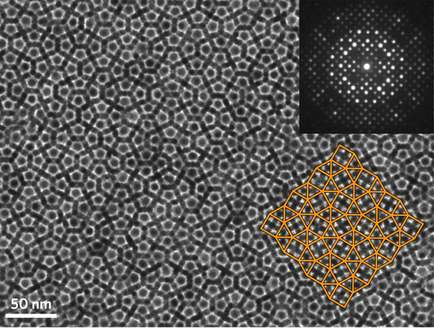
Crystals are defined by their repeating, symmetrical patterns and long-range order. Unlike amorphous materials, in which atoms are randomly packed together, the atoms in a crystal are arranged in a predictable way. Quasicrystals are an exotic exception to this rule. First discovered in 1982, their atoms pack together in an orderly fashion, but in a mosaic-like pattern that doesn’t repeat and can’t be predicted from a small sample.
Being able to map out the position of individual atoms within a quasicrystal is a prerequisite for achieving a complete understanding of their structure and aids in designing them for specific applications, but conventional microscopy techniques don’t have the resolution to accomplish such a task.
In an effort to address this challenge, researchers from the University of Pennsylvania and the University of Michigan have engineered a quasicrystal that is formed by self-assembling nanoparticles, which are an order of magnitude larger than the atoms that comprise traditional quasicrystals. Their larger size enabled the team to use a suite of microscopy and simulation techniques to deduce, for the first time, the full three-dimensional configuration of a spontaneously formed quasicrystal.
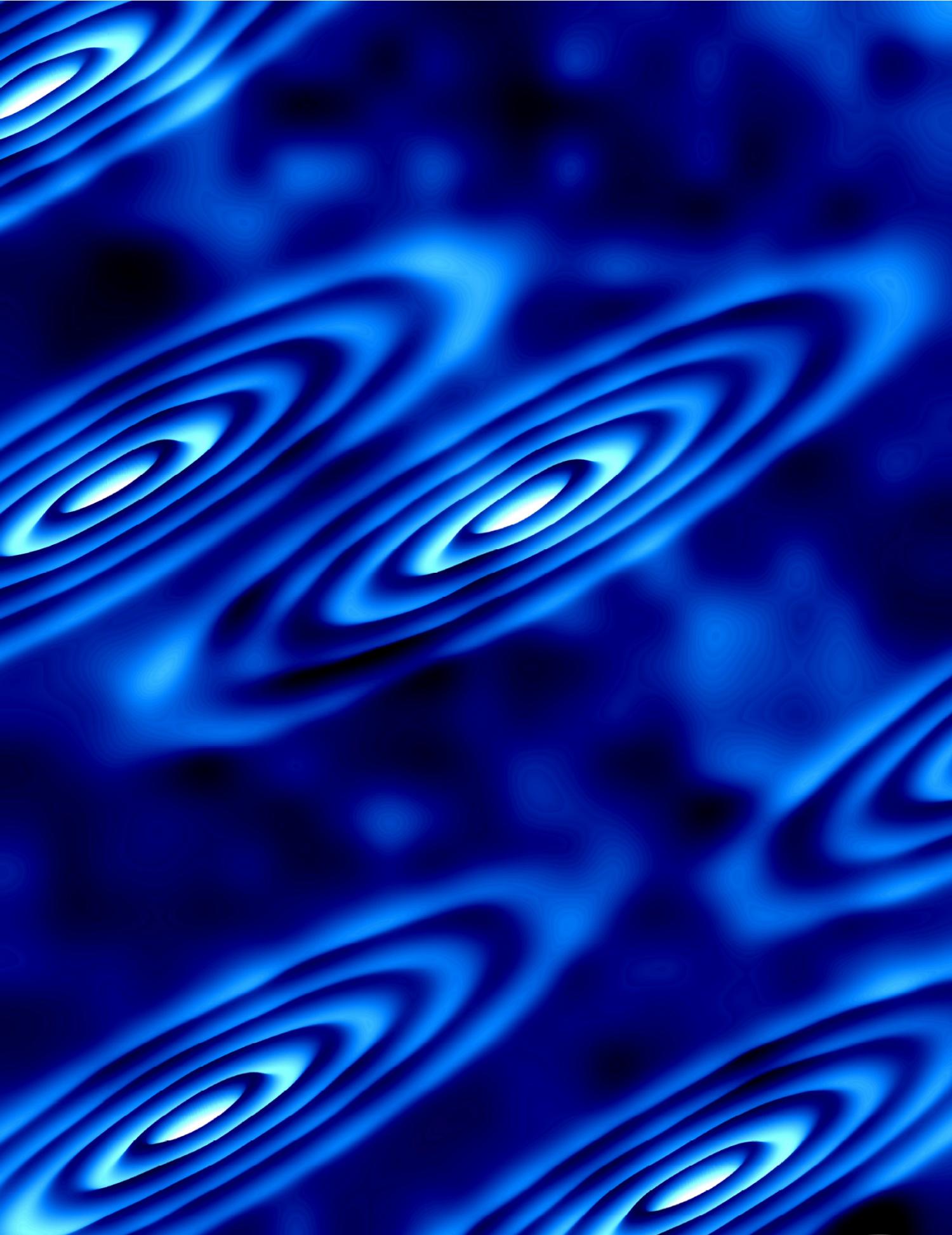
For the first time, an experiment has directly imaged electron orbits in a high-magnetic field, illuminating an unusual collective behavior in electrons and suggesting new ways of manipulating the charged particles.
The study, conducted by researchers at Princeton University and the University of Texas-Austin was published Oct. 21, in the journal Science. The study demonstrates that the electrons, when kept at very low temperatures where their quantum behaviors emerge, can spontaneously begin to travel in identical elliptical paths on the surface of a crystal of bismuth, forming a quantum fluid state. This behavior was anticipated theoretically during the past two decades by researchers from Princeton and other universities.
“This is the first visualization of a quantum fluid of electrons in which interactions between the electrons make them collectively choose orbits with these unusual shapes,” said Ali Yazdani, the Class of 1909 Professor of Physics at Princeton, who led the research.