‘Something terribly new’ goes bump in data yet to be confirmed by Atlas detector.
Category: particle physics – Page 758
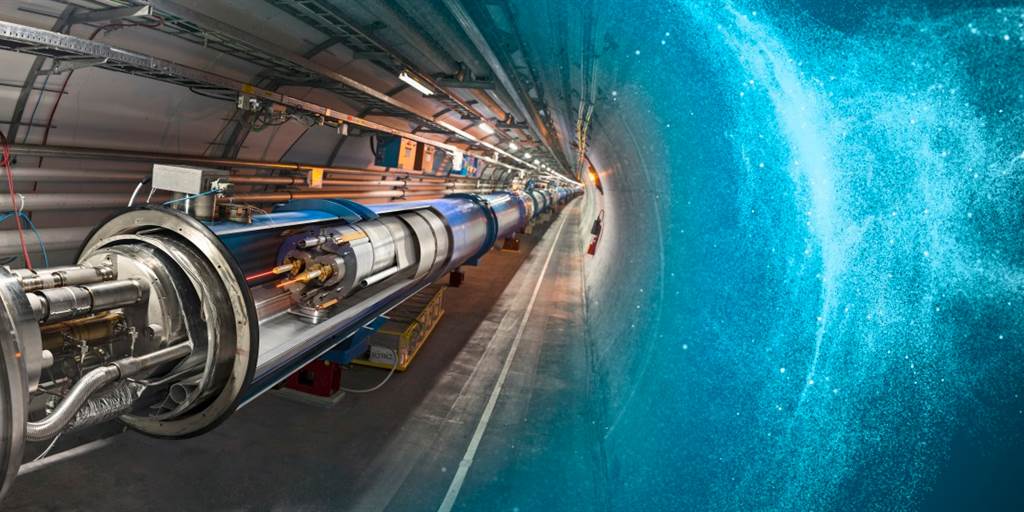
Sir Martin Rees says a physics experiment could swallow up the entire universe
Just how real is the risk?
Some physicists worried that particle accelerator experiments could unleash bits of “strange matter” that destroy the Earth, or even the entire universe. Daniel Dominguez, Maximilien Brice / CERN.

Technology and Culture: Our Accelerating Epigenetic Factor Driven Evolution
Memes are not just learned, they run deeper than that, they are part of our shared experience as human beings. This is how we communicate to each other through spoken, written, and body language; this is how we participate in customs, rituals and cultural traditions. Indeed, human civilization has always been a “cultured” virtual reality. We don’t often think of cultures as virtual realities, but there is no more apt descriptor for our widely diverse sociology and interpretations than the metaphor of the “virtual reality.” In truth, the virtual reality metaphor encompasses the entire human enterprise. We should realize that all our ideologies and religions, our belief systems and models of reality are our own personal operating systems — real to us but wry to someone else — each of us lives in a seemingly shared but simultaneously private virtual world.
By Alex Vikoulov.
“We live in succession, in division, in parts, in particles. Meantime within man is the soul of the whole; the wise silence; the universal beauty, to which every part and particle is equally related; the eternal One. And this deep power in which we exist, and whose beatitude is all accessible to us, is not only self-sufficing and perfect in every hour, but the act of seeing and the thing seen, the seer and the spectacle, the subject and the object, are one. We see the world piece by piece, as the sun, the moon, the animal, the tree; but the whole, of which these are the shining parts, is the soul.” — Ralph Waldo Emerson, “The Over-Soul” (1841)
If atoms are mostly empty space, why is matter not transparent?
Sure there’s lots of empty space within atoms, but that doesn’t mean there’s nothing there to see.
Scientists Worldwide Are Getting Serious About Quantum Internet
It takes little more than logging on to see the flaws in today’s internet—mainly, how easy it is to steal or intercept data. One future solution for these problems could be an upgrade that relies on the latest advances in the science of subatomic particles: a quantum internet.
Just last week, three scientists from the renowned QuTech center at the Delft University of Technology (TU Delft) revealed a roadmap for how this quantum internet should develop. They also plan to connect four cities with a quantum link by 2020, reports MIT Tech Review. And today, University of Chicago scientists announced that they plan to set up a quantum link across a 30-mile distance. Scientists are really getting serious about this quantum internet idea.
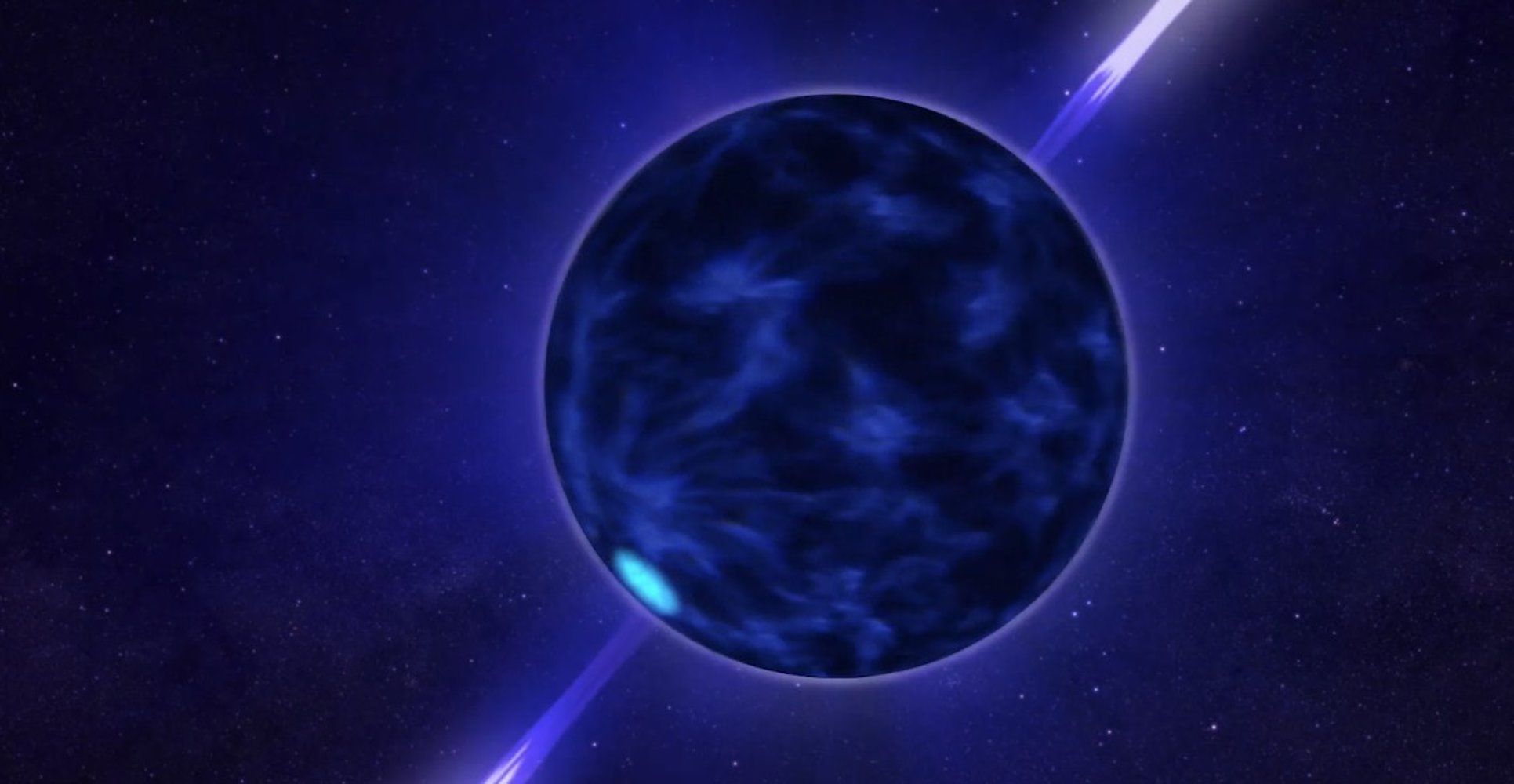
Ask a Spaceman: The Quirks of Quark Star Physics
Astrophysicist digs deep into quark stars in the latest episode of ‘Ask a Spaceman.’
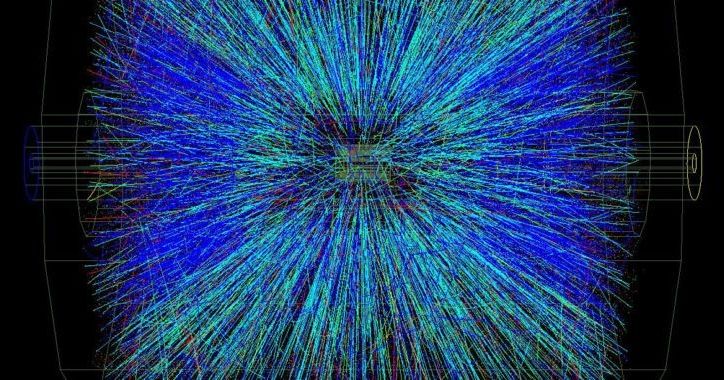
Atoms may come apart as the Universe’s biggest stars explode
Something we found in a particle accelerator could explain massive stars’ supernovae.
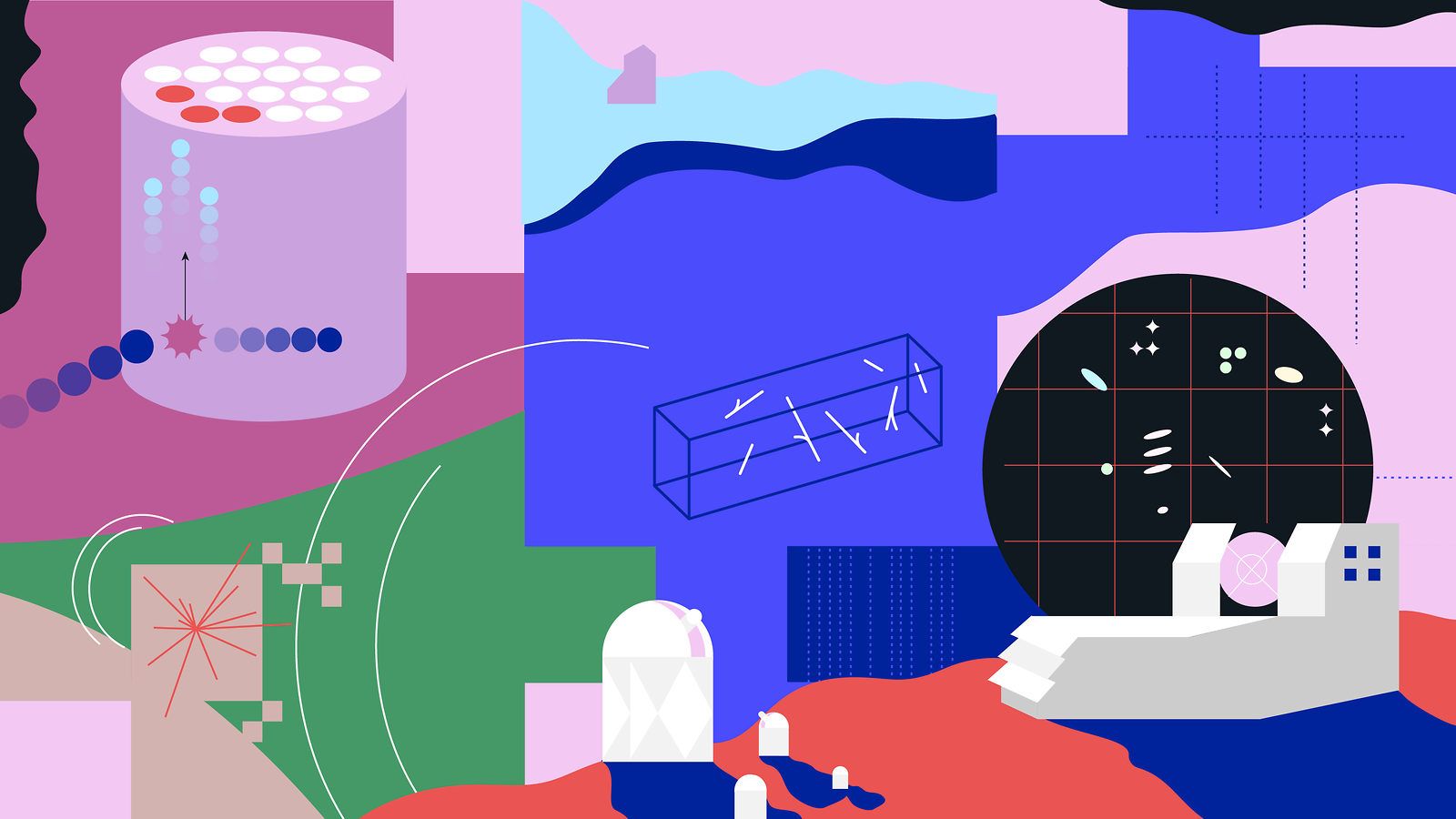
The building boom
These international projects, selected during the process to plan the future of US particle physics, are all set to come online within the next 10 years.
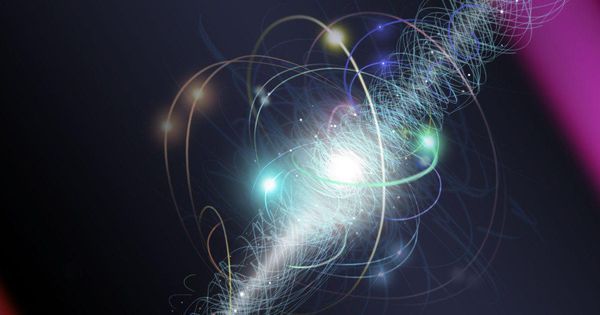
How Does The ‘Shape’ Of An Electron Limit Particle Physics?
The ACME experiment has released new result showing the “roundness” of the electron, which are touted as a test of fundamental physics theories. How does that work, anyway?

Why are particle physicists so keen to find the Higgs boson?
This elementary particle was confirmed by Large Hadron Collider experiments at CERN in 2012 — but what’s the big deal?