Toggle light / dark theme

The Human Brain Runs Way Hotter Than We Ever Realized, Scientists Find

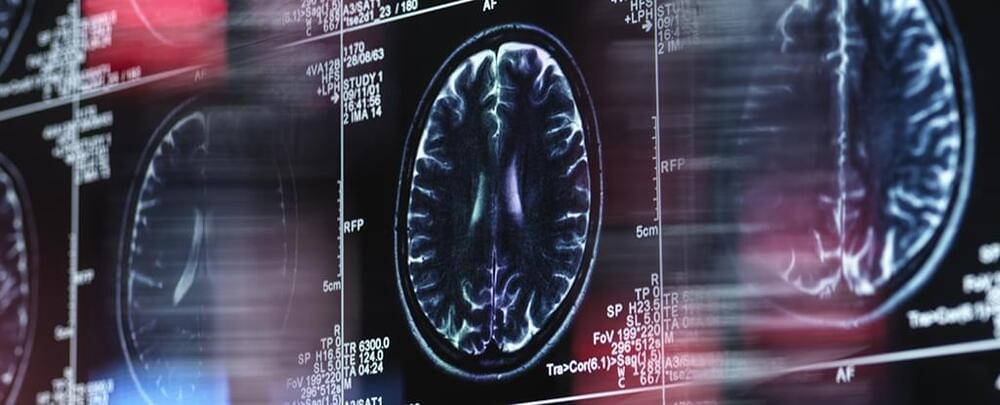
From the engine in your car to the components in your laptop, mechanical systems tend to heat up when they’re working harder. Now new research has revealed that the same can be said of the brain – and it runs hotter than was previously thought.

Some parts of the deep brain can get up to 40 °C (104 °F), a new study shows, though this varies by sex, time of day, and various other factors. Compare that with the average oral temperature in human bodies, which is typically under 37 °C (98.6 °F).

This isn’t a sign of malfunctioning though, researchers think, and may actually be evidence that the brain is operating healthily. Unusual heat signatures could potentially be used in the future to look for signs of brain damage or disorder.

Collapsing a leading theory for the quantum origin of consciousness

The origin of consciousness is one of the greatest mysteries of science. One proposed solution, first suggested by Nobel Laureate and Oxford mathematician Roger Penrose and anesthesiologist Stuart Hammeroff, at Arizona State University, in Tucson, attributes consciousness to quantum computations in the brain. This in turn hinges on the notion that gravity could play a role in how quantum effects disappear, or “collapse.” But a series of experiments in a lab deep under the Gran Sasso mountains, in Italy, has failed to find evidence in support of a gravity-related quantum collapse model, undermining the feasibility of this explanation for consciousness. The result is reported in the journal Physics of Life Reviews.

“How consciousness arises in the brain is a huge puzzle,” says Catalina Curceanu, a member of the physics think tank, the Foundational Questions Institute, FQXi, and the lead physicist on the experiments at INFN in Frascati, Italy. “There are many competing ideas, but very few can be experimentally tested.”

Quantum physics famously tells us that cats can be alive and dead at the same time, at least in . Yet in practice we never see felines locked in such an unfortunate limbo state. One popular explanation for why not is because the “wavefunction” of a system–its quantum character allowing it to be in two contradictory states simultaneously–is more likely to “collapse” or be destroyed if it is more massive, leaving it in one defined state, either dead or alive, say, but not both at the same time. This model of collapse, related to gravity acting on heavy objects like cats, was invoked by Penrose and Hammeroff when developing their model of consciousness, ‘Orch OR theory’ (the Orchestrated Objective Reduction theory), in the 1990s.

Cartographers of the Brain: Mapping the Connectome

Scientists are attempting to map the wiring of the nearly 100 billion neurons in the human brain. Are we close to uncovering the mysteries of the mind or are we only at the beginning of a new frontier?

PARTICIPANTS: Deanna Barch, Jeff Lichtman, Nim Tottenham, David Van Essen.
MODERATOR: John Hockenberry.
Original program date: JUNE 4, 2017

WATCH THE TRAILER: https://youtu.be/lX5S_1bXUhw.
WATCH THE LIVE Q&A W/ JEFF LICHTMAN: https://youtu.be/h14hcBrqGSg.

Imagine navigating the globe with a map that only sketched out the continents. That’s pretty much how neuroscientists have been operating for decades. But one of the most ambitious programs in all of neuroscience, the Human Connectome Project, has just yielded a “network map” that is shedding light on the intricate connectivity in the brain. Join leading neuroscientists and psychologists as they explore how the connectome promises to revolutionize treatments for psychiatric and neurological disorders, answer profound questions regarding the electrochemical roots of memory and behavior, and clarify the link between our upbringing and brain development.

MORE INFO ABOUT THE PROGRAM AND PARTICIPANTS: https://www.worldsciencefestival.com/programs/wired-life-mapping-connectome/

This program is part of the Big Ideas Series, made possible with support from the John Templeton Foundation.

How To Live Forever with BioViva’s Liz Parrish! The LONGEVITY revolution has begun!

Liz mentions combinatorial gene therapy for aging near the end which is something you hear the likes of George Church mention they are working on.


Liz Parrish is the founder of @BioViva Science, a company dedicated to curing biological aging, a disease that is at the root cause of all other chronic diseases from heart disease to Alzheimer’s. Watch this video to understand how much more control we have over our lifespan and health!

💻Connect with BioViva here:
Website: https://bioviva-science.com/
YouTube channel: https://www.youtube.com/channel/UCaBq8hEExcUN6mtKMEuBvMQ
Instagram: https://www.instagram.com/biovivasciences/
Twitter: https://twitter.com/BioVivaScience.
Facebook: https://www.facebook.com/BiovivaSciences/

💻Connect with Liz Parrish here:
Instagram: https://www.instagram.com/lizlparrish/
Twitter: https://twitter.com/parrishliz?lang=en.

☕EAT MEAT. LIFT. REPEAT. mug merch: https://bit.ly/3GuFUXx.

Posture Assessed in Health Exam Detects Cognitive Decline

Summary: An older person’s posture may give clues to hidden cognitive decline, a new study reports.

Source: Shinshu University.

A mass survey of citizens aged 50 to 89 years examined whether cognitive decline could be detected by sagittal spinal balance measurement based on a radiological approach. Doctors from Shinshu University observed associations of sagittal vertical axis (SVA) anteriorization and higher age with lower cognitive function.

Synapse Study Explores the “Dark Matter of the Brain”

They are part of the brain of almost every animal species, yet they remain usually invisible even under the electron microscope. “Electrical synapses are like the dark matter of the brain,” says Alexander Borst, director at the MPI for Biological Intelligence, in foundation (i.f). Now a team from his department has taken a closer look at this rarely explored brain component: In the brain of the fruit fly Drosophila, they were able to show that electrical synapses occur in almost all brain areas and can influence the function and stability of individual nerve cells.

Neurons communicate via synapses, small contact points at which chemical messengers transmit a stimulus from one cell to the next. We may remember this from biology class. However, that is not the whole story. In addition to the commonly known chemical synapses, there is a second, little-known type of synapse: the electrical synapse. “Electrical synapses are much rarer and are hard to detect with current methods. That’s why they have hardly been researched so far,” explains Georg Ammer, who has long been fascinated by these hidden cell connections. “In most animal brains, we therefore don’t know even basic things, such as where exactly electrical synapses occur or how they influence brain activity.”

An electrical synapse connects two neurons directly, allowing the electrical current that neurons use to communicate, to flow from one cell to the next without a detour. Except in echinoderms, this particular type of synapse occurs in the brain of every animal species studied so far. “Electrical synapses must therefore have important functions: we just do not know which ones!” says Georg Ammer.

/* */