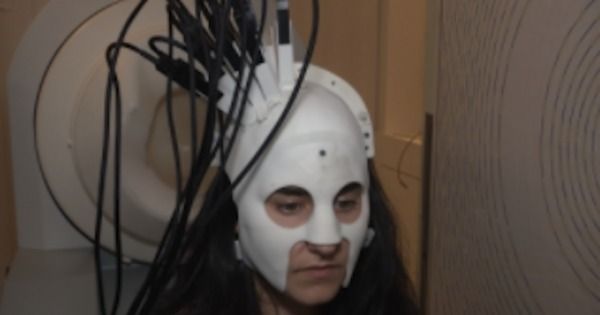
Could this mask replace MRI technology?


Scientists from several universities published a paper in Science Advances, in which they reveal their progress toward the “holy grail” of computing: a light-based microchip that truly rivals the speed and parallel processing of the human brain.
Scientists at the University of Exeter have made a landmark breakthrough in the quest for the “holy grail” of computing: human-brain-mimicking microchips able to store and process information on par with homo sapiens, according to a new Science Advances release.
Dr. Mark Katakowski makes the case that rejuvenation of the bone marrow niche is a practical approach to life-extension today. Mark is President of the longevity company Forever Labs, and is a medical physicist with extensive experience developing stem cell therapies for neurological disease and injury.
Mark was first to demonstrate that microRNA functions as a communication molecule between brain tumor cells, a previously unknown mechanism of intercellular eukaryotic gene regulation. Based upon his use of stem cells to treat age-related disease, Mark surmises that rejuvenating the bone marrow provides significant opportunity to combat aging.

The human brain is used as a comparison for how computer’s function. But, honestly, computers are nothing like human brains. Not yet, at least.
That could change as researchers have developed computing technology that uses light to mimic the functionality of a nerve’s synapse, opening the way for hardware that combines the speed of modern processors with the efficiency of brainpower.
Brains and computers are both systems that can model, manipulate, and store information. From there, they don’t tend to have all that much in common.

So far, the only intervention that is known to increase lifespan in multiple species is caloric restriction (CR). Caloric restriction is known to increase lifespan in the majority of mouse strains tested[1]. The effects of CR have even been shown to influence how primates age and reduce the incidence of diabetes, cancer, cardiovascular disease, and brain atrophy[2].
Science has known about the effects of CR since the 1930s, when rat experiments first showed researchers this phenomenon[3]. However, despite the various health benefits of CR, how it delays aging has remained a mystery. A new study suggests that epigenetic drift may be the answer.
THE numbers are stark. Cancer claimed the lives of 8.8m people in 2015; only heart disease caused more deaths. Around 40% of Americans will be told they have cancer during their lifetimes. It is now a bigger killer of Africans than malaria. But the statistics do not begin to capture the fear inspired by cancer’s silent and implacable cellular mutiny. Only Alzheimer’s exerts a similar grip on the imagination.
Confronted with this sort of enemy, people understandably focus on the potential for scientific breakthroughs that will deliver a cure. Their hope is not misplaced. Cancer has become more and more survivable over recent decades owing to a host of advances, from genetic sequencing to targeted therapies. The five-year survival rate for leukemia in America has almost doubled, from 34% in the mid-1970s to 63% in 2006-12. America is home to about 15.5m cancer survivors, a number that will grow to 20m in the next ten years. Developing countries have made big gains, too: in parts of Central and South America, survival rates for prostate and breast cancer have jumped by as much as a fifth in only a decade.
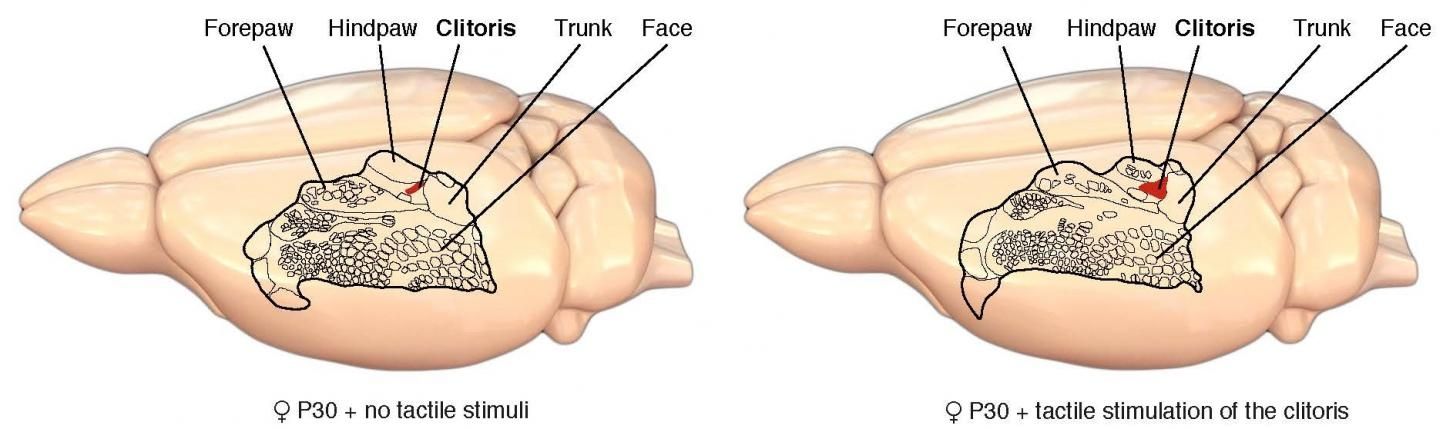
Hormones or sexual experience? Which of these is crucial for the onset of puberty? It seems that when rats are touched on their genitals, their brain changes and puberty accelerates. In a new study publishing September 21 in the open access journal PLOS Biology researchers at the Bernstein Center, and Humboldt University, Berlin, led by Constanze Lenschow and Michael Brecht, report that sexual touch might have a bigger influence on puberty than previously thought.
It has been known for some time that social cues can either accelerate or delay puberty in mammals, but it hasn’t been clear which signals are crucial, nor how they affect the body and brain, and in particular the possible reorganization of the brain.
The researchers first observed that the neural representation of the genitals in the cerebral cortex expands during puberty. To begin with, the study confirms what was expected; that sexual hormones accelerate puberty and the growth of the so-called ‘genital cortex’. However, what’s new is that they find that sexual touch also contributes substantially to the acceleration of puberty.

New technology enables thought to be translated into audible words with surprising accuracy by reading user’s brainwaves. The developers say they might be able to get the device to work with smartphones via an app in just five years.
A new system developed by a team of researchers from Japan’s Toyohashi University of Technology can read people’s minds using brainwaves.