Toggle light / dark theme

Scientists unravel how a tiny region of the brain helps us form distinct memories

Life may unfold as a continuous stream, but our memories tell a different story. We do not recall the past as one long, unbroken text. Instead, we remember it as a series of meaningful events, like how sentences are structured with grammar and punctuation. Like any narrative, this organization gives our experiences shape and coherence, helping us make sense of what and when things happen.

The brain must devote a lot of space to this herculean task, right?

Wrong! It turns out that a tiny but mighty region pulls far more than its weight.

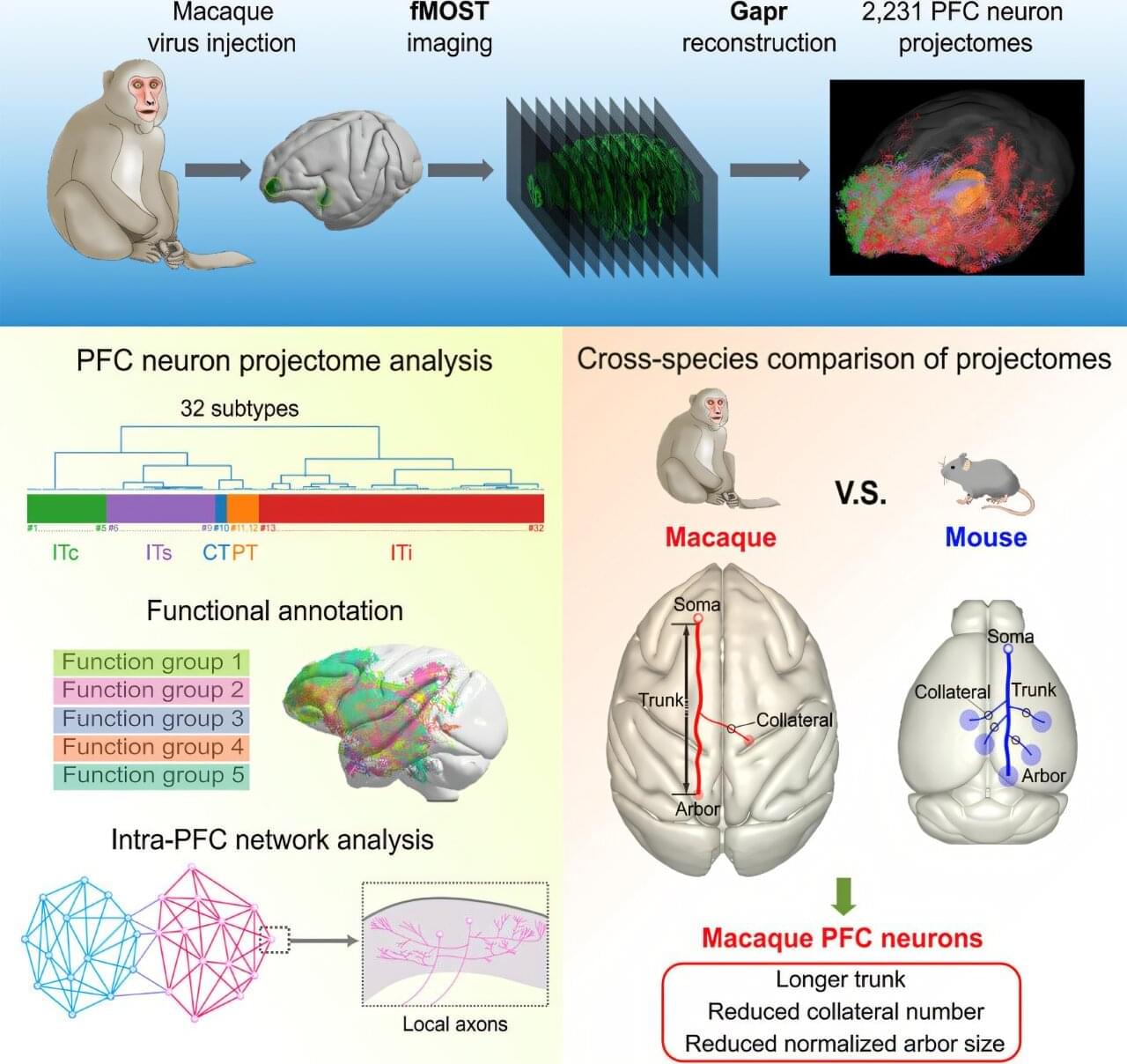
Single-neuron projectomes of macaque prefrontal cortex reveal primate-specific connectivity principle

In a study published in Cell on July 10, researchers reported the first comprehensive study of whole-brain projectomes of the macaque prefrontal cortex (PFC) at the single-neuron level and revealed the organization of macaque PFC connectivity.

The team from the Center for Excellence in Brain Science and Intelligence Technology (CEBSIT) of the Chinese Academy of Sciences, along with a team from the HUST-Suzhou Institute for Brainsmatics, compared macaque and mouse PFC single-neuron projectomes and revealed highly refined axon targeting and arborization in primates.

The PFC in primates, including humans, has dramatically expanded over the course of evolution, which is believed to be the structural basis of high cognitive functions. Previous studies of PFC connectivity in have mainly relied on population-level viral tracing and imaging (fMRI), which in general lack single-cell resolution to examine projection diversity. Meanwhile, whole-brain imaging data for tracing axons in the primate brain are massive in size.

THIS Problem Prevents a MERGER Between X.AI and Tesla Stock

Questions to inspire discussion.

🏢 Q: What are Elon Musk’s current ownership stakes in Tesla and XAI? A: Musk owns 55% of XAI and 12.9% of Tesla, with potential to increase his Tesla ownership to 20% through a compensation package.

💰 Q: How do the valuations of XAI and Tesla compare? A: XAI’s valuation is expected to reach $200 billion in the next round, while Tesla’s valuation is approximately $1 trillion.

Potential Conflicts and Risks.

⚖️ Q: What conflict of interest exists for Elon Musk in a potential merger? A: Musk’s significant ownership in both companies creates a conflict of interest in merger discussions, as he must balance his interests in XAI (55% ownership) and Tesla (12.9–20% ownership).

🔒 Q: What control risk does Elon Musk face with Tesla? A: Musk currently lacks the 25% voting control needed for major decisions in Tesla, presenting a non-trivial control risk that could be mitigated through Tesla’s investment in XAI. ## Key Insights.

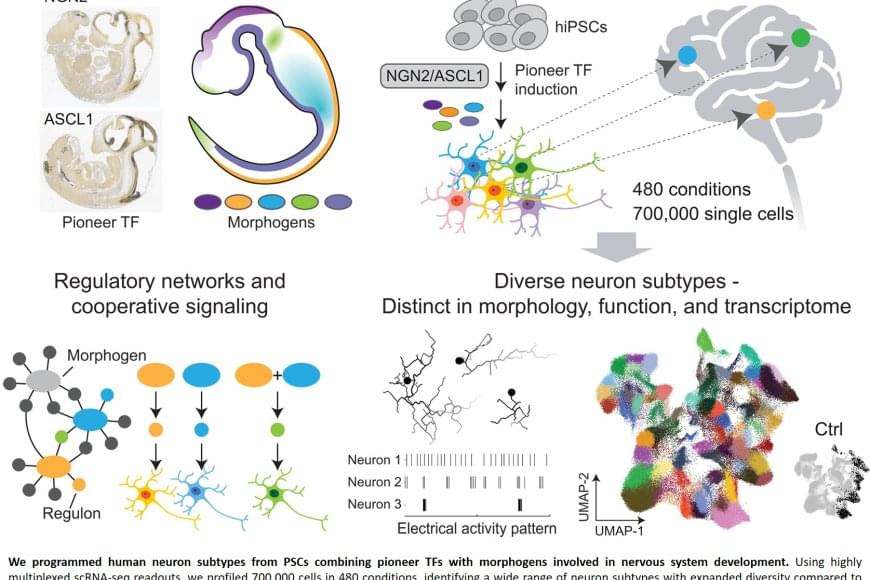
Producing library of heterogeneous human neurons from stem cells

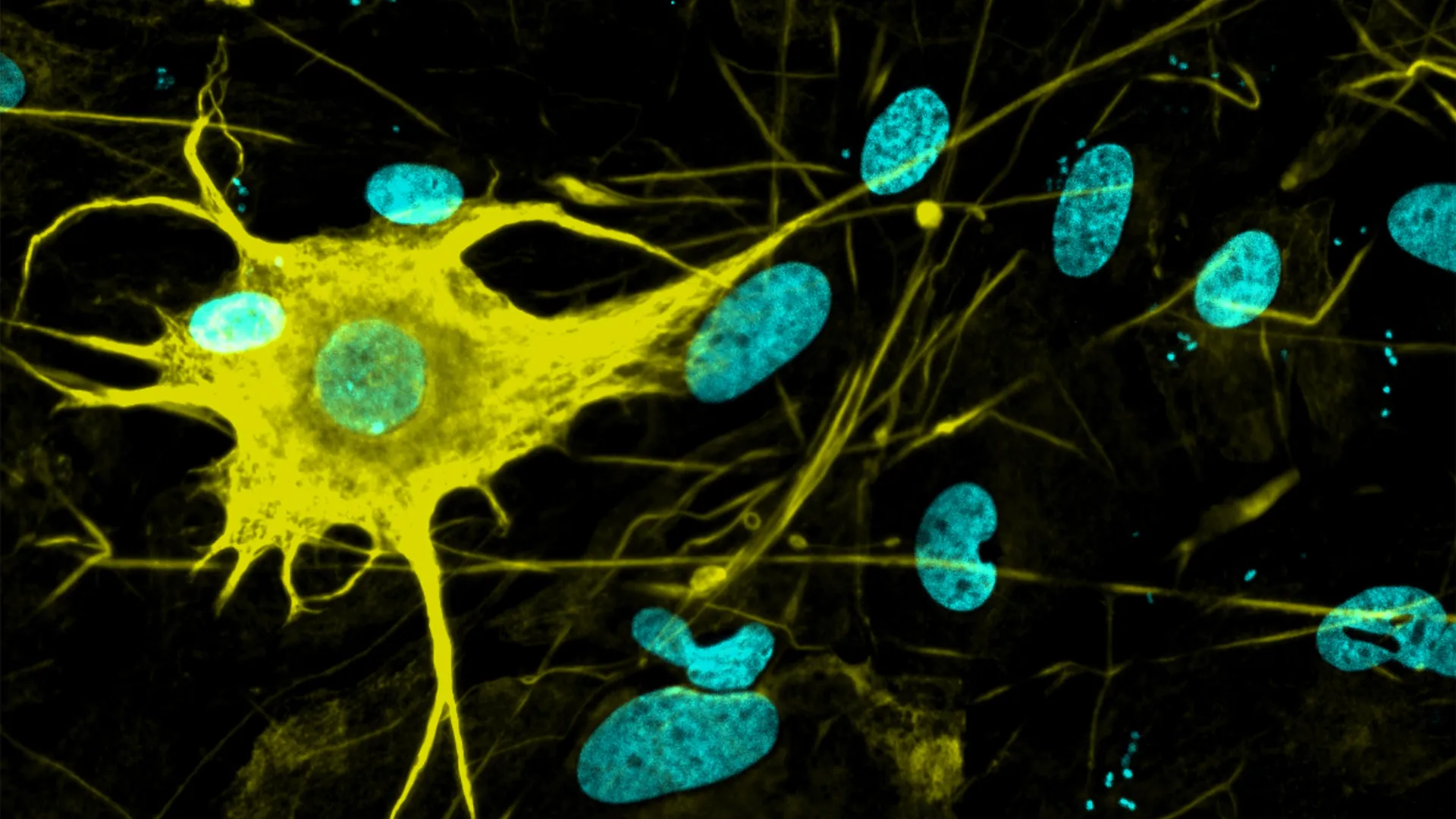
Nerve cells are not just nerve cells. Depending on how finely we distinguish, there are several hundred to several thousand different types of nerve cell in the human brain according to the latest calculations. These cell types vary in their function, in the number and length of their cellular appendages, and in their interconnections. They emit different neurotransmitters into our synapses and, depending on the region of the brain – for example, the cerebral cortex or the midbrain – different cell types are active.

When scientists produced nerve cells from stem cells in Petri dishes for their experiments in the past, it was not possible to take their vast diversity into account. Until now, researchers had only developed procedures for growing a few dozen different types of nerve cell in vitro. They achieved this using genetic engineering or by adding signalling molecules to activate particular cellular signalling pathways. However, they never got close to achieving the diversity of hundreds or thousands of different nerve cell types that actually exists.

“Neurons derived from stem cells are frequently used to study diseases. But up to now, researchers have often ignored which precise types of neuron they are working with,” saysthe senior author. However, this is not the best approach to such work. “If we want to develop cell culture models for diseases and disorders such as Alzheimer’s, Parkinson’s and depression, we need to take the specific type of nerve cell involved into consideration.”
Researchers grow 400+ brain cell types—a leap for Alzheimer’s and Parkinson’s research

Scientists at ETH Zurich have broken new ground by generating over 400 types of nerve cells from stem cells in the lab, far surpassing previous efforts that produced only a few dozen. By systematically experimenting with combinations of morphogens and gene regulators, the researchers replicated the vast diversity of neurons found in the human brain. This breakthrough holds major promise for studying neurological diseases like Alzheimer’s and Parkinson’s, creating more accurate models for drug testing, and eventually even enabling neuron replacement therapies.

/* */