Toggle light / dark theme

Experimental Dementia Drug May Have Anti-Aging Effects

Researchers at the Salk Institute working on an experimental Alzheimer’s drug have discovered it may have a host of anti-aging effects too.

Building on previous work

Research had already been conducted on the drug candidate, J147, with the aim of targeting Alzheimer’s. The results showed the drug could help prevent and even regenerate; reversing memory loss and a form of inherited Alzheimer’s disease in mice subjects. While this form comprises only 1% of Alzheimer’s cases, the biggest risk factor for the remainder is old age. If you could target brain aging itself, risk factors would be significantly reduced.

Read more

Are there More Stars in the Universe than Grains of Sand on Earth?

It may hurt your brain to think about it, but it appears that the answer is possibly to be yes, or at least the numbers are almost in the same ballpark.

Astrophysicists in fact set out to answer this question about a decade ago. It’s a complicated problem to solve, but it’s somewhat easier if you throw in a couple of qualifiers — that we are talking about stars in the observable universe; and grains of sand on the whole planet, not just the seashores.

The researchers started by calculating the luminosity density of a section of the cosmos — this is a calculation of how much light is in that space. They then utilized this calculation to guess the number of stars needed to make that amount of light. This was quite a mathematical challenge!

“You have to suppose that you can have one type of star signify all types of stars,” says astrophysicist Simon Driver, Professor at the International Centre for Radio Astronomy Research in Western Australia and one of the researchers who worked on the question.

“Then let’s suppose, on average, this is a normal mass star that gives out the normal amount of light, so if I know that a part of the universe is producing this amount of light, I can now say how many stars that would associate to.”

Now armed with a guess of the number of stars within a section of the cosmos, the next challenge was to work out the size of the cosmos. Given we know that the cosmos is 13.8 billion years old, we can suppose that we exist in a sphere 13.8 billion light years in volume. But there’s a catch: the universe is possibly immeasurable in size.

Read more

A network of artificial neurons learns to use human language

A computer simulation of a cognitive model entirely made up of artificial neurons learns to communicate through dialog starting from a state of tabula rasa —

A group of researchers from the University of Sassari (Italy) and the University of Plymouth (UK) has developed a cognitive model, made up of two million interconnected artificial neurons, able to learn to communicate using human language starting from a state of ‘tabula rasa’, only through communication with a human interlocutor. The model is called ANNABELL (Artificial Neural Network with Adaptive Behavior Exploited for Language Learning) and it is described in an article published in PLOS ONE. This research sheds light on the neural processes that underlie the development of language.

How does our brain develop the ability to perform complex cognitive functions, such as those needed for language and reasoning? This is a question that certainly we are all asking ourselves, to which the researchers are not yet able to give a complete answer. We know that in the human brain there are about one hundred billion neurons that communicate by means of electrical signals. We learned a lot about the mechanisms of production and transmission of electrical signals among neurons. There are also experimental techniques, such as functional magnetic resonance imaging, which allow us to understand which parts of the brain are most active when we are involved in different cognitive activities. But a detailed knowledge of how a single neuron works and what are the functions of the various parts of the brain is not enough to give an answer to the initial question.

Read more

Lost And Found: Can We Restore Forgotten Memories?

Memories are priceless, and the plight of dementia patients highlights how important they are to forming what makes us, well us. Now a new study has provided hope we may one day be able to restore lost memories.

Clearing the mist

A paper from researchers at MIT has demonstrated the reactivation of memories in amnesia patients with optogenetics — in which cell activity is controlled by bursts of light.

Read more

Blood-brain barrier opened non-invasively for the first time in humans, using focused ultrasound

Opening up the blood-brain barrier to deliver drugs (credit: Focused Ultrasound Foundation)

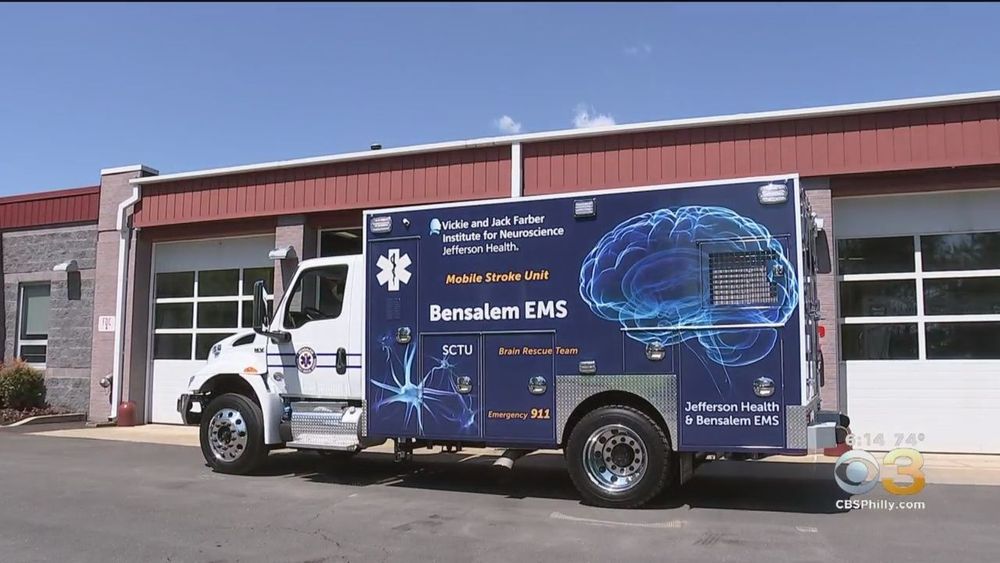
The blood-brain barrier has been non-invasively opened in a human patient for the first time. A team at Sunnybrook Health Sciences Centre in Toronto used focused ultrasound to temporarily open the blood-brain barrier (BBB), allowing for effective delivery of chemotherapy into a patient’s malignant brain tumor.

The team infused the chemotherapy agent doxorubicin, along with tiny gas-filled bubbles, into the bloodstream of a patient with a brain tumor. They then applied focused ultrasound to areas in the tumor and surrounding brain, causing the bubbles to vibrate, loosening the tight junctions of the cells comprising the BBB, and allowing high concentrations of the chemotherapy to enter targeted tissues.

Read more

Genome Editing with CRISPR-Cas9

This animation depicts the CRISPR-Cas9 method for genome editing – a powerful new technology with many applications in biomedical research, including the potential to treat human genetic disease. Feng Zhang, a leader in the development of this technology, is a faculty member at MIT, an investigator at the McGovern Institute for Brain Research, and a core member of the Broad Institute. Further information can be found on Prof. Zhang’s website at http://zlab.mit.edu.

Images and footage courtesy of Sputnik Animation, the Broad Institute of MIT and Harvard, Justin Knight and pond5.

Read more

Using Ultrasound To Pierce The Blood-Brain Barrier

Treating the brain often requires invasive surgery, but a new technique involving ultrasound and air bubbles has now shown promise at delivering drugs through the blood-brain barrier.

One of the biggest challenges of medicating brain tumours is actually getting drugs into the organ. Your brain is well protected from invasion by untoward substances or life forms, and this protection limits what will enter from the bloodstream. There have been previous efforts to open up the barrier, but they often involve a surgical approach that is far from ideal.

Read more

David Eagleman: Can a Computer Simulate Consciousness?

Yes, conceivably. And if/when we achieve the levels of technology necessary for simulation, the universe will become our playground. Eagleman’s latest book is “The Brain: The Story of You” (http://goo.gl/2IgDRb).

Follow Big Think here:
YouTube: http://goo.gl/CPTsV5
Facebook: https://www.facebook.com/BigThinkdotcom
Twitter: https://twitter.com/bigthink

Transcript — The big picture in modern neuroscience is that you are the sum total of all the pieces and parts of your brain. It’s a vastly complicated network of neurons, almost 100 billion neurons, each of which has 10,000 connections to its neighbors. So we’re talking a thousand trillion neurons. It’s a system of such complexity that it bankrupts our language. But, fundamentally it’s only three pounds and we’ve got it cornered and it’s right there and it’s a physical system.

The computational hypothesis of brain function suggests that the physical wetware isn’t the stuff that matters. It’s what are the algorithms that are running on top of the wetware. In other words: What is the brain actually doing? What’s it implementing software-wise that matters? Hypothetically we should be able to take the physical stuff of the brain and reproduce what it’s doing. In other words, reproduce its software on other substrates. So we could take your brain and reproduce it out of beer cans and tennis balls and it would still run just fine. And if we said hey, “How are you feeling in there?” This beer can/tennis ball machine would say “Oh, I’m feeling fine. It’s a little cold, whatever.”

It’s also hypothetically a possibility that we could copy your brain and reproduce it in silica, which means on a computer at zeroes and ones, actually run the simulation of your brain. The challenges of reproducing a brain can’t be underestimated. It would take something like a zettabyte of computational capacity to run a simulation of a human brain. And that is the entire computational capacity of our planet right now.

There’s a lot of debate about whether we’ll get to a simulation of the human brain in 50 years or 500 years, but those would probably be the bounds. It’s going to happen somewhere in there. It opens up the whole universe for us because, you know, these meat puppets that we come to the table with aren’t any good for interstellar travel. But if we could, you know, put you on a flash drive or whatever the equivalent of that is a century from now and launch you into outer space and your consciousness could be there, that could get us to other solar systems and other galaxies. We will really be entering an era of post-humanism or trans-humanism at that point.

Inside the 50-year-quest to build a mechanical heart

Steve Williams couldn’t breathe. The former athlete had cardiomyopathy, which occasionally choked his lungs with fluid, making him gasp for air. But this felt different; Williams felt like he was dying. He was raced to an Orange County hospital, and shortly after checking in, his heart stopped. For 30 minutes, ER workers compressed his chest in an attempt to revive him. At one point, his wife Mary remembers being called into his room to say goodbye to her husband of 24 years. It seemed Williams was a dead man.

Incredibly, doctors rebooted Williams’ heart — but for three days, he was in an induced coma, his body packed in ice to minimize brain damage. When he woke up, his mental facilities were intact, but his body was ravaged. His liver was congested, fluid reappeared in his lungs, and his heart’s right and left ventricles were practically destroyed, making it hard for blood to circulate throughout his body. Without a heart transplant, he would soon die.

Read more

/* */