“The future belongs to those who prepare for it today.”–Malcolm X “Be open-minded, but not so open-minded that your brains fall out.”–Groucho Marx In our …
Category: neuroscience – Page 1,243
An Oxford Neuroscientist Explains Mind vs. Brain
It’s good to see a growing response to the materialist superstition about the mind and the brain from the neuroscience and philosophy community. Materialist theories of the mind are philosophically indefensible and scientifically discredited. Dualism is necessary to account for the immaterial nature of the intellect, for the metaphysical simplicity of the mind, and for free will. Of the varieties of dualism, I believe that Thomistic dualism offers the most satisfactory framework for neuroscience.
I also think that Edward Feser ’s Philosophy of Mind, written from the Thomistic perspective on metaphysics and the mind, is the best available for readers of a philosophical bent. introduction It is a fine accompaniment to Dr. Dirckx’s work!
More by neurosurgeon Michael Egnor on how the mind differs from the brain:
How Will We Store Three Septillion Bits of Data? Your Metabolome May Have the Answer
For the “big data” revolution to continue, we need to radically rethink our hard drives. Thanks to evolution, we already have a clue.
Our bodies are jam-packed with data, tightly compacted inside microscopic structures within every cell. Take DNA: with just four letters we’re able to generate every single molecular process that keeps us running. That sort of combinatorial complexity is still unheard of in silicon-based data storage in computer chips.
Add this to the fact that DNA can be dehydrated and kept intact for eons—500,000 years and counting—and it’s no surprise that scientists have been exploiting its properties to encode information. To famed synthetic biologist Dr. George Church, looking to biology is a no-brainer: even the simple bacteria E. Coli has a data storage density of 1019 bits per cubic centimeter. Translation? Just a single cube of DNA measuring one meter each side can meet all of the world’s current data storage needs.
Promising steps towards hope for a treatment for schizophrenia
Schizophrenia is a severe mental health condition that causes significant disability, and affects 1 in 100 people. Patients with schizophrenia commonly experience negative symptoms, which include lack of motivation, social isolation and inability to experience pleasurable feeling. The current antipsychotics minimally improve these negative symptoms, and there are no currently licensed treatments. In addition, it is estimated that total service costs for schizophrenia in England alone will be £6.5 billion by 2026. In view of this, there is considerable interest in identifying potential treatment targets for these symptoms. However, the nature of the changes in brain chemistry that contribute to these negative symptoms is unknown.
Mu-opioid receptors (MOR) are found in a region of the brain called the striatum and they play a crucial role in how we experience pleasure and reward. Our bodies naturally produce opioid molecules that include endorphins; which are hormones secreted by the brain that are known to help relieve pain or stress and boost happiness. MORs are receptors that bind these naturally produced endogenous opioid molecules, and stimulation of the MOR system starts a signalling cascade that causes an increase in motivation to seek reward and increase food palatability amongst many other effects. Interestingly, MORs were found to be reduced in the striatum post-mortem in schizophrenia. So, it was unclear whether the availability of these receptors was increased when individuals were alive, or whether reduced MORs was related to the negative symptoms of schizophrenia.
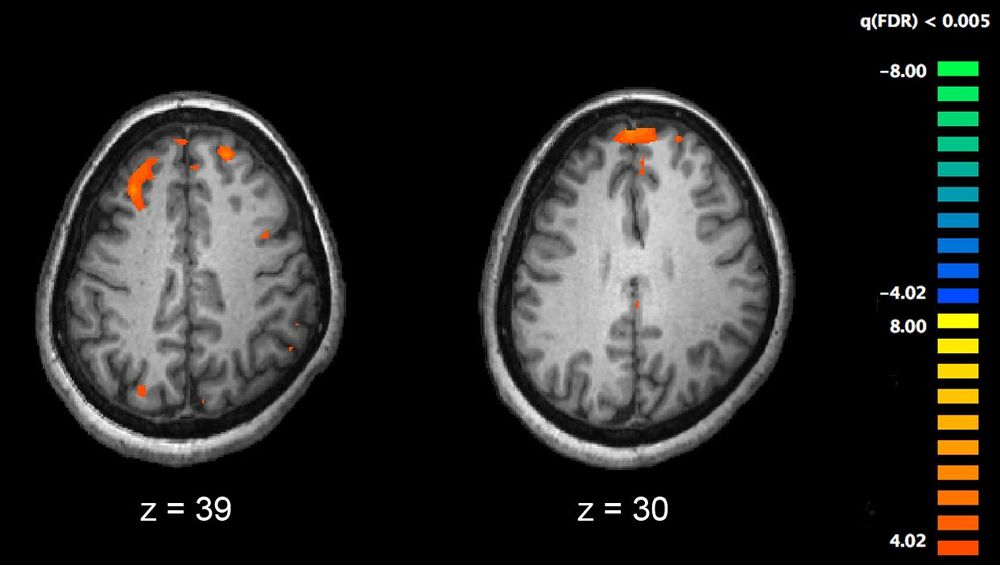
The latest brain scan research from the Psychiatric Imaging group at the MRC LMS published on 3 October in Nature Communications has reported how the MOR system contributes to the negative symptoms displayed in schizophrenia patients. For the first time, this research study showed how MOR levels are significantly reduced in the striatum region of the brain. Thus, a lack of MOR system stimulation in the brain contributes to these negative feelings that schizophrenia patients can experience.
Everything is Code
One of the most astonishing revelations might be that information equals reality. In other words, the basis for our material reality is actually immaterial information. Pattern and flow of information is what defines our experiential reality.
Everything boils down to the binary code of Nature. This is a basic tenet of Digital Physics which is the science of information. Nature computes. Deep down we are information technology. We run on genetic, neural and societal codes. Our DNA-based biology is clearly code-theoretic. We are alphabetic all the way down. We communicate intersubjectively mind-to-mind via language-structured exchange of information.
A recent study shows that human speech is transmitted at about 39 bits a sec. Idealist philosopher Terence McKenna used to say that “The world is made of language and if you know the words the world is made of you can make of it whatever you wish.”
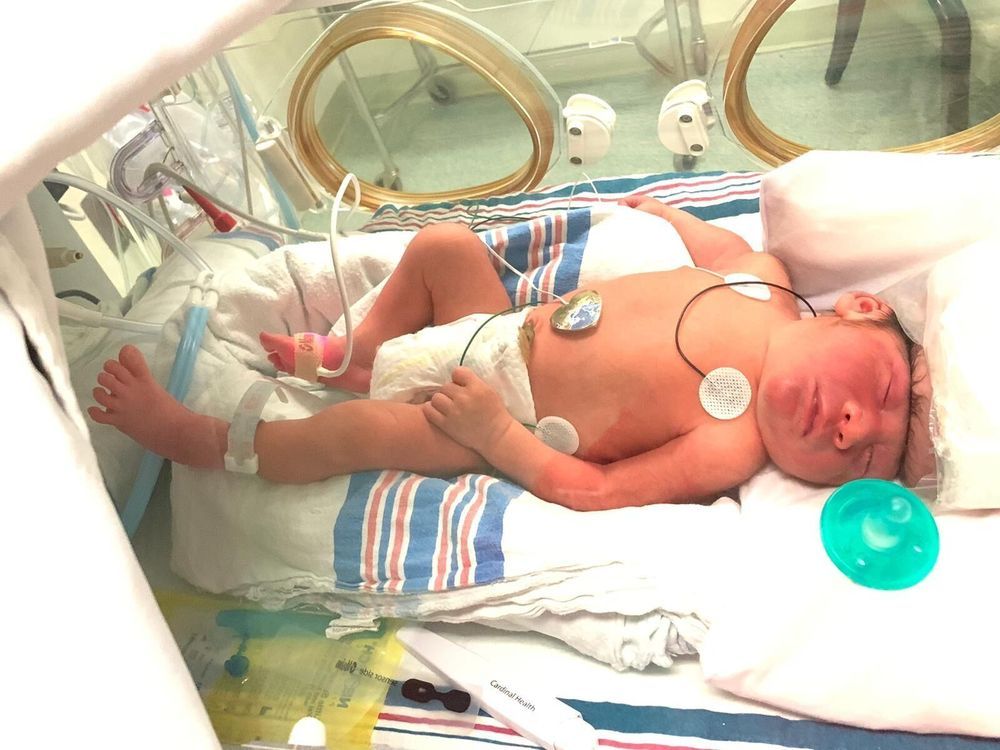
New Jersey baby born with ‘brain outside of skull’ believed to be first to survive condition
“I don’t want to interrupt Lucas’ neurodevelopment — he’s on the same path that a child his age would normally be,” Vogel said, adding that he’s started eating baby cereal and baby food. “We intervene with the best intentions and then possibly delay someone’s recovery — I don’t want to stunt his growth or neurodevelopment.”
In the future, Vogel said they will work with his family on cosmetic goals as well but that he has normal facial features, meaning the area the will need to address is the top of his skull. He added that the more bone he develops the more of his own tissue they can use, which will “lead to a better outcome.”
Vogel said the waiting has also paid off, as at a recent visit with Lucas he was lifting his head and trying to crawl, which is something a babies typically master between six and 10 months of age.