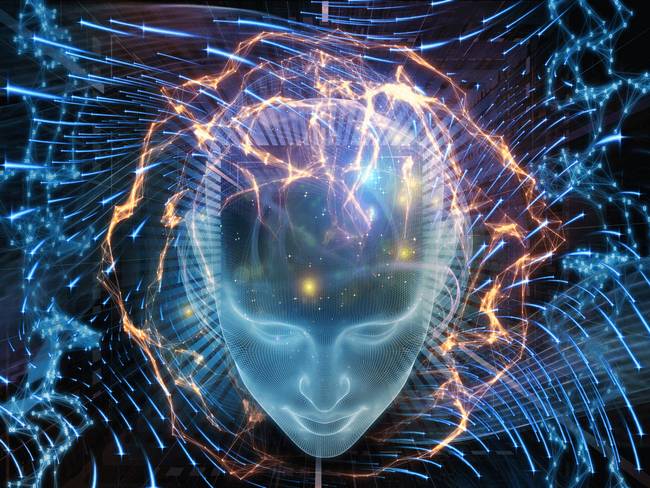
Facebook is working on futuristic technology that will let people type using only brain waves the understand thoughts through only skin contact.
Scientists hope they have found a drug to stop all neurodegenerative brain diseases, including dementia. In 2013, a UK Medical Research Council team stopped brain cells dying in an animal for the first time, creating headline news around the world. But the compound used was unsuitable for people, as it caused organ damage. Now two drugs have been found that should have the same protective effect on the brain and are already safely used in people. “It’s really exciting,” said Prof Giovanna Mallucci, from the MRC Toxicology Unit in Leicester. She wants to start human clinical trials on dementia patients soon and expects to know whether the drugs work within two to three years.
Why might they work?
The novel approach is focused on the natural defence mechanisms built into brain cells.
Facebook today unveiled a project from its secretive Building 8 research group that’s working to create a brain-computer interface that lets you type with your thoughts. Regina Dugan, a former director of DARPA and the ex-head of Google’s experimental ATAP research group, announced the news today onstage at Facebook’s F8 developer conference. Dugan, who now heads up Building 8, says the goal is “something as simple as a yes-no brain click” that could fundamentally change how we interact with and use technology. While it does not exist today outside of very specific medical research trials, Dugan says her team is actively working to make it a reality.
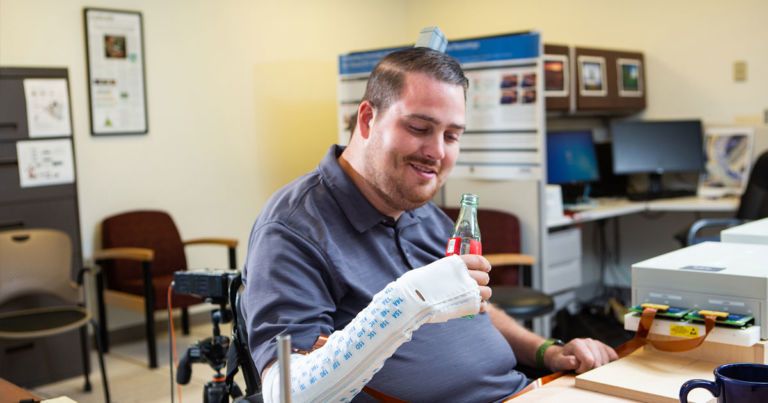
The blind may be able to see with help from this chip.
In the past 10 years, the best-performing artificial-intelligence systems—such as the speech recognizers on smartphones or Google’s latest automatic translator—have resulted from a technique called “deep learning.”
Deep learning is in fact a new name for an approach to artificial intelligence called neural networks, which have been going in and out of fashion for more than 70 years. Neural networks were first proposed in 1944 by Warren McCullough and Walter Pitts, two University of Chicago researchers who moved to MIT in 1952 as founding members of what’s sometimes called the first cognitive science department.
Neural nets were a major area of research in both neuroscience and computer science until 1969, when, according to computer science lore, they were killed off by the MIT mathematicians Marvin Minsky and Seymour Papert, who a year later would become co-directors of the new MIT Artificial Intelligence Laboratory.
Traditionally, humans have five recognized senses: sight, touch, taste, smell, and sound. In the strictest sense, our reality is defined by anything and everything we experience through those five senses, but today’s technology is allowing us to live in a world beyond them.
The idea that humans may have more senses isn’t as far-fetched as it sounds. For example, our sense of balance and our body’s inherent pain monitoring capabilities would both be considered crucial sensory inputs. Not everyone experiences the traditional five senses in the same way, either. A small fraction of the population (around 4.4 percent) has synesthesia, a form of sensory perception that causes them to experience crosswired sensations such as “seeing” sounds or “feeling” tastes.
A Mexican engineer has devised a tool that can be used to differentiate between a tumor and healthy tissue while on the operating table, leading to more accurate surgeries and minimizing risks.
Brain surgery is never easy. There is always risk; however, it just got a little bit safer.
“These re-engineered organisms will change our lives over the coming years, leading to cheaper drugs, ‘green’ means to fuel our cars and targeted therapies for attacking ‘superbugs’ and diseases, such as cancer,” wrote Drs. Ahmad Khalil and James Collins at Boston University, who were not involved in the study.
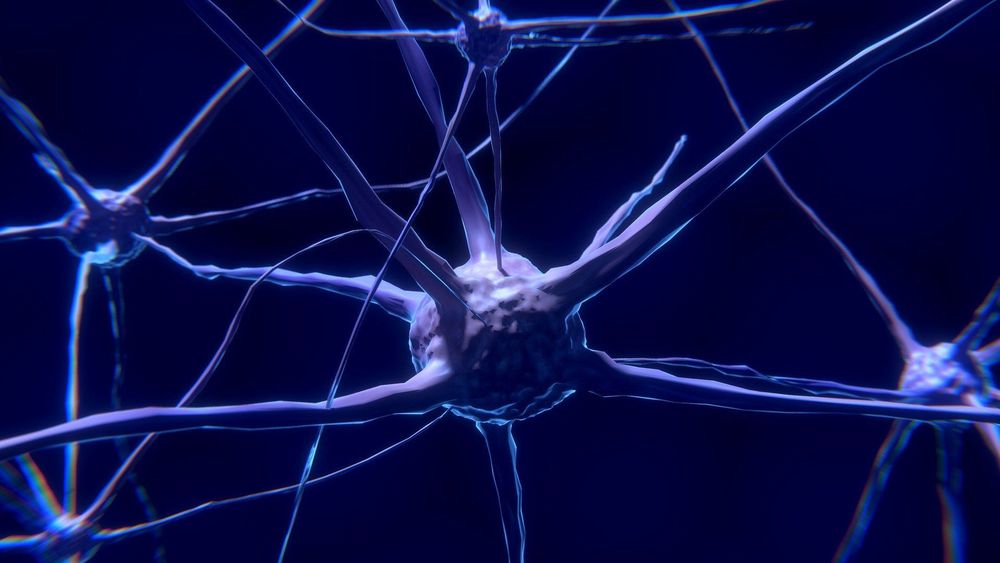
Our brains are often compared to computers, but in truth, the billions of cells in our bodies may be a better analogy. The squishy sacks of goop may seem a far cry from rigid chips and bundled wires, but cells are experts at taking inputs, running them through a complicated series of logic gates and producing the desired programmed output.
Take beta cells in the pancreas, which manufacture and store insulin. If they detect a large spike in blood sugar, then they release insulin; else they don’t. Each cell adheres to commands like these, allowing us—the organism—to operate normally.
This circuit-like nature of cellular operations is not just a handy metaphor. About 50 years ago, scientists began wondering: what if we could hijack the machinery behind these algorithms and reprogram the cells to do whatever we want?
Bryan Johnson launched Kernel to help humans to co-evolve with machines.