The full-body exoskeleton lets you feel and control all the forces your avatar feels.
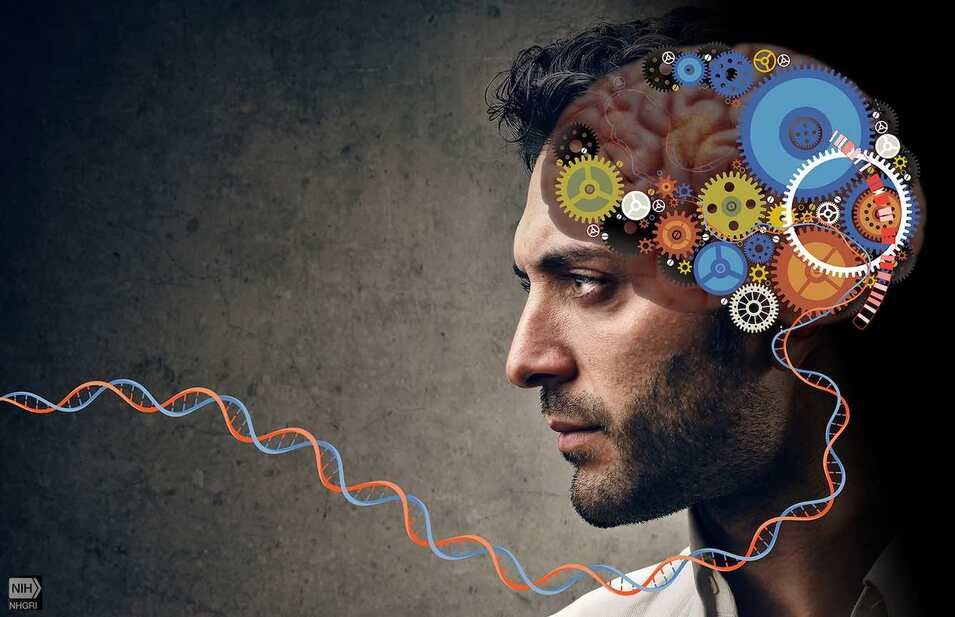
The Holotron is a full-body exoskeleton, with several possible realizations for life-like control of any humanoid avatar, including implanted brain-computer interfaces.
Summary: Gene expression patterns in four regions of the prefrontal cortex are distinctly different in those who have been diagnosed with PTSD compared to those who have not. Major differences were seen in interneurons, which inhibit the immune system and microglia in the central nervous system. Findings shed light on why women are more likely to experience PTSD and compound a link between post-traumatic stress and a dampening of the immune system.
Source: Yale.
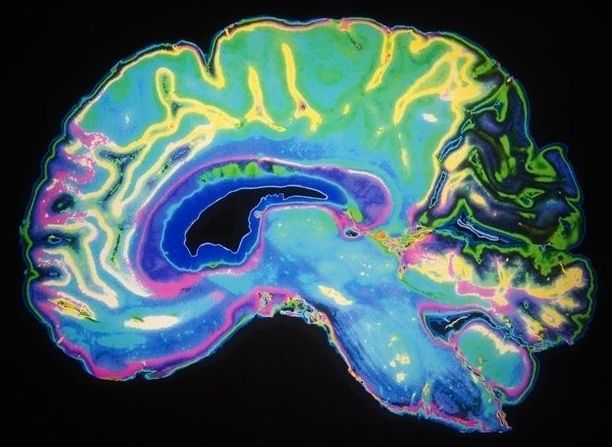
A post-mortem analysis of brain tissue from people who had been diagnosed with post-traumatic stress disorder (PTSD) may help explain enduring mysteries about the disorder, such as why women are more susceptible to it and whether a dampened immune system response plays a role in dealing with stress, a team headed by Yale University researchers has found.
Using CRISPR to alter the genetics of astrocytes in mice, researchers hope they’ve discovered how to regenerate neurons in patients with Parkinsons disease.
In some ways, learning to program a computer is similar to learning a new language. It requires learning new symbols and terms, which must be organized correctly to instruct the computer what to do. The computer code must also be clear enough that other programmers can read and understand it.
In spite of those similarities, MIT neuroscientists have found that reading computer code does not activate the regions of the brain that are involved in language processing.
Instead, it activates a distributed network called the multiple demand network, which is also recruited for complex cognitive tasks such as solving math problems or crossword puzzles.
The octopus essentially has many brains and can edit its own dna this is probably the closest invebrate as close to an alien species that we have on earth because their biology is so exotic.
A questionnaire developed by XPRIZE and Deep Longevity claims to be able to accurately predict your psychological age by using artificial intelligence (AI) to analyze your answers, which theoretically should fall close to your chronological age. The questionnaire is developed from a study published in Aging that used AI in an attempt to identify key hallmarks of psychological aging and the top risk factors that affect mortality.
While the questionnaire seems like a fun insight into whether you’re an old soul or a young gun at heart, there is an important scientific basis for an age-predicting AI. The newly developed technology represents the first AI aimed solely at using psychological aspects to predict age. The researchers hope it can contribute to understanding the role psychological clocks play in overall aging, as well as improving mental health and the feeling of youth.
“For the first time, AI can predict human psychological and subjective age and help identify the possible interventions that can be applied in order to help people feel and behave younger,” said Alex Zhavoronkov, PhD,founder and CLO of Deep Longevity and co-author of the study, in a statement.
The journey to see future technology starts in 2022, when Elon Musk and SpaceX send the first Starship to Mars — beginning the preparations for the arrival of the first human explorers.
We see the evolution of space exploration, from NASA’s Artemis mission, humans landing on Mars, and the interplanetary internet system going online. To the launch of the Starshot Alpha Centauri program, and quantum computers designing plants that can survive on Mars.
On Earth, tech evolves with quantum computers and Neaulink chips. People begin living with bio-printed organs. Humans record every part of lives from birth. And inner speech recording becomes possible.
And what about predictions further out into the future, when humans become level 2 and level 3 civilizations. When NASA’s warp drive goes live, and Mars declares independence from Earth. Will there be Dyson structures built around stars to capture their energy. Will they help power computers that can take human consciousness and download it into a quantum computer core. Allowing humanity to travel further out into space.
Quotes about the future from: Arthur C. Clarke, Stephen Hawking, Albert Einstein, and Elon Musk.
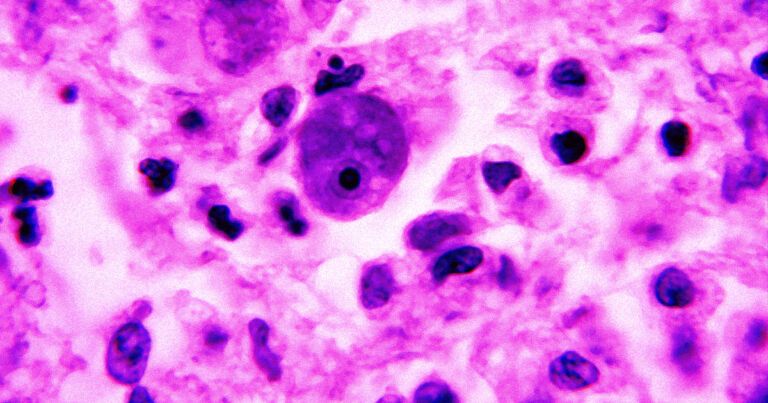
The single-celled organism behind the infections is usually found in warm bodies of freshwater, including lakes and rivers. Once a person is infected — an exceedingly rare occurrence usually resulting from swimming or diving in infected waters — the amoeba travels from the nose into the brain.
Once there, the organism can kick off a nasty brain condition called primary amebic meningoencephalitis (PAM). And yep, according to the CDC, PAM is “usually fatal.”
The good news: there have only been 34 infections reported in the US in the last ten years, according to CDC data.
Summary: Researchers have identified a direct cellular interaction between the nervous system and the immune system. Pain sensing neurons around the lymph nodes can modulate lymph node activity.
Source: Broad Institute.
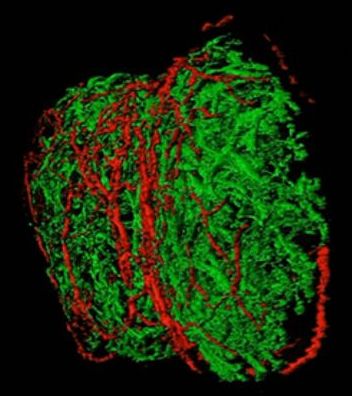
The nervous and immune systems have long been thought to be separate entities in the body, but new research has uncovered a direct cellular interaction between the two. Scientists from Harvard Medical School, the Broad Institute of MIT and Harvard, MIT, and the Ragon Institute of MGH, MIT and Harvard have found that pain-sensing neurons surround lymph nodes in mice, and can modulate the activity of these small organs, which are key parts of the immune system.