Toggle light / dark theme

Becoming the First Transhuman: A Call For The Right Stuff

Many scientists research the practical and immediate applications of bio molecular technology but it seems most fail to study our most important, and largest organ, our skin.


Who will officially be the first transhuman? Will it be you? Why wait decades? This article explains one approach to speeding up the process and also the challenge involved.

Defining the Object of the Goal:

Although the words ‘cyborg’ and ‘transhuman’ are often used interchangeably, and someone can aspire to be a combination of both, there are fundamental differences between the two — as has been articulated by Dr. Natasha Vita-More: The transhuman will be genetically programmed and otherwise equipped towards indefinite life extension and to attain a great many other physical and mental capabilities and other benefits. The transhuman also maintains specific transhumanist values and may actively foster the far-reaching humane goals of the transhumanist movement, including guaranteed social justice for all and highly-advanced space colonization to foster indefinite life, peace, etc. Whereas, a cyborg may not uphold transhuman values or goals, and may or may not seek to live longer or indefinitely, but will be fitted with a device or devices to acquire one or more enhanced capabilities (such as better vision and/or hearing, faster running ability, etc.).

Wireless ‘pacemaker for the brain’ could be new standard treatment for neurological disorders

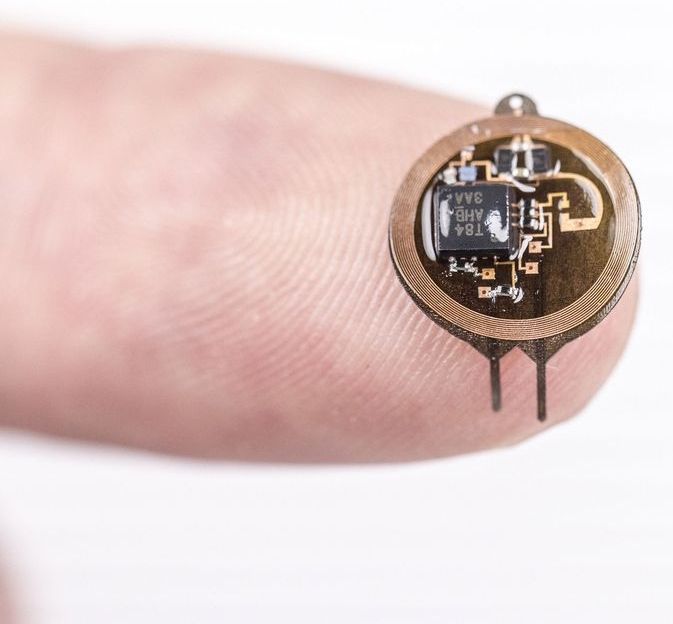
A new neurostimulator developed by engineers at UC Berkeley can listen to and stimulate electric current in the brain at the same time, potentially delivering fine-tuned treatments to patients with diseases like epilepsy and Parkinson’s.

The device, named the WAND, works like a “pacemaker for the brain,” monitoring the brain’s electrical activity and delivering electrical stimulation if it detects something amiss.

These devices can be extremely effective at preventing debilitating tremors or seizures in patients with a variety of neurological conditions. But the electrical signatures that precede a seizure or tremor can be extremely subtle, and the frequency and strength of electrical stimulation required to prevent them is equally touchy. It can take years of small adjustments by doctors before the devices provide optimal treatment.

A critical appraisal of amyloid-β-targeting therapies for Alzheimer disease

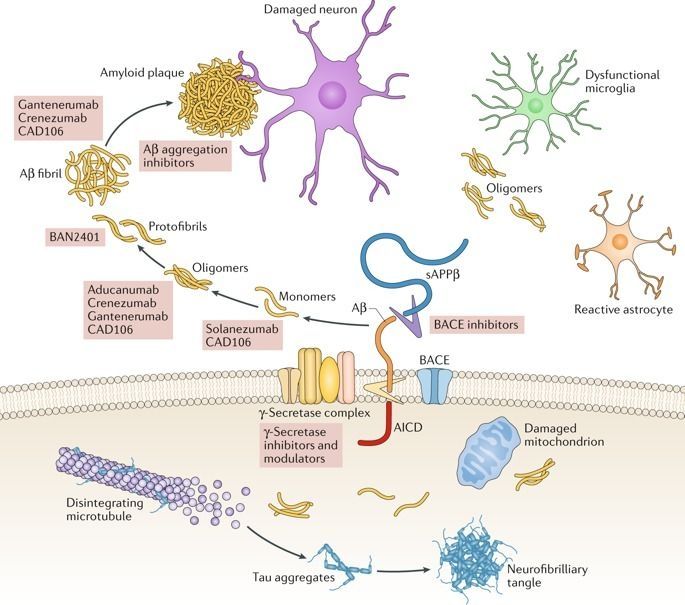
Brain accumulation of the amyloid-β (Aβ) peptide is believed to be the initial event in the Alzheimer disease (AD) process. Aβ accumulation begins 15–20 years before clinical symptoms occur, mainly owing to defective brain clearance of the peptide. Over the past 20 years, we have seen intensive efforts to decrease the levels of Aβ monomers, oligomers, aggregates and plaques using compounds that decrease production, antagonize aggregation or increase brain clearance of Aβ. Unfortunately, these approaches have failed to show clinical benefit in large clinical trials involving patients with mild to moderate AD. Clinical trials in patients at earlier stages of the disease are ongoing, but the initial results have not been clinically impressive. Efforts are now being directed against Aβ oligomers, the most neurotoxic molecular species, and monoclonal antibodies directed against these oligomers are producing encouraging results. However, Aβ oligomers are in equilibrium with both monomeric and aggregated species; thus, previous drugs that efficiently removed monomeric Aβ or Aβ plaques should have produced clinical benefits. In patients with sporadic AD, Aβ accumulation could be a reactive compensatory response to neuronal damage of unknown cause, and alternative strategies, including interference with modifiable risk factors, might be needed to defeat this devastating disease.

Immune cells from the gut found to reduce MS-related brain inflammation

The growing understanding of the link between the gut and brain inflammation is perhaps one of the most exciting new avenues in modern medical research. An incredible new study from researchers at the University of Toronto and UC San Francisco has provided a novel insight into the gut-brain connection, revealing the intestine may be the source of immune cells found to reduce brain inflammation in multiple sclerosis (MS) sufferers.

Brains of 3 People Have Been Successfully Connected, Enabling Them to Share Thoughts

Neuroscientists have successfully hooked up a three-way brain connection to allow three people to share their thoughts – and in this case, play a Tetris-style game.

The team thinks this wild experiment could be scaled up to connect whole networks of people, and yes, it’s as weird as it sounds.

It works through a combination of electroencephalograms (EEGs), for recording the electrical impulses that indicate brain activity, and transcranial magnetic stimulation (TMS), where neurons are stimulated using magnetic fields.

Controlling neurons with light—but without wires or batteries

University of Arizona biomedical engineering professor Philipp Gutruf is first author on the paper Fully implantable, optoelectronic systems for battery-free, multimodal operation in neuroscience research, published in Nature Electronics.

Optogenetics is a biological technique that uses light to turn specific neuron groups in the on or off. For example, researchers might use to restore movement in case of paralysis or, in the future, to turn off the areas of the brain or spine that cause pain, eliminating the need for—and the increasing dependence on—opioids and other painkillers.

“We’re making these tools to understand how different parts of the brain work,” Gutruf said. “The advantage with optogenetics is that you have cell specificity: You can target specific groups of neurons and investigate their function and relation in the context of the whole brain.”

/* */