Toggle light / dark theme

VA to Offer New Ketamine-Based Nasal Spray for Depression

The newest FDA-approved medication to treat severe depression, a nasal spray based on the anesthetic (and misused hallucinogenic party drug) ketamine, will soon be available to veterans treated within the Department of Veterans Affairs.

In a move that may help thousands of former service members with depression that has not improved with other treatments, VA officials announced Tuesday that the department’s doctors are now authorized to prescribe Spravato, the brand name for esketamine, a molecular variation of ketamine.

The decision to offer a drug hailed by many as a breakthrough in treatment for its speedy results — often relieving symptoms in hours and days, not weeks — shows the VA’s “commitment to seek new ways to provide the best health care available for our nation’s veterans,” Secretary Robert Wilkie said in a release.

New technique could help regrow tissue lost to periodontal disease

According to the U.S. Centers for Disease Control and Prevention, about half of all Americans will have periodontal disease at some point in their lives. Characterized by inflamed gums and bone loss around teeth, the condition can cause bad breath, toothache, tender gums and, in severe cases, tooth loss. Now, in ACS Nano, researchers report development of a membrane that helps periodontal tissue regenerate when implanted into the gums of rats.

To regrow lost gum tissue and bone, scientists have tried implanting pieces of polymers that form a protected niche near the root of a tooth, recruiting nearby stem cells and helping them differentiate into new gum and bone cells. However, a second surgery is usually required to remove the polymeric , which can get in the way of the healing process. Although researchers have developed biodegradable membranes, these materials don’t tend to work as well for re-growing periodontal tissue. Alireza Moshaverinia, Paul Weiss and colleagues wanted to develop a membrane that would enhance periodontal tissue regeneration and then be absorbed by the body when healing was complete.

The researchers made nanofibrous membranes of poly(ε-caprolactone), a biocompatible polymer already approved for medical applications. They then coated the membrane with polydopamine (PDA), a synthetic polymer that mimics the sticky protein that mussels use to attach to wet surfaces. In the lab, dental-derived stem cells adhered to the membrane and differentiated. The PDA coating also attracted calcium and phosphate ions, leading to early bone mineralization. When the researchers implanted the membranes into the gums of rats with periodontal defects, at the defect sites regenerated to normal levels within eight weeks. By this time, the membranes had degraded and were absorbed by the rats.

Sounds and vibrations are quite similar for the brain, finds new study

We all know the feeling of a mobile phone vibrating in our hands when announcing an incoming call. If we perceive these vibrations so clearly, it is due to specialized receptors that transduce them into neural signals sent to our brain. But how does the latter encode their physical characteristics? To understand this, neuroscientists from the University of Geneva (UNIGE) have observed what happens in the brains of mice whose forepaws perceive vibrations. They discovered that neurons in the somatosensory cortex are activated in a manner similar to those in the sound-reactive auditory cortex. These results, published in the journal Nature, suggest that feeling a phone vibrate or hearing it ring is ultimately based on the same brain codes.

If you place a glass of water on your desk, you can probably see on its surface the concentric oscillatory motions created by the small movements that occur nearby. These oscillations are caused by vibrations that propagate through the floor, desk, glass and all other solid surfaces. These vibrations are also important sensory stimuli that we use to detect, for example, an approaching train or to identify the familiar step of our office neighbor. «We live surrounded by vibrations that are extremely important in how we perceive the world,» explains Daniel Huber at the Department of Basic Neurosciences at the UNIGE Faculty of Medicine, who led this work. «So we wanted to know how the brain perceives and represents them.».

The March Journal Club by Dr. Oliver Medvedik will focus on this recent study that showed transplanting the bone marrow of young laboratory mice into old mice prevented cognitive decline in the old mice, preserving their memory and learning abilities

These findings support the idea that cognitive decline is in part due to the aging of blood cells, which are produced in the bone marrow.

Abstract
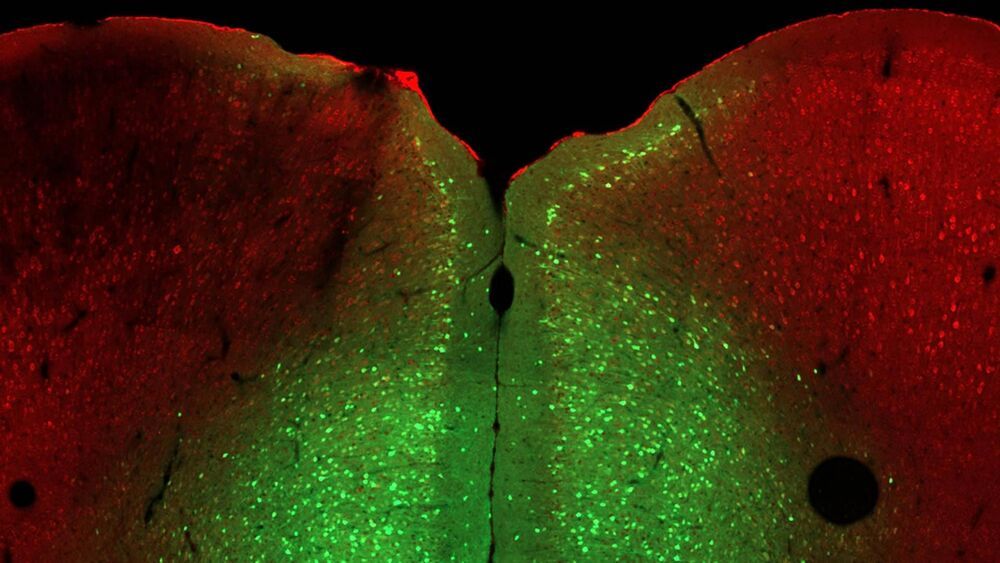
Restoration of cognitive function in old mice by transfer of blood or plasma from young mice has been attributed to reduced C–C motif chemokine ligand 11 (CCL11) and β2-microglobulin, which are thought to suppress neurogenesis in the aging brain. However, the specific role of the hematopoietic system in this rejuvenation has not been defined and the importance of neurogenesis in old mice is unclear. Here we report that transplantation of young bone marrow to rejuvenate the hematopoietic system preserved cognitive function in old recipient mice, despite irradiation-induced suppression of neurogenesis, and without reducing β2-microglobulin. Instead, young bone marrow transplantation preserved synaptic connections and reduced microglial activation in the hippocampus. Circulating CCL11 levels were lower in young bone marrow recipients, and CCL11 administration in young mice had the opposite effect, reducing synapses and increasing microglial activation.


Scientists ‘Clear’ Alzheimer’s Plaque From Mice Using Only Light And Sound

Clumps of harmful proteins that interfere with brain functions have been partially cleared in mice using nothing but light and sound.

Research led by MIT has found strobe lights and a low pitched buzz can be used to recreate brain waves lost in the disease, which in turn remove plaque and improve cognitive function in mice engineered to display Alzheimer’s-like behaviour.

It’s a little like using light and sound to trigger their own brain waves to help fight the disease.

/* */