When you shine a beam of light on your hand, you don’t feel much, except for a little bit of heat generated by the beam. When you shine that same light into a world that is measured on the nano- or micro scale, the light becomes a powerful manipulating tool that you can use to move objects around – trapped securely in the light.
Category: nanotechnology – Page 346
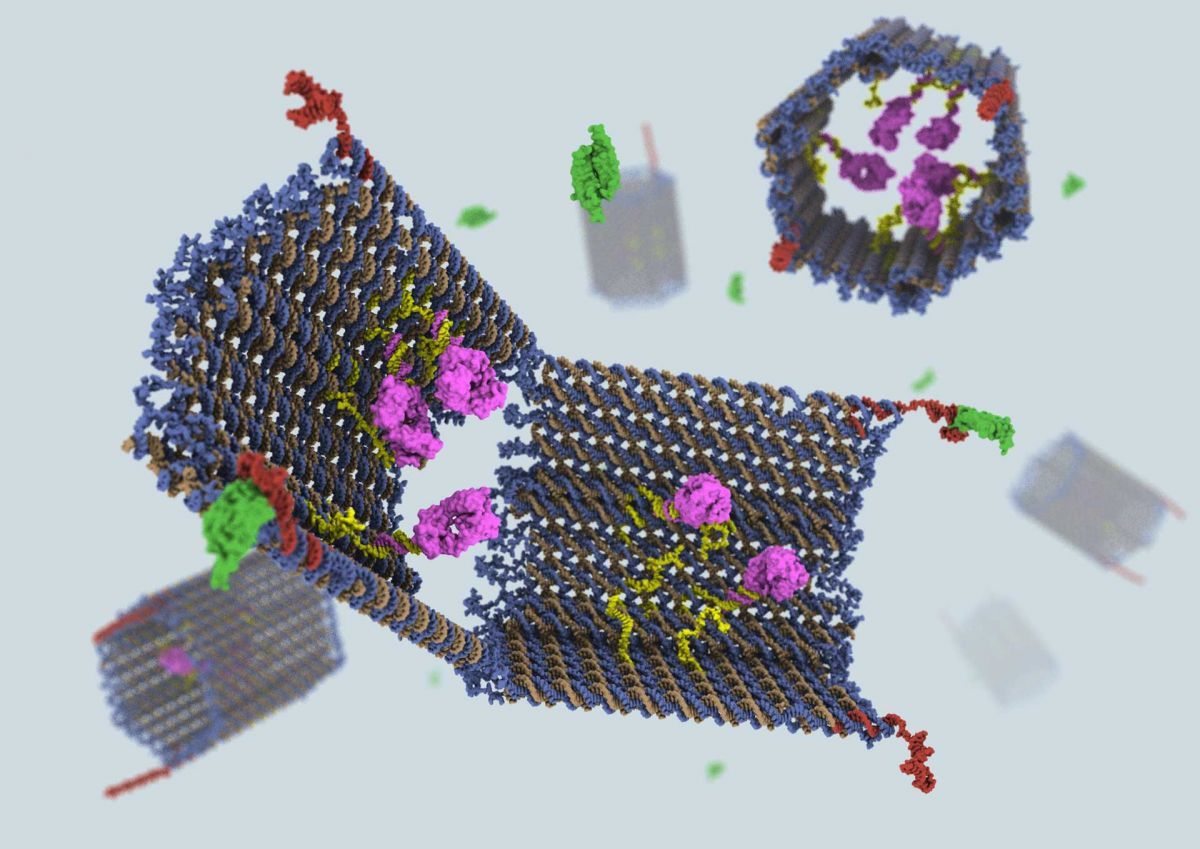

Lasers may help experts understand cancer
Scientists in Fife are investigating if tiny lasers could be used to better understand diseases such as cancer.
Using nano-technology, the St Andrews University experts created lasers small enough to fit inside live cells which can then be tracked.
With a diameter of a thousandth of a millimetre, the lasers can be inserted into neurons or immune cells.


More realistic research needed on substances that enter the environment
Chemical substances and nanomaterials are processed on a massive scale in diverse products, while their risks have not been properly assessed. Time and again synthesised substances have been shown to pollute the environment more than lab tests predicted. This is the warning given by Professor of Ecotoxicology Martina Vijver from Leiden University in her inaugural lecture on 16 November.
Laboratory tests are inadequate, according to Vijver, because they do not imitate a complete ecosystem. In her inaugural lecture she will discuss in greater detail two examples of substances where more realistic research is needed: agricultural toxins and nanoparticles. ‘But the same can be said for many other groups of substances, such as antibiotics, plasticizers and GenX.’

Detecting light in a different dimension
“We did not expect to see such a dramatic improvement just by changing the morphology of the polymer,” said co-corresponding author Mircea Cotlet, a materials scientist in the CFN Soft and Bio Nanomaterials Group.
The scientists believe that there are two explanations behind their observations.
“At a certain polymer concentration, the nanowires have dimensions comparable to the wavelength of light,” said Li. “This size similarity has the effect of increasing light scattering and absorption. In addition, crystallization of P3HT molecules within the nanowires provides more charge carriers to transfer electricity to the graphene layer.”
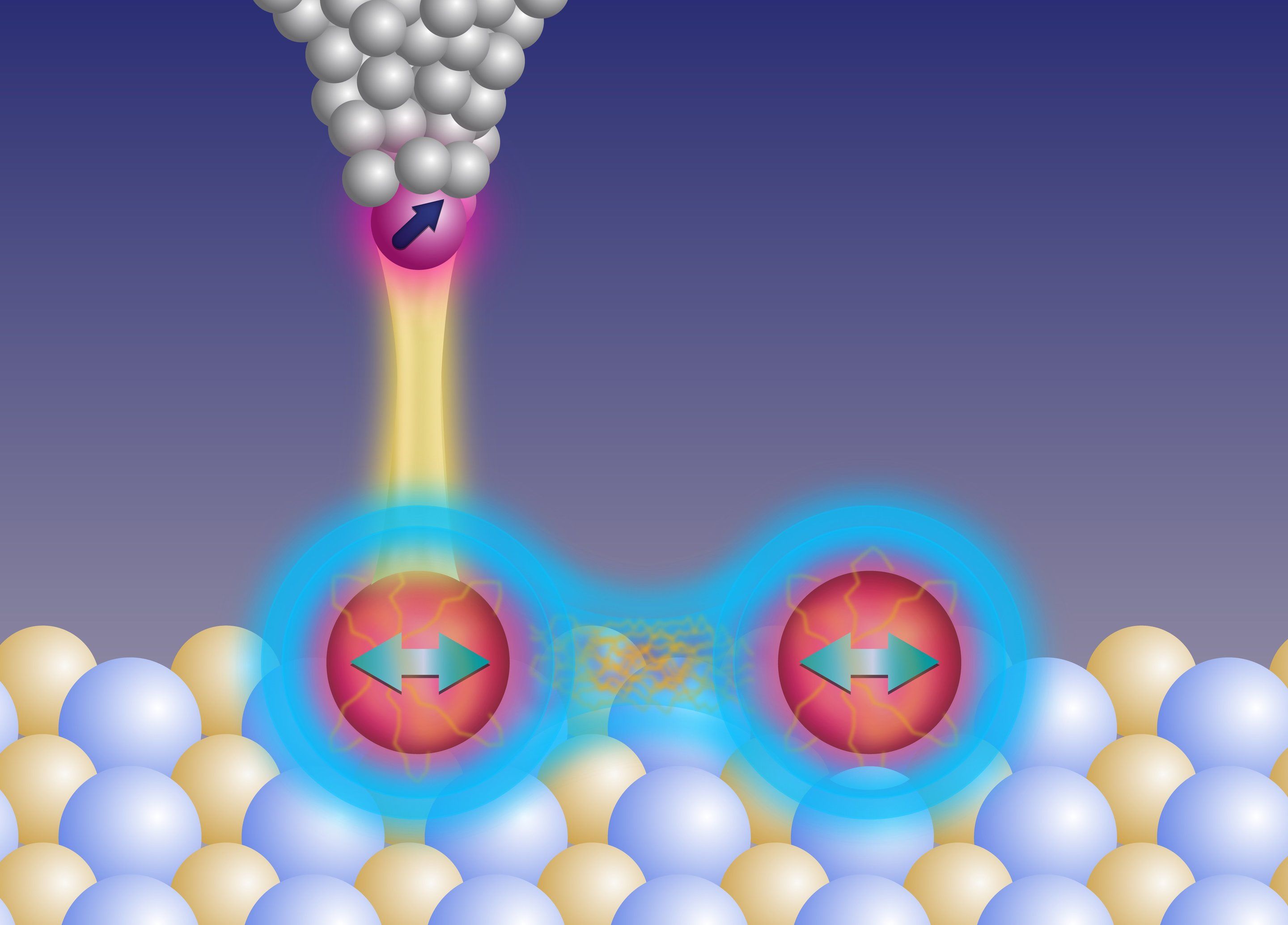
A two-atom quantum duet
Researchers at the Center for Quantum Nanoscience (QNS) within the Institute for Basic Science (IBS) achieved a major breakthrough in shielding the quantum properties of single atoms on a surface. The scientists used the magnetism of single atoms, known as spin, as a basic building block for quantum information processing. The researchers could show that by packing two atoms closely together they could protect their fragile quantum properties much better than for just one atom.
The spin is a fundamental quantum mechanical object and governs magnetic properties of materials. In a classical picture, the spin often can be considered like the needle of a compass. The north or south poles of the needle, for example, can represent spin up or down. However, according to the laws of quantum mechanics, the spin can also point in both directions at the same time. This superposition state is very fragile since the interaction of the spin with the local environment causes dephasing of the superposition. Understanding the dephasing mechanism and enhancing the quantum coherence are one of the key ingredients toward spin-based quantum information processing.
In this study, published in the journal Science Advances in November 9, 2018, QNS scientists tried to suppress the decoherence of single atoms by assembling them closely together. The spins, for which they used single titanium atoms, were studied by using a sharp metal tip of a scanning tunneling microscope and the atoms’ spin states were detected using electron spin resonance. The researchers found that by bringing the atoms very close together (1 million times closer than a millimeter), they could protect the superposition states of these two magnetically coupled atoms 20 times longer compared to an individual atom.