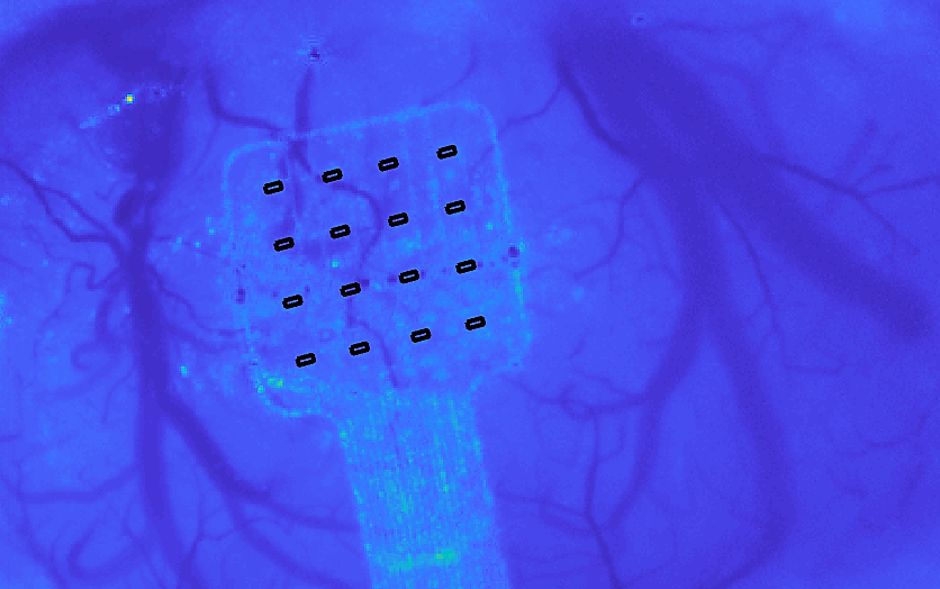
Implantable device could teach about brain development and disease.
It echoes the nanite and nanobot technology seen in science fiction TV series like Star Trek and Red Dwarf, where swarms of microscopic robots can be used to repair damaged tissue.
Researchers at Bar Ilan University in Ramat Gan, Israel, and the Interdisciplinary Centre in Herzliya, built their nanobots using a form to DNA origami to create hollow shell-like structures.
Drugs could then be placed inside these before they were chemically locked shut with particles of iron oxide.
Scientists have managed to develop a novel method to grow stable, ultra-long 1D carbon chains of a material that is twice as strong as carbon nanotubes and far stronger than diamonds.
Elemental carbon is extremely versatile, and scientists have long been able to create new carbon allotropes that make for super durable and multi-functioning materials—such as everyone’s favorite material, graphene.
The “carbon family” is one very resourceful family. But even with all these developments, carbyne remained elusive. In fact, it is the only form of carbon that has not been synthesized, even though researchers have been studying its properties for over 50 years.
Execellent.
Excellent.nanowerk.com/spotlight/spotid=44331.php
Subscribe! Receive a convenient email notification whenever a new Nanowerk Nanotechnology Spotlight posts.
Become a Spotlight guest author! Have you just published a scientific paper or have other exciting developments to share with the nanotechnology community? Here is how to publish on nanowerk.com.
Rebirth of the 1960s cult classic “Fantastic Voyage”; however, this time its not a movie.
When asked what exactly a “nano submarine” was, University of California San Diego chair of nanoengineering professor Joseph Wang described it as like something taken from the 1966 film Fantastic Voyage, where medical personnel board a submarine were shrunk to microscopic size to travel through the bloodstream of a wounded diplomat and save his life.
Professor Wang said his team was getting closer to the goal of using nano submarines in a variety of ways, minus the shrunken humans and sabotage of the 1966 film.
“It’s like the Fantastic Voyage movie, where you want to improve therapeutic and diagnostic abilities through proper timing and proper location to improve efficiency,” he said.
Luv this!!!
Subscribe! Receive a convenient email notification whenever a new Nanowerk Nanotechnology Spotlight posts.
Become a Spotlight guest author! Have you just published a scientific paper or have other exciting developments to share with the nanotechnology community? Here is how to publish on nanowerk.com.
I’ve been reading Ramez Naam’s fantastic book “Nexus,” which is set in a near-future where a powerful nano-drug allows human minds to connect together. In the story, a group of enterprising neuroscientists and engineers discover they can use the drug in a new way — to run a computer operating system inside their brains. Naam’s characters telepathically communicate with each other using a mental chat app and even manipulate other people’s bodies by gaining control of their brains’ operating systems.
Sounds far-fetched, right?
It might not be as far-fetched as you think. From connecting a human brain to a basic tablet to help a paralyzed patient communicate with the outside world to memory-boosting brain implants and a prototype computer chip that runs on live neurons — the real world progress we’re seeing today is nearly as strange as fiction.
Excellent progress.
The rapid progress that has been sweeping the field of crystal growth and related device technology is opening doors. Perhaps nowhere is the effect of this evolution being felt more than in the development of ultra-small structures whose material properties can be controlled on the nanoscale. The reason for this development: because solid-state nano–structures possess unique optical and electronic properties, they have the potential to be the launching pad of a new generation of devices.
Within the field, researchers are particularly focused on the properties of spins confined within the nano-structures – with the ultimate goal being to use spin nano-systems to develop, for example, robust quantum bits (qubits) capable of storing vast amounts of information. Here, the EU -funded S^3NANO project has successfully developed qubits in a new, innovative form. According to project researchers, these qubits could serve as the information units of the quantum computers of the future.
S^3NANO, which has recently published its full key findings, was a collaborative effort of studies and researchers. It brought together existing studies on the development of new device concepts in the field of few spin solid-state nano-systems with a team of leading international researchers and institutions. Over the course of four years, this ‘few spin solid state nano-system network’ achieved numerous breakthroughs in the understanding and successful utilisation of nanoscale systems in future devices via research, exchange programmes and training sessions.