Toggle light / dark theme

Could a black hole be used as portable gravity device?

I don’t use the term artificial gravity because, the gravity from a black hole is real.

If you have harnessed and are able to control a black hole would you be able to use it as portable gravity device?

I don’t really have the physics and the math to to figure it out. But it would seem that if you are in a low gravity environment, you could place a black hole under the floor, and have gravity. Presumably by changing the distance between the floor and the black hole you could adjust to 1 gravity or partial gravity.

Researchers’ deep learning algorithm solves Rubik’s Cube faster than any human

Since its invention by a Hungarian architect in 1974, the Rubik’s Cube has furrowed the brows of many who have tried to solve it, but the 3D logic puzzle is no match for an artificial intelligence system created by researchers at the University of California, Irvine.

DeepCubeA, a learning algorithm programmed by UCI scientists and mathematicians, can find the solution in a fraction of a second, without any specific domain knowledge or in-game coaching from humans. This is no simple task considering that the cube has completion paths numbering in the billions but only one goal state—each of six sides displaying a solid color—which apparently can’t be found through random moves.

For a study published today in Nature Machine Intelligence, the researchers demonstrated that DeepCubeA solved 100 percent of all test configurations, finding the to the goal state about 60 percent of the time. The algorithm also works on other combinatorial games such as the sliding tile , Lights Out and Sokoban.

Physicists Reverse Time for Tiny Particles Inside a Quantum Computer

Time goes in one direction: forward. Little boys become old men but not vice versa; teacups shatter but never spontaneously reassemble. This cruel and immutable property of the universe, called the “arrow of time,” is fundamentally a consequence of the second law of thermodynamics, which dictates that systems will always tend to become more disordered over time. But recently, researchers from the U.S. and Russia have bent that arrow just a bit — at least for subatomic particles.

In the new study, published Tuesday (Mar. 12) in the journal Scientific Reports, researchers manipulated the arrow of time using a very tiny quantum computer made of two quantum particles, known as qubits, that performed calculations. [Twisted Physics: 7 Mind-Blowing Findings]

At the subatomic scale, where the odd rules of quantum mechanics hold sway, physicists describe the state of systems through a mathematical construct called a wave function. This function is an expression of all the possible states the system could be in — even, in the case of a particle, all the possible locations it could be in — and the probability of the system being in any of those states at any given time. Generally, as time passes, wave functions spread out; a particle’s possible location can be farther away if you wait an hour than if you wait 5 minutes.

The biological computer is an implantable device that is mainly used for tasks like monitoring the body’s activities or inducing therapeutic effects

The biological computer is an implantable device that is mainly used for tasks like monitoring the body’s activities or inducing therapeutic effects, all at the molecular or cellular level. This is made up of RNA, DNA and proteins and can also perform simple mathematical calculations.


DNA computing is a branch of computing which uses DNA, biochemistry, and molecular biology hardware, instead of the traditional silicon-based computer technologies. Research and development in this area concerns theory, experiments, and applications of DNA computing.

https://www.wired.com/…/finally-a-dna-computer-that-can-ac…/

🖖 👽

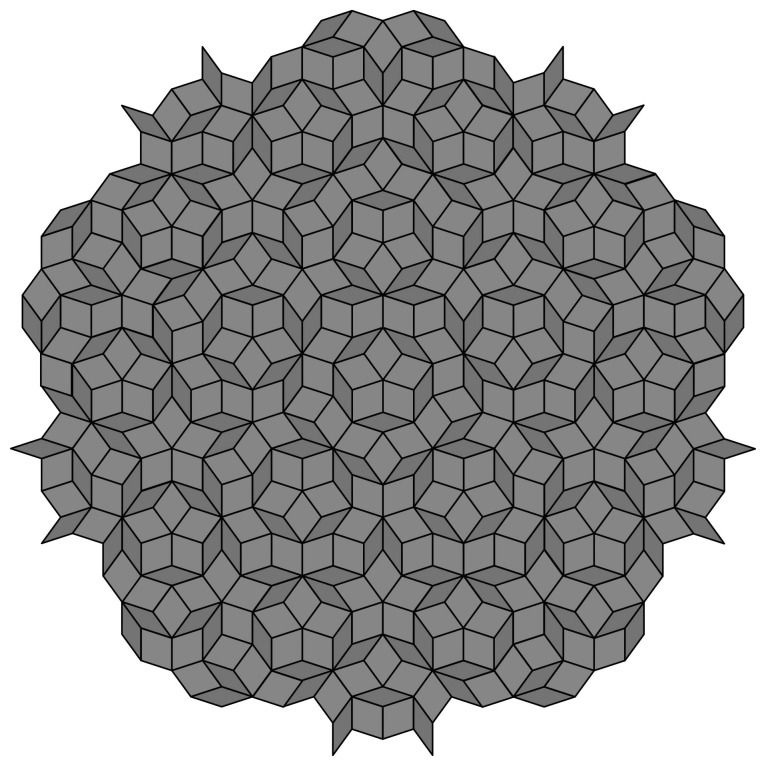
Strange warping geometry helps to push scientific boundaries

Atomic interactions in everyday solids and liquids are so complex that some of these materials’ properties continue to elude physicists’ understanding. Solving the problems mathematically is beyond the capabilities of modern computers, so scientists at Princeton University have turned to an unusual branch of geometry instead.

Researchers led by Andrew Houck, a professor of electrical engineering, have built an electronic array on a microchip that simulates in a hyperbolic plane, a geometric surface in which space curves away from itself at every point. A hyperbolic plane is difficult to envision—the artist M.C. Escher used in many of his mind-bending pieces—but is perfect for answering questions about particle interactions and other challenging mathematical questions.

The research team used superconducting circuits to create a lattice that functions as a hyperbolic space. When the researchers introduce photons into the lattice, they can answer a wide range of difficult questions by observing the photons’ interactions in simulated hyperbolic space.

Robert Edward Grant Photo

Dr. Dee J. Nelson and his wife Geo, produced a Kirlian photograph of Pyramid energy using a Tesla Coil in 1979.


We have confirmed that the Great Pyramid encodes over 80 Mathematical and Physical constants (including but not limited to Pi, E, a, Phi, Y, Planck Length, Planck Time, and even math constants only discovered in the last century like Brun’s Constant and Tribonacci), our metric and imperial measurement systems (including Meter, Foot, Mile, Nautical Mile, and the ancient Sacred Egyptian Cubit), and even the Speed of Light in BOTH its Longitude and Latitude positions…and all with astounding accuracy.

Image and content from “The Etymology of Number” Course in Resonance Academy http://bit.ly/Resonance-Academy

Can mathematics help us understand the complexity of our microbiome?

How do the communities of microbes living in our gastrointestinal systems affect our health? Carnegie’s Will Ludington was part of a team that helped answer this question.

For nearly a century, have probed how genes encode an individual’s chances for success—or fitness—in a specific environment.

In order to reveal a potential evolutionary trajectory biologists measure the interactions between genes to see which combinations are most fit. An organism that is evolving should take the most fit path. This concept is called a fitness landscape, and various mathematical techniques have been developed to describe it.

Math can help uncover cancer’s secrets

Irina Kareva translates biology into mathematics and vice versa. She writes mathematical models that describe the dynamics of cancer, with the goal of developing new drugs that target tumors. “The power and beauty of mathematical modeling lies in the fact that it makes you formalize, in a very rigorous way, what we think we know,” Kareva says. “It can help guide us to where we should keep looking, and where there may be a dead end.” It all comes down to asking the right question and translating it to the right equation, and back.

/* */