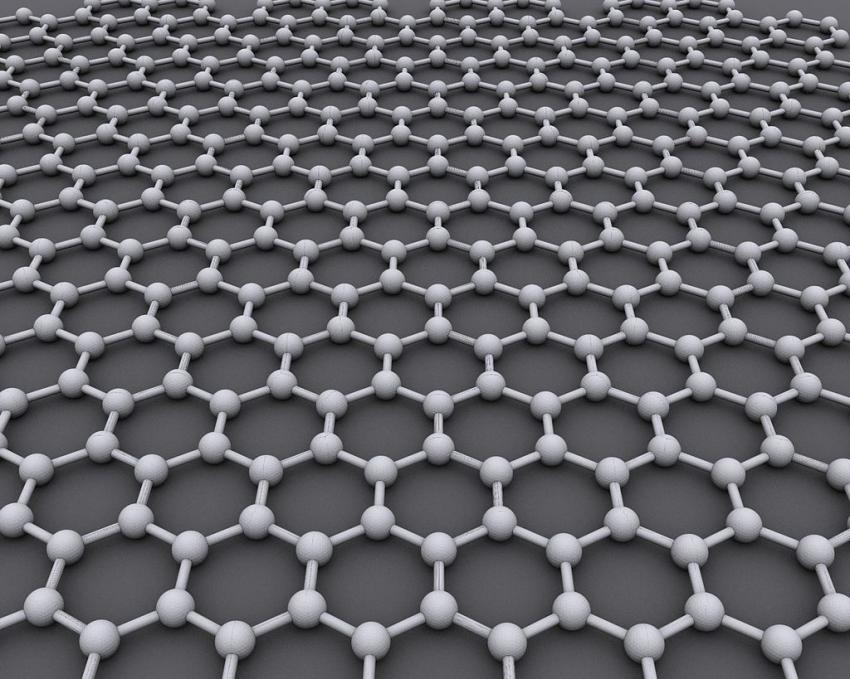
The material to create space elevators will be developed by 2030, enabling a new golden age of space travel, according to a study published in the journal New Space.
“The material needed to have a 100,000 km rope will become real before 2030 and enable the creation of this low-cost access to space,” wrote Cathy W Swan, of SouthWest Analytic Network, Peter A Swan and John M Knapman, of the International Space Elevator Consortium, and David I Raitt, retired from the European Space Agency.
A space elevator would make launching people, satellites and craft into geostationary orbit dramatically cheaper than at present, with the researchers estimating it would drop from the current prices of $25,000 per kg for commercial launches and $40,000 per kg for governmental launches to $100 per kg for materials.


Last week at CES, South San Francisco based Profusa showed off an upcoming injectable sensor that can be used to continuously monitor oxygen levels in tissue. Measuring only five millimeters long and a tiny 250 microns in diameter, the biosensor can be injected into tissue with just a hypodermic needle. It consists of a soft hydrogel scaffold that allows it to be biologically compatible with the surrounding tissue without any foreign body response. The sensor also contains a special chemical marker that changes fluorescence depending on the amount of oxygen that reacts with it. An optical reader placed on the skin measures the fluorescence and relays the data to a smartphone. The biosensor can last as long as two years (at which point the chemical marker begins to lose its potency), and because it contains no electronics and is completely biocompatible there’s no need to remove it.