Toggle light / dark theme

Dead whale found with 88 pounds of plastic in stomach in the Philippines

Messed up is the right phrasing for it, I figure.


March 18 (UPI) — After a dead whale washed ashore in the Philippines, scientists pulled 88 pounds of plastic debris from the mammal’s intestines. The young Cuvier’s beaked whale died from gastric shock, according to biologists.

The necropsy was conducted by scientists at the D’ Bone Collector Museum. They were assigned by biologists with the Philippines Bureau of Fisheries and Aquatic Resources.

“This whale had the most plastic we have ever seen in a whale. It’s disgusting,” museum biologists wrote in a Facebook update. “Action must be taken by the government against those who continue to treat the waterways and ocean as dumpsters.”

Ultrathin and ultrafast: Scientists pioneer new technique for two-dimensional material analysis

Discovery allows scientists to look at how 2-D materials move with ultrafast precision.

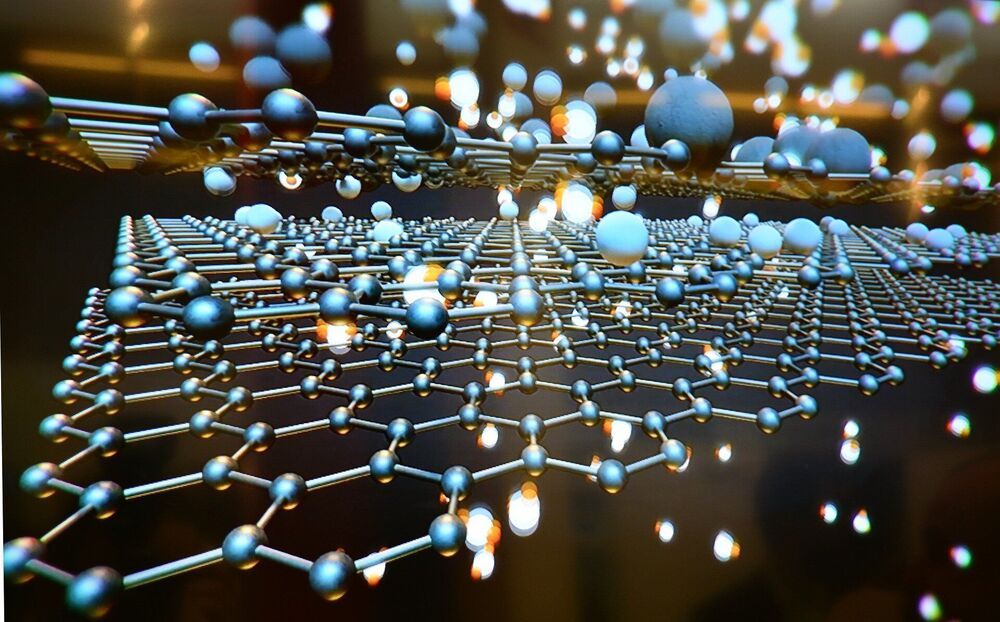
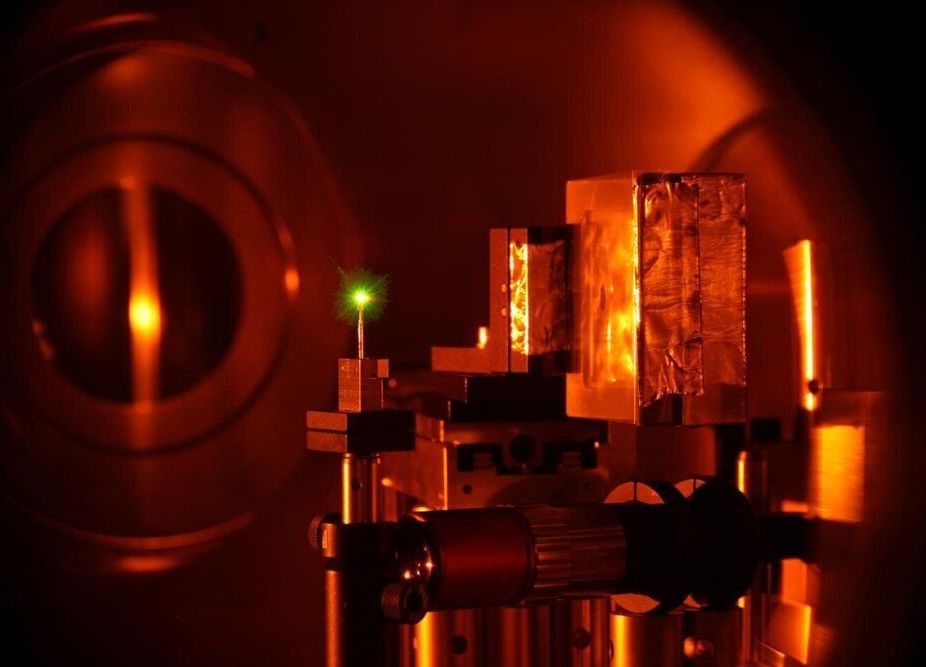
Using a never-before-seen technique, scientists have found a new way to use some of the world’s most powerful X-rays to uncover how move in a single atomic sheet at ultrafast speeds.

The study, led by researchers at the U.S. Department of Energy’s (DOE) Argonne National Laboratory and in collaboration with other institutions, including the University of Washington and DOE’s SLAC National Accelerator Laboratory, developed a new technique called ultrafast X-ray scattering. This technique revealed the changing structure of an atomically thin two-dimensional crystal after it was excited with an optical laser pulse.

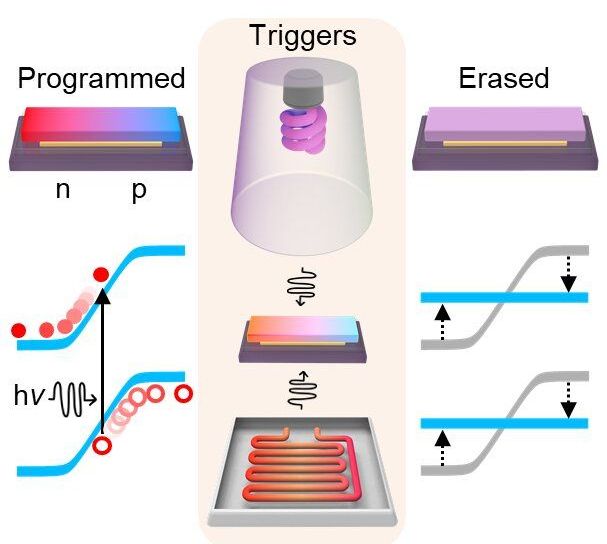
Chirality yields colossal photocurrent

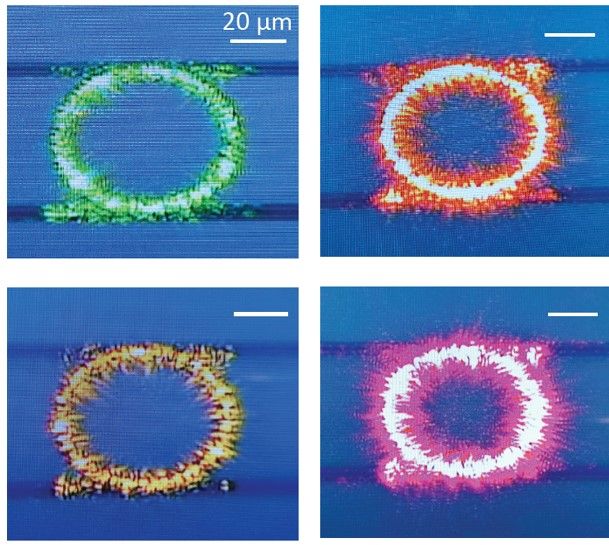
A recently discovered Weyl semimetal delivers the largest intrinsic conversion of light to electricity of any material, an international team lead by a group of Boston College researchers reports today in the journal Nature Materials.

The discovery is based on a unique aspect of the material where electrons can be separated by their chirality, or handedness—similar to DNA. The findings may offer a new route to efficient generation of electricity from light, as well as for thermal or .

“We discovered that the Weyl semimetal Tantalum Arsenide, has a colossal bulk photovoltaic effect—an intrinsic, or non-linear, generation of current from light more than ten times larger than ever previously achieved,” said Boston College Associate Professor of Physics Kenneth Burch, a lead author of the article, titled “Colossal mid-infrared bulk photovoltaic effect in a type-I Weyl semimetal.”

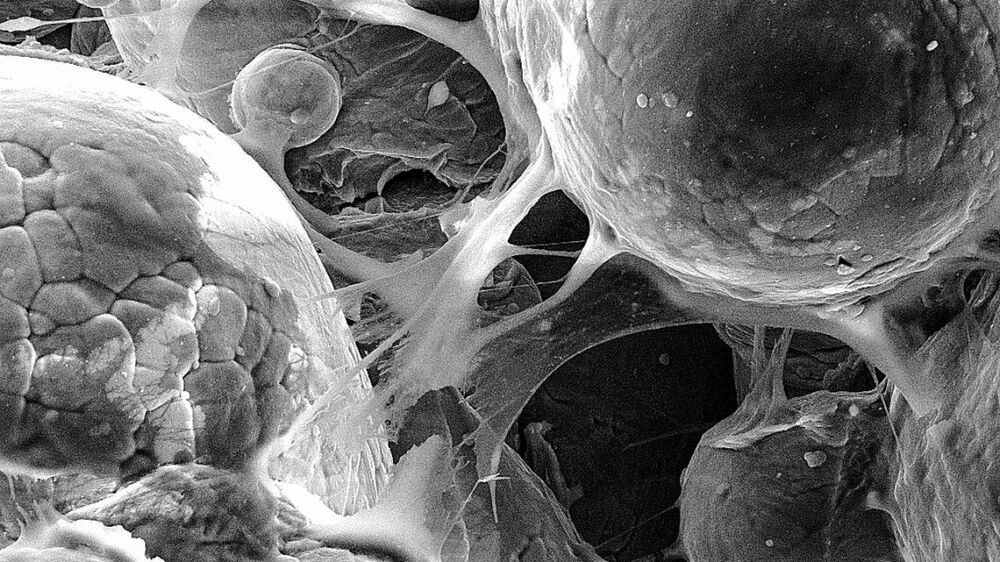
Smart material made from squid teeth a potential plastic alternative

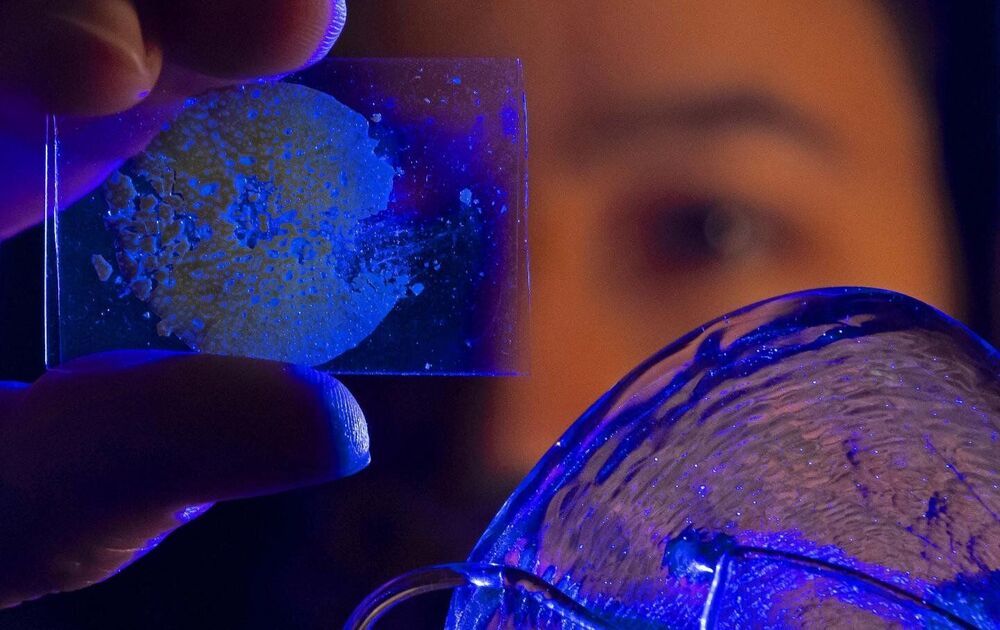
A newly-discovered material made from squid teeth could one day replace man-made fibres like nylon and polyester, according to a review by scientists at Pennsylvania State University. This would help to reduce microplastic pollution in the oceans, as well as paving the way for new possibilities such as self-repairing safety clothing, or garments with built-in, flexible screens.

Hall effect becomes viscous in graphene

Researchers at The University of Manchester in the UK have discovered that the Hall effect—a phenomenon well known for more than a century—is no longer as universal as it was thought to be.

In the research paper published in Science this week, the group led by Prof Sir Andre Geim and Dr. Denis Bandurin found that the Hall effect can even be signifcantly, if strongly interact with each other giving rise to a viscous flow. The new phenomenon is important at —something that can have important implications for when making electronic or .

Just like molecules in gases and liquids, electrons in solids frequently collide with each other and can thus behave like viscous fluids too. Such electron fluids are ideal to find new behaviours of materials in which are particularly strong. The problem is that most materials are rarely pure enough to allow electrons to enter the viscous regime. This is because they contain many impurities off which electrons can scatter before they have time to interact with each other and organise a viscous flow.

Superintelligence as a Service is Coming and It Can Be Safe AGI

Drexler and the Oxford Future of Humanity Institute proposing that artificial intelligence is mainly emerging as cloud-based AI services and a 210-page paper analyzes how AI is developing today.

AI development is developing automation of many tasks and automation of AI research and development will enable acceleration of AI improvement.

Accelerated AI improvement would mean the emergence of asymptotically comprehensive, superintelligent-level AI services that—crucially—can include the service of developing new services, both narrow and broad, guided by concrete human goals and informed by strong models of human (dis)approval. The concept of comprehensive AI services (CAIS) provides a model of flexible, general intelligence in which agents are a class of service-providing products, rather than a natural or necessary engine of progress in themselves.

/* */