Toggle light / dark theme

QUESTION: Reality Is A Consensual, Consensual, Conditionalized, And Assimilated Hallucination? By Lifeboat Foundation’s Andres Agostini — Amazon — LinkedIn

QUESTION: Reality Is A Consensual, Consensual, Conditionalized, And Assimilated Hallucination?

THIS IS NO DOGMA, BUT AN EXTREMELY IMPORTANT P.O.V.

As I have mentioned elsewhere, beyond everything else, I am also an evidence-based researcher and to that end I must study tons and tons of literature.

In the United States, there is a nice thing. When someone is remarkable, his or her I.Q. is measured and made public.

Dr. Hamel is, as per my understanding, America’s I.Q. #25. He was the CEO to Strategos and currently is Professor Gary Hamel, PhD. at marvelous London Business School. Hamel pays a great deal of attention to REALITY and the quote below, excerpted in the White Swan book, is used by him frequently.

VERBATIM:

“… [He] tells a wonderful little story about how he came to recognize this deep truth: On the third day of a conference at a Buddhist center, I asked people why they put their palms together several times a day. THE BUDDHISTS BELIEVE THAT THE WORLD IS AN ILLUSION, BUT WE HAVE TO GO ALONG WITH THE ILLUSION FOR EFFICIENCY REASONS. When they put their hands together it is a semicolon, an acknowledgment that whatever they may think is going on right now is largely a fabrication of their own mind…”

SOURCE: http://amzn.to/1rPYHEZ

SPECIAL MENTION REGARDING THE PHOTO:

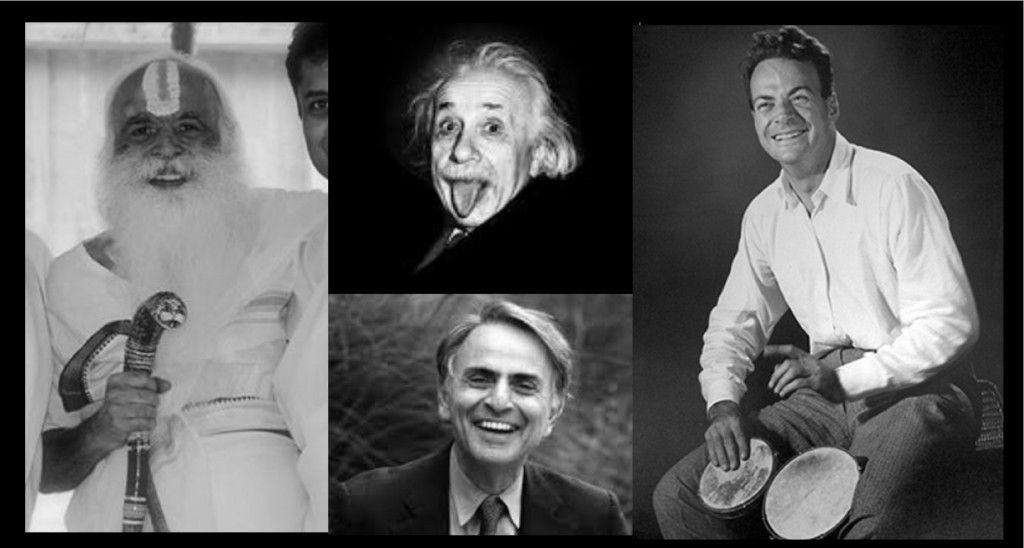
Every person in the embedded photo is of my highest regard, both by their respective intellects and, as well, as by their corresponding justness and generosity.

ABSOLUTE END.

Authored By Copyright Mr. Andres Agostini

000000000000000   OVERMAN  400

White Swan Book Author (Source of this Article)

http://www.LINKEDIN.com/in/andresagostini

http://www.AMAZON.com/author/agostini

https://www.FACEBOOK.com/heldenceo (Other Publications)

http://LIFEBOAT.com/ex/bios.andres.agostini

http://ThisSUCCESS.wordpress.com

https://www.FACEBOOK.com/agostiniandres

http://www.appearoo.com/aagostini

http://connect.FORWARDMETRICS.com/profile/1649/Andres-Agostini.html

https://www.FACEBOOK.com/amazonauthor

http://FUTURE-OBSERVATORY.blogspot.com

http://ANDRES-AGOSTINI-on.blogspot.com

http://AGOSTINI-SOLVES.blogspot.com

@AndresAgostini

@ThisSuccess

@SciCzar

Kaizen and Six Sigma Vs. White Swan “…Transformative and Integrative Risk Management …” [Pictorial] — Andres Agostini

Kaizen and Six Sigma Vs. White Swan “…Transformative and Integrative Risk Management …”

ABSOLUTE END.

Authored By Copyright Mr. Andres Agostini

White Swan Book Author (Source of this Article)

http://www.LINKEDIN.com/in/andresagostini

http://www.AMAZON.com/author/agostini

http://LIFEBOAT.com/ex/bios.andres.agostini

https://www.FACEBOOK.com/agostiniandres

http://www.appearoo.com/aagostini

http://connect.FORWARDMETRICS.com/profile/1649/Andres-Agostini.html

https://www.FACEBOOK.com/amazonauthor

@AndresAgostini

@ThisSuccess

@SciCzar

FutureMed: What is the future of Health?

This archive file was compiled from audio and video documentation of a gathering of medical professionals, inventors & entrepreneurs, held at Singularity University in California, February 2013. The selected material gives a portrait of a time in which the field of health found itself at a crossroads between the mature medical institutions which had slowly evolved over hundreds of years, and a need to develop and integrate new, more flexible and scalable forms of care. About Future Med: http://futuremed2020.com/ About Singularity University: http://singularityu.org/ GPA on Facebook: on.fb.me/18NiF8z GPA on Twitter: twitter.com/GPA2030

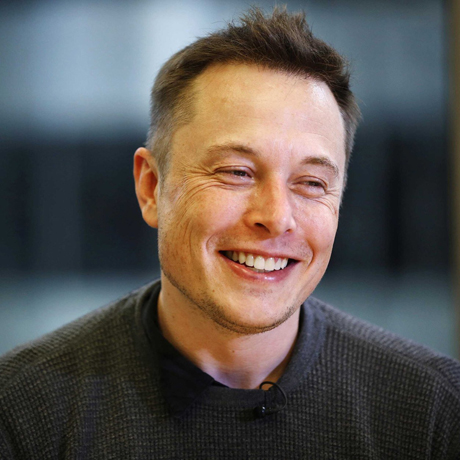
Elon Musk named Lifeboat Foundation 2014 Guardian Award winner

The Lifeboat Foundation Guardian Award is annually bestowed upon a respected scientist or public figure who has warned of a future fraught with dangers and encouraged measures to prevent them.

The 2014 Lifeboat Foundation Guardian Award has been given to Elon Musk in recognition of his warnings about artificial intelligence, his promotion of space exploration including the creation of self-sustaining space colonies, and his efforts to improve our environment with electric cars and to expand solar energy generation.

Elon is often likened to a real-life Tony Stark from Marvel’s Iron Man comics for his role in cutting-edge companies including SpaceX, a private space exploration company that holds the first private contracts from NASA for resupply of the International Space Station, and the electric car company Tesla Motors. Watch Elon in Iron Man 2!

Artificial Intelligence

Elon recently described his investments in AI research as “keeping an eye on what’s going on” rather than aiming for a viable return on capital. He said, “I think we should be very careful about artificial intelligence. If I had to guess at what our biggest existential threat is, it’s probably that. So we need to be very careful.”

Considering that oversight of AI development by governmental and nongovernmental agencies is about zero, it is helpful for Elon to bring attention to this matter. For example, thanks to warnings like his, Google now has an AI Ethics Board. (This matters since Google is putting a lot of resources into creating smarter and smarter AIs.)

Self-Sustaining Space Colonies

There are many existential risks that could be survived if we had self-sustaining colonies outside of the Earth. Elon said, “What matters is being able to establish a self-sustaining civilization on Mars, and I don’t see anything being done but SpaceX. I don’t see anyone else even trying.” He also said, “Sooner or later, we must expand life beyond this green and blue ball — or go extinct.”

Elon is CEO and CTO of SpaceX. Historic achievements by SpaceX, among others, include the first privately funded, liquid-fueled rocket (Falcon 1) to reach orbit in September 2008; the first privately funded company to successfully launch (Falcon 9), orbit, and recover a spacecraft (Dragon) in December 2010; and the first private company to send a spacecraft (Dragon) to the International Space Station in May 2012. The launch of SES-8 in December 2013 was the first SpaceX delivery into geosynchronous orbit.

Sustainable Energy

Elon is CEO, Chairman, and Product Architect of Tesla Motors. Tesla first gained widespread attention following their production of the Tesla Roadster, the first fully electric sports car. The company’s second vehicle is the Model S, a fully electric luxury sedan, and its next two vehicles are the Models X and 3 respectively.

Tesla also markets electric powertrain components, including lithium-ion battery packs to automakers including Daimler and Toyota. Elon has said that he envisions Tesla as an independent automaker, aimed at eventually offering electric cars at prices affordable to the average consumer.

Elon is Chairman of SolarCity, the second largest provider of solar power systems in the United States. Continuing its strong growth, the United States installed 1,354 megawatts of solar photovoltaics in Q3 2014, up 41 percent over the same period last year. Only 440 megawatts had been installed in all of 2009 to show how fast this market is growing.

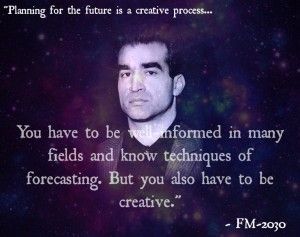
FM2030: Are You A Transhuman?

This archive file was compiled from audio of a discussion futurist FM 2030 held at the University of California, February 6th, 1994. In this discussion 2030 laid out an overview of his ‘transhuman’ philosophy and held a back and forth with other people present in the discussion. Discussion and debate included items such as the value of researching ‘indefinite lifespan’ technologies directly as opposed to (or in addition to) more traditional approaches, such as researching cures for specific diseases.
The excerpts in this archive file present a sort of thesis of FM 2030’s transhuman ideas.

About FM 2030: FM 2030 was at various points in his life, an Iranian Olympic basketball player, a diplomat, a university teacher, and a corporate consultant. He developed his views on transhumanism in the 1960s and evolved them over the next thirty-something years. He was placed in cryonic suspension July 8th, 2000. For more information about FM 2030, view the GPA Archive File: ‘Introduction to FM 2030′ or visit some of the following links:

Wikipedia:
en.wikipedia.org/wiki/FM-2030

Institute for Ethics & Emerging Technologies:
ieet.org/index.php/tpwiki/Transhuman

The New York Times:
nytimes.com/2000/07/11/us/futurist-known-as-fm-2030-is-dead-at-69.html

GPA on Facebook: on.fb.me/18NiF8z
GPA on Twitter: twitter.com/GPA203

Marty Kohn, MD: Will your doctor be a Robot?

This archive file was compiled from an interview conducted on the campus of Singularity University, February 2013. The interview took place at a time where new artificial intelligence systems, such as IBM’s Jeopardy winning “Watson,” were re-awakening the popular imagination in terms of artificial intelligence becoming a visible part of day to day life. The privacy issues regarding the ‘big-data’ that allowed many AI systems to function was also becoming a significant source of controversy. In this piece, Marty Kohn, MD, chief medical scientist on the IBM Watson Medical Team, gives insight into his personal thoughts and feelings regarding how society might both accept and reject the artificial intelligence advances of the coming years.

About the Speaker:
IBM:
researcher.ibm.com/researcher/view.php?person=us-marty.kohn

FutureMed:
futuremed2020.com/marty-kohn/

FM-2030: What is the Future of Democracy? Part 2

The audio in this archive file was compiled from a 1984 meeting of futurists, transhumanists, and progressives. The main topic of the meeting was the most appropriate ways to engage or advance these philosophies within government. For example, one significant point of discussion centered around whether running for office was an effective way to drive change.

In the course of the discussion, the primary viewpoint FM-2030 espoused was that some aspects of government — especially the concept of leadership — would become obsolete or be replaced by other aspects of society (see Part 1). However, he also expressed what he believed the core of a ‘true’ democracy might look like. This archive file is assembled from excerpts of that section of the discussion.

FM-2030: What is the Future of Democracy? Part 1

The audio in this archive file was compiled from a 1984 meeting of futurists, transhumanists & progressives. The main topic of the meeting was the most appropriate ways to engage or advance these philosophies within government. For example, one significant point of discussion centered around whether running for office was an effective way to drive change.

The excerpts in this archive file collect many of futurist FM 2030’s thoughts over the course of the discussion.

About FM 2030: FM 2030 was at various points in his life, an Iranian Olympic basketball player, a diplomat, a university teacher, and a corporate consultant. He developed his views on transhumanism in the 1960s and evolved them over the next thirty-something years. He was placed in cryonic suspension July 8th, 2000.

Amit Singhal (at Google): Will your computer plan change your life?

This archive file was compiled from an interview conducted at the Googleplex in Mountain View, California, 2013. In the discussion, Amit Singhal, a key figure in the evolution of Google’s search engine, broadly outlined the significant hurdles that stood in the way of achieving one of his long-held dreams — creating a true ‘conversational’ search engine. He also sketched out a vision of how the initial versions of such a system would, and also importantly, would not attempt to assist the individuals that it interacted with.

Though the vision was by design more limited and focused than a system capable of passing the famous Turing test, it nonetheless raised stimulating questions about the future relationships of humans and their ‘artificial’ assistants.

More about Amit Singhal:

Wikipedia:
en.wikipedia.org/wiki/Amit_Singhal

Google Search:
en.wikipedia.org/wiki/Google_Search

Who is Amit Singhal (at Google)?

This archive file was compiled from an interview conducted at the Googleplex in Mountain View, California, 2013.

As late as the 1980s and the 1990s, the common person seeking stored knowledge would likely be faced with using an 18th century technology — the library index card catalogue — in order to find something on the topic he or she was looking for. Fifteen years later, most people would be able to search, at any time and any place, a collection of information that dwarfed that of any library. And unlike the experience with a library card catalogue, this new technology rarely left the user empty-handed.

Information retrieval had been a core technology of humanity since written language — but as an actual area of research it was so niche that before the 1950s, nobody had bothered to give the field a name. From a superficial perspective, the pioneering work in the area during the 1940s and 50s seemed to suggest it would be monumentally important to the future — but only behind the scenes. Information retrieval was to be the secret tool of the nation at war, or of the elite scientist compiling massive amounts of data. Increasingly however, a visionary group of thinkers dreamed of combining information retrieval and the ‘thinking machine’ to create something which would be far more revolutionary for society.

In the case of Google’s Amit Singhal, it was a childhood encounter with a visionary work that gave him his initial fascination with the dream of the thinking machine — a fascination that would result in his evolution to be one of the individuals who began to transform the dream into a reality. The work that he encountered was not that of a scientific pioneer such as Alan Turing or Marvin Minsky — it was a visionary work of pop culture.

More about Amit Singhal:
en.wikipedia.org/wiki/Amit_Singhal
Google Search:
en.wikipedia.org/wiki/Google_Search

/* */