Toggle light / dark theme

Cryptographers Develop Encryption Method Resistant to Future Quantum Attacks

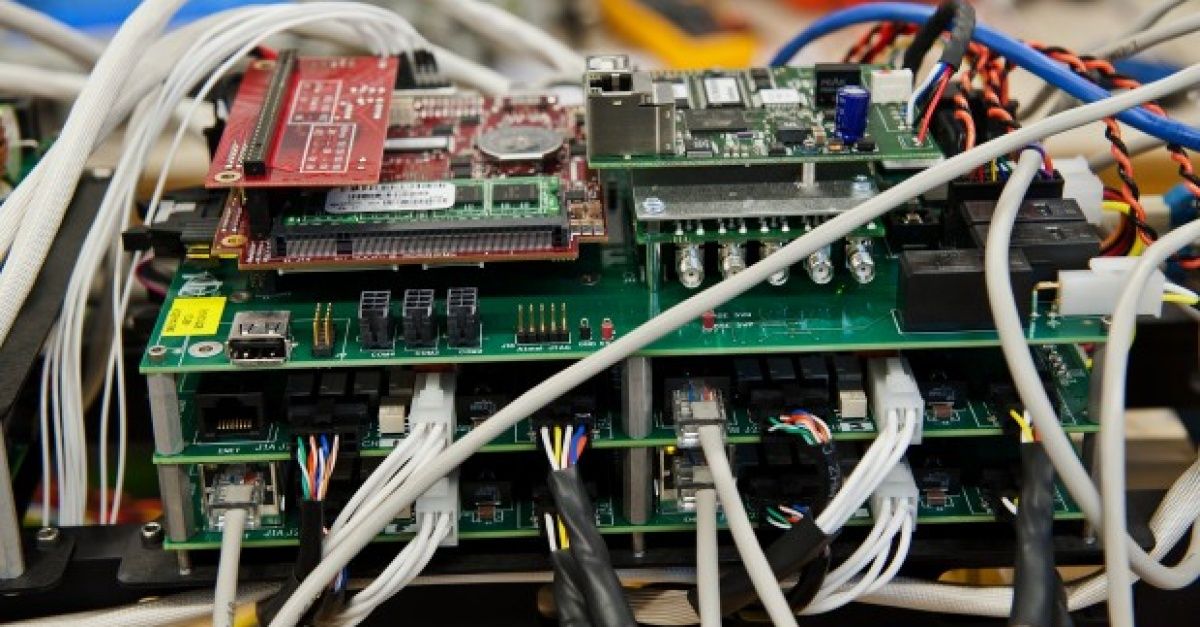
Cryptographers are working on new encryption methods able to protect today’s Internet communications from future quantum computers that can be able to break today’s cryptography techniques. The researchers have developed upgrades to the Internet’s core encryption protocol that will prevent quantum computer users from intercepting Internet communications.

Read more

Google’s New Alphabetical Order — By Vauhini Vara | The New Yorker

“In one sense, Page and Brin are just formalizing an arrangement that has evidently existed at Google for the past several years—the two of them at the helm of a company largely occupied with seeking out new and strange areas of innovation. The bet, it seems, is that this arrangement will improve the chances that Page and Brin’s unconventional investments will pan out—and that, if they don’t, the rest of the company will be better insulated from its founders’ mistakes. Until then, Sundar Pichai can focus on the boring, plodding business of actually making money.”

Read more

Japanese Court: Bitcoin Cannot be Owned

Responding to this nugget from Engadget:

Tokyo’s district court has ruled that it’s not possible for people to own bitcoin, and therefore they cannot sue for compensation in the wake of Mt. Gox’s collapse.

The ruling comes days after the head of the world’s largest bitcoin exchange was arrested on charges of fraud. Judge Masumi Kurachi felt that bitcoins do not possess “tangible qualities” to constitute owned property. Mt. Gox held thousands of individual accounts, and so there’s plenty of angry customers looking for compensation.

Here at Lifeboat, we have a long term view of cryptocurrency, and we sense the underpinning of fundamentals that are often overlooked.

My response to the Tokyo court…

A personal stake in Bitcoin is every bit as real (and a bit more tangible) than a personal stake in Yen, Dollars or Euros. Fiat currency is backed by the knowledge that your national government will demand tax payments in kind. But is it tangible? Like any invention of humans, that’s a matter of perception.

a) Dollars / Yen / Euros

Dollar_closeOver the long term, national currency is likely to be debased by debt, social welfare, war, political ambition, and a desire to redistribute fruits of labor, typically to assuage political ambitions. A built in mechanism of inflation forces a hidden tax and enables legislators to spend beyond the consent of their constituents.

b) Bitcoin

Bitcoin_BlueBitcoin on the other hand is backed by math. It is an asset without the potential for inflation or manipulation. It is a pure supply-demand currency and a pure 2-sided network—completely unfettered by the chaff that comes with central banks and national treasuries.

A stake in Bitcoin rises over the long haul, because the total quantity of currency is capped. As it is adopted for payments and commerce, a fixed pie is sliced thinner and thinner. This results in increased value per unit. Result: A deflationary economy without the baggage of sluggish economics.

Japan has made a foolish pronouncement; one that will ultimately embarrass their courts. Declaring Bitcoin ethereal is laughable when you consider that paper money is no more tangible than an unfulfilled promise. Likewise, declaring the theft or mismanagement of Bitcoin unworthy of recovery or restitution is no different than declaring the theft of art unworthy of restitution. Consider that each Mt. Gox account holder has proof of a real dollar investment position and an appreciation that is reported and tracked by exchanges all over the world.

Wake up Japan. You have so much more to offer the world than a distorted interpretation of a new technology.

Philip Raymond is Co-Chair of CRYPSA,
Cryptocurrency Standards Association

Google’s Internet balloons will soon connect all of Sri Lanka with Wi-Fi

It will be the first country in the world to have universal Internet coverage.


Google has teamed up with the Sri Lankan government to deliver broadband Internet to every region of the island nation, making it the first country in the world to have universal Internet coverage. The initiative is part of Google’s Project Loon, which aims to provide cheap or free Wi-Fi to people in remote rural areas around the world via a fleet of huge helium-filled balloons floating way up in the stratosphere.

Read more

IBM believes blockchain is an “elegant solution” for Internet of Things

Quoted: “IBM’s first report shows that “a low-cost, private-by-design ‘democracy of devices’ will emerge” in order to “enable new digital economies and create new value, while offering consumers and enterprises fundamentally better products and user experiences.” “According to the company, the structure we are using at the moment already needs a reboot and a massive update. IBM believes that the current Internet of Things won’t scale to a network that can handle hundreds of billions of devices. The operative word is ‘change’ and this is where the blockchain will come in handy.”

Read the article here > https://99bitcoins.com/ibm-believes-blockchain-elegant-solut…of-things/

The $100 Million Content Farm That’s Killing the Internet — Charles Buzz | Motherboard

“This week, the viral aggregator ViralNova was acquired for $100 million dollars. Meanwhile, the Pitchfork spin-off film criticism site The Dissolve ceased operations with an internet_meaningful blogpost entitled “The End.” The divergence between the missions and lifecycles of these two media projects that both launched in 2013 leave me wondering, “WTF is value?” It is certainly not creating #niche content for ‘intelligent audiences.’ Over the past two years, we’ve learned that there isn’t any actual monetizable ‘cultural value’ in building a content farm with an authoritative voice or domination of a niche area. Instead, it is more important to chase quantifiable human metrics by shoving lowbrow content in front of Facebook users. This is exactly what ViralNova has done better than most content farms–it figured out the current system and #growth_hacked the hell out of it.” Read more

Passfaces: Strong authentication for the masses

Last year, Google began experimenting with hardware-based schemes for user-authentication, while Apple added two factor authentication to iCloud and Apple ID users. They began sending a verification code to users via a mobile number registered in advance.

Security pundits know that two factor authentication is more secure than simple passwords. As a refresher, “Factors” are typically described like this:

  • Something that you know (a password — or even better, a formula)
  • Something that you have (Secure ID token or code sent to cell phone)
  • Something that you are (a biometric: fingerprint, voice, face, etc.)

The Google project may be just another method of factor #2. In fact, because it is small (easily misplaced or stolen), it simplifies but does not improve on security. I suggest a radical and reliable method of authentication. It’s not new and it’s not my idea…

Back in 1999, Hugh Davies (no relation to Ellery) was awarded a patent on a novel form of access and authentication. It capitalizes on the human ability to quickly pick a familiar face out of a crowd. Just as with passwords, it uses something that you know to log in, purchase, or access a secure service. But unlike passwords, the “combination” changes with every use, and yet the user needn’t learn anything new.

Hoping to commercialize the technique, Davies joined another Brit, Paul Barrett, and formed Passfaces (originally, Real User Corporation). Incidentally, it is quite difficult to research Passfaces and its history. Web searches for “face recognition”, “access”, “authentication” and “patent” yield results for a more recent development in which a smart phone recognizes the face of authorized users, rather than users recognizing familiar faces. (Google, Samsung and Apple are all beginning to use face recognition on mobile devices). In fact, the Passfaces method is quicker, uses less resources and is far more reliable.

I have long been disappointed and surprised that the technique has never caught on. It is a terrific method with few drawbacks. Used alone, it is better than other methods of 1 or 2 factor authentication. Add a second factor and it is remarkably secure and robust.

How it Works:

Passfaces-1When accessing or authenticating (for example, logging into a corporate VPN or completing a credit card purchase), you are presented with a tiled screen of individual faces. I prefer a big 15×5 grid = 75 images, but Passfaces uses sequential screens of just 9 faces arranged like the number pad on an ATM.

Just click on a few familiar faces. That’s all! Oddly, Passfaces discourages the use of known faces. Their research, with which I respectfully disagree, suggests that users should train themselves to recognize a few faces from the company’s stock library. In my preferred embodiment, users upload a dozen photos of people they know at a glance—preferably, people that they knew in the past: A 3rd grade music teacher, a childhood friend who moved away, the face on an oil painting that hung in the basement until Dad tossed it in the fireplace. Now, add the boss who fired you from your first job, the prom queen who dumped you for a football jock, and that very odd doorman who stood in front of a hotel in your neighborhood for 20 years. Photos of various quality and resolution, but all scaled to fit the grid. Some are black & white, perhaps scanned from an old yearbook.

Using my preferred example of 75 faces, suppose that 5 or 6 of the images are from your personal shoe box of old photos. The rest are randomly inserted from all over the internet. How long would take you to click on 3 of the 5 or 6 familiar faces in front of you? (Remember: They are old acquaintances. Even a spouse would have difficulty picking out 3 faces from your early life—as they looked back then). Surprise! You will click them instantly, especially on a touch screen. You won’t need even a second to study the collage. They jump off the screen because your brain perceives a familiar face very differently and faster than anything else.

Of course, the photo array is mixed in different ways for each authentication and it incorporates different friends from your original upload. In fact, if a user sees the same faces in the next few transactions, it is a red flag. Someone has spied on the process, perhaps with a local camera or screen logger. In legitimate use, the same faces are not recycled for many days and are never shown together on the same screen.

Facebook uses a variant of this technique when their servers sense your attempt to login from new equipment or from another part of the country. They show you individuals that you have friended, but that were uploaded and tagged by other users. If you cannot identify a few of your own friends, especially the ones with which you have frequent social contact, than it’s likely that your login attempt deserves more scrutiny.

I don’t know why Passfaces or something like it has failed to catch fire. Perhaps the inventor refuses to license the method at reasonable cost or perhaps he cannot find a visionary VC or angel consortium to more aggressively promote it. If I had invented and patented facial-array authentication, I would attempt to market the patent for a short time focusing on very large network companies like Microsoft, Google, Cisco or Akamai. If I could not license or sell the patent quickly, I would hesitate to go it alone. (I have tried that route too many times). Instead, I would place it in the public domain and profit by being the first, and most skilled practitioner at deployment. I would train and certify others and consult to organizations that use or commercialize the technology.

saira.maskI used this approach in promoting my own patent which describes an economic barrier to spam (after failing to exploit the invention with my own company). Later, I started with this approach in my research on Blind Signaling and Response and on Reverse Distributed Data Clouds. I recognized that rapid adoption of transformative technology like facial grid authentication, can be thwarted by defensive IP practice.

« Branching somewhat off topic, a developmental biologist at Imperial College in London, has published a proof that Saira Mohan has the world’s most beautiful face, irrespective of the observer’s race. That’s Saira at left. Her mother is French/Irish and her father is Hindoo.

__________
Philip Raymond is Co-Chair of The Cryptocurrency Standards Association [crypsa.org] and
chief editor at AWildDuck.com. He consults to cloud storage vendors in areas of security, pri–
vacy & network architecture, but has no ties to Passfaces or the authentication community.

/* */