Welcome to Oxford longevity related conference, free of charge.
Munjal Shah, CEO & Co-founder of Health IQ, discusses lowering premiums for better behavior.
Innovation series by Steven Loeb March 23, 2018 Short URL: http://vator.tv/n/4b46

Welcome to Oxford longevity related conference, free of charge.
Munjal Shah, CEO & Co-founder of Health IQ, discusses lowering premiums for better behavior.
Innovation series by Steven Loeb March 23, 2018 Short URL: http://vator.tv/n/4b46
We need the arts to stimulate debate over the impact of technological breakthroughs on society.
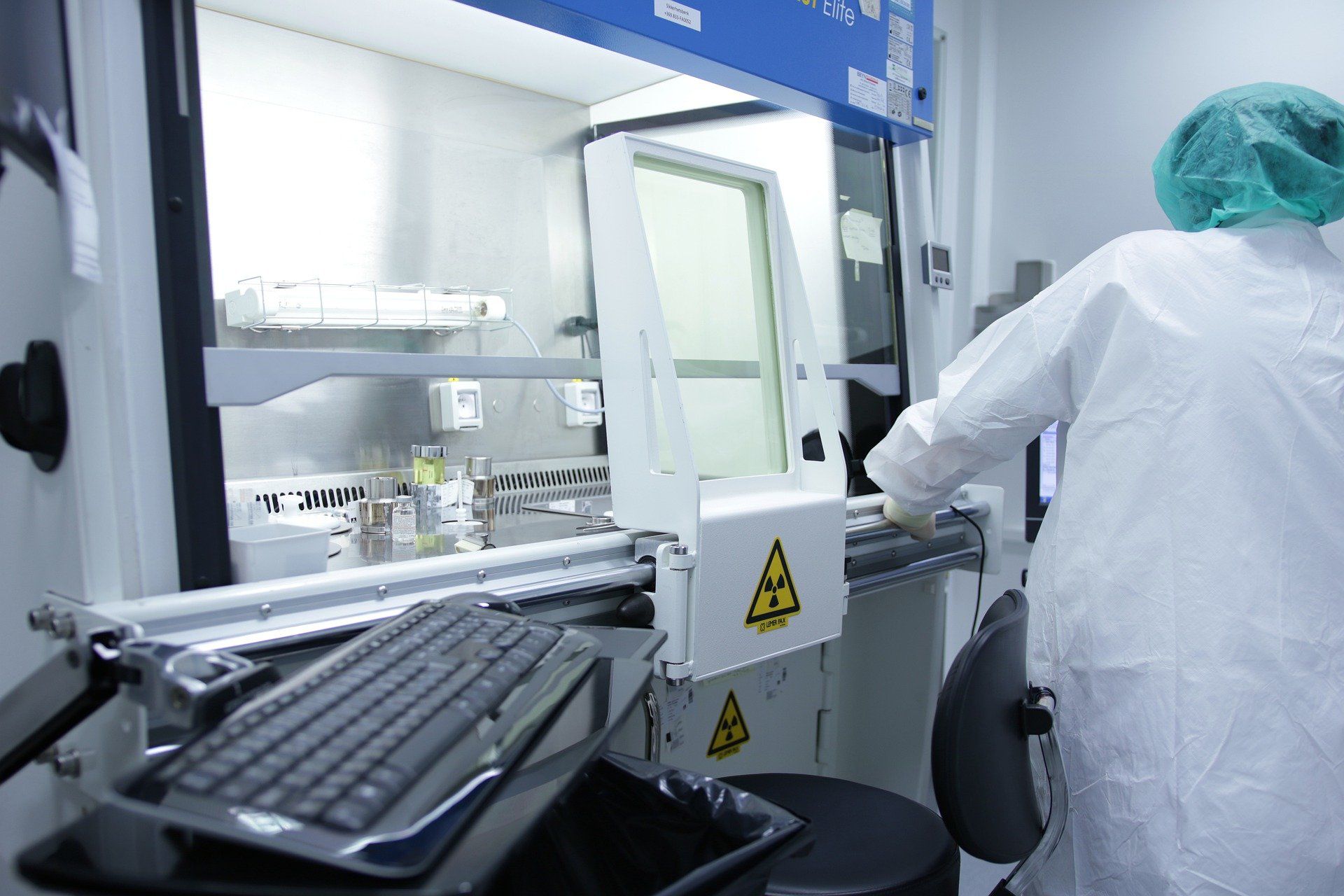
A Northwestern University-led team has developed a new way to manufacture proteins outside of a cell that could have important implications in therapeutics and biomaterials.
The advance could make possible decentralized manufacturing and distribution processes for protein therapeutics that might, in the future, promote better access to costly drugs all over the world.
The team set out to improve the quality of manufactured proteins in vitro, or outside a cell, and found success across a number of fronts.

Innovation is the latest social, political and economic battleground. Techno-optimists dismiss fears about innovation, typecasting non-believers as Luddites. The impact of recent technological changes, they believe, will be realised over time. Luddites, on the other hand, point to weaknesses in technology.
Policymakers are placing their faith on technological advancements to boost flagging growth. But it is founded more on hope than reality.
By Satyajit Das

24,800 acres of land will soon become a “smart city” in Arizona. One of Bill Gates’ investment firms is investing millions into this project, hoping that its proximity to local hubs and ability to be completely molded will allow for innovation.
Bill Gates has started laying out his plans for creating a “smart city” in Phoenix, Arizona, about 45 minutes west of downtown. Located in the far west valley, the piece of land is comprised of approximately 24,800 acres. Belmont, the proposed name for the city, will embrace and push forward innovation and technology. One of Gates’ investment firms has already solidified the plans by devoting $80 million to the project.

Breakthrough measurements of Jupiter’s hidden interior could revolutionize our understanding of giant planets.
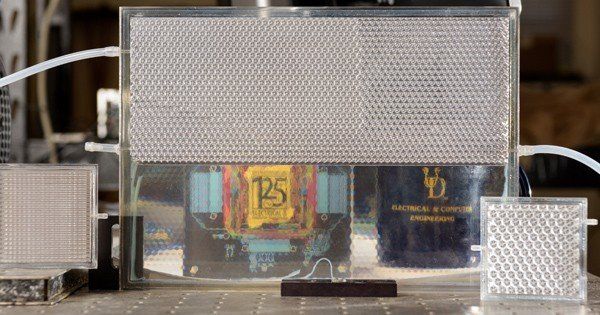
Someday we won’t need curtains or blinds on our windows, and we will be able to block out light—or let it in—with just the press of a button. At least that’s what Keith Goossen, associate professor of electrical and computer engineering at the University of Delaware, hopes.
Goossen and Daniel Wolfe, who earned a doctoral degree from UD last year, developed panels that can switch between allowing light in and blocking it out. This “smart glass” technology could be utilized in eco-friendly windows, windshields, roof panes and building envelopes, absorbing light and heat in the winter and reflecting it away in the summer.
Although Goossen isn’t the first scientist to make smart glass, his team’s invention is about one-tenth the price of other versions. It is also more transparent in its transparent state and more reflective in its reflective state than competitors, he said.

Our galaxy may contain billions of habitable worlds that don’t host any life. Should we attempt to change that?Claudius Gros at the Goethe University Frankfurt, Germany, thinks we should. He believes in directed panspermia: deliberately seeding life throughout the cosmos. And to do that, he proposes we use a laser propulsion system that may not be technically out of reach.

Breakthrough Starshot is a project with ambitious aims to use such systems to send tiny, lightweight probes to Alpha Centauri. The goal is to take pictures of our nearest star, but these systems could also deliver much larger payloads into orbit around nearby stars, says Gros.


Inspired by the human eye, researchers at the Harvard John A. Paulson School of Engineering and Applied Sciences (SEAS) have developed an adaptive metalens, that is essentially a flat, electronically controlled artificial eye. The adaptive metalens simultaneously controls for three of the major contributors to blurry images: focus, astigmatism, and image shift.
The research is published in Science Advances.
“This research combines breakthroughs in artificial muscle technology with metalens technology to create a tunable metalens that can change its focus in real time, just like the human eye,” said Alan She, a graduate student at SEAS and first author of the paper. “We go one step further to build the capability of dynamically correcting for aberrations such as astigmatism and image shift, which the human eye cannot naturally do.”