It will have a speed of 7500 miles per hour.
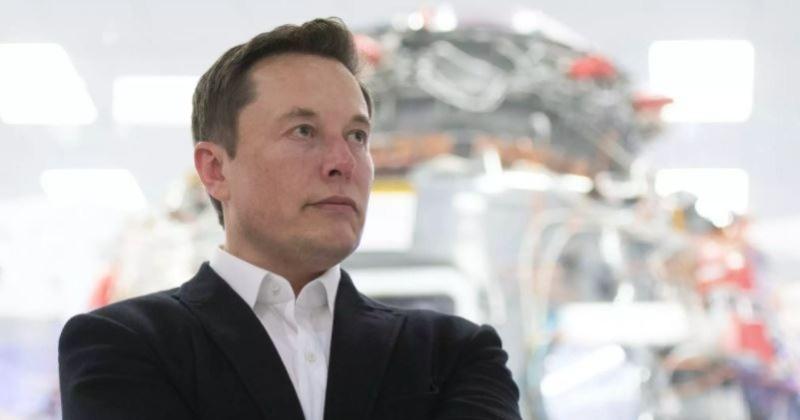
An Amazon Prime-like service to deliver weapons? Well, that is what Elon Musk is working on. Yes, rockets that can deliver weapons to US Armed Forces stationed anywhere in the world.
It will have a speed of 7500 miles per hour.
An Amazon Prime-like service to deliver weapons? Well, that is what Elon Musk is working on. Yes, rockets that can deliver weapons to US Armed Forces stationed anywhere in the world.
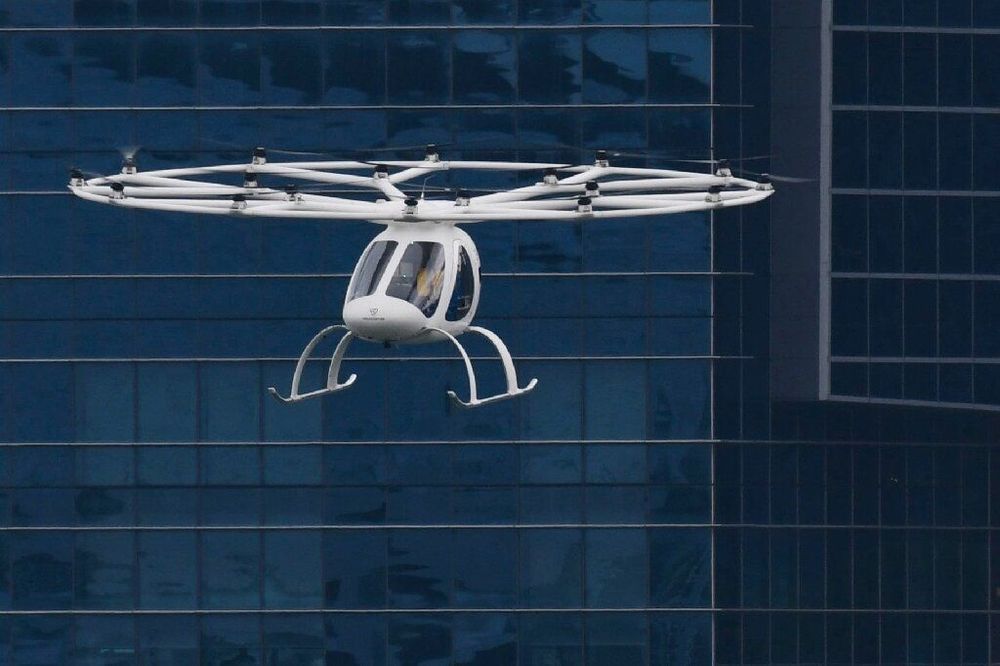
Airborne taxis are coming?
“Flying taxis” will start taking off from an aerodrome north of Paris as soon as next June, operators said, in a trial ahead of a vast tourist influx for the 2024 Olympics.
The experiment will take place at the Pontoise-Cormeilles-en-Vexin aerodrome some 90 minutes northwest of the capital by car, according to a joint announcement by the Ile-de-France region, airports operator Groupe ADP and the RATP public transport agency.
A drone-like, fully-electric vertical take-off and landing vehicle (VTOL) dubbed VoloCity, produced by German company Volocopter, was chosen for the innovative trial with flying taxis in a peri-urban area, they said.
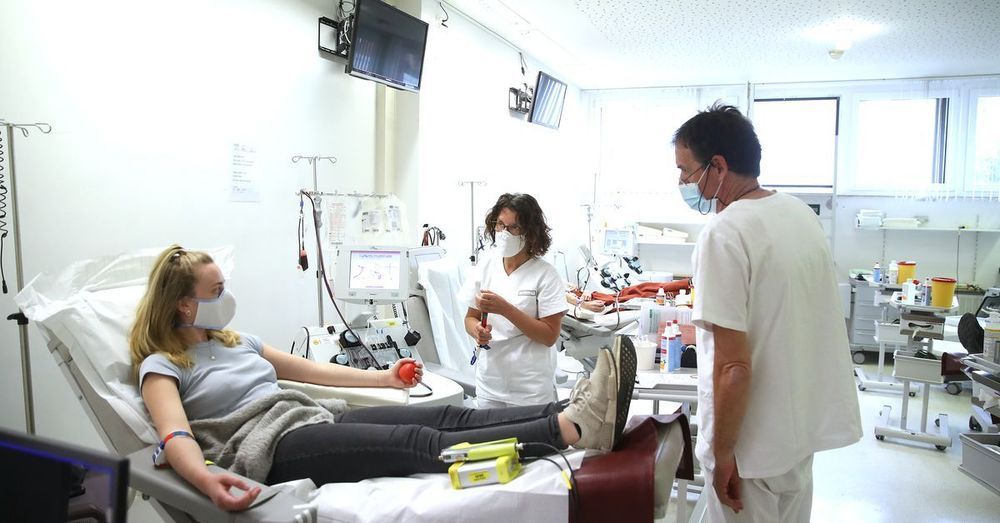
Vaccines could take years, and preventative drugs could help bridge the gap.
Though many people are pinning their hopes on a COVID-19 vaccine, another option is available: preventive treatment. At a Senate hearing this week, Anthony Fauci noted that a vaccine — which is probably months or years away — isn’t the only way to protect someone from a life-threatening virus.
These treatments could protect people against infection for a few weeks or months, said Fauci, the director of the National Institute of Allergy and Infectious Diseases. While most ongoing research studies are focused on finding treatments for people who are already sick with COVID-19, some researchers are looking to see if they can stop people who are at high risk from getting sick in the first place.
It’s a proven strategy: preventive drugs have been used for decades to help people protect themselves against malaria. More recently, they were a breakthrough in the fight against HIV. There’s no effective vaccine against HIV, but people can take a daily medication that reduces their risk of contracting it through sexual activity by 99 percent. The medication is a pre-exposure prophylactic, or PrEP — a drug used to prevent disease in people who haven’t yet been exposed to it.
Robots of the future will be dexterous, capable of deep nuanced conversations, and fully autonomous. They are going to be indispensable to humans in the future.
Let me know in the comment section what you wish a robot could help you do…?
~ 2020s & The Future Beyond.
#Iconickelx
#artificialintelligence #Robots #AI #automation #Future #4IR #Innovation #digitaltransformation
Digital transformations have become a global trend in recent years. To be clear, in mainstream understanding, the term means to increase the use of data, which can then help us to build “smarter” machines, predict the future, dig out insights, eliminate human errors and maximize efficiency. However, according to the stats released by Boston Consulting Group (BCG) and McKinsey & Company, only about 30% of digital transformation projects ended up successfully. The result keeps us wondering: What are the key issues to account for such high failure rate? And more importantly, how can we resolve these issues?

The explosive successes of AI in the last decade or so are typically chalked up to lots of data and lots of computing power. But benchmarks also play a crucial role in driving progress—tests that researchers can pit their AI against to see how advanced it is. For example, ImageNet, a public data set of 14 million images, sets a target for image recognition. MNIST did the same for handwriting recognition and GLUE (General Language Understanding Evaluation) for natural-language processing, leading to breakthrough language models like GPT-3.
A fixed target soon gets overtaken. ImageNet is being updated and GLUE has been replaced by SuperGLUE, a set of harder linguistic tasks. Still, sooner or later researchers will report that their AI has reached superhuman levels, outperforming people in this or that challenge. And that’s a problem if we want benchmarks to keep driving progress.
So Facebook is releasing a new kind of test that pits AIs against humans who do their best to trip them up. Called Dynabench, the test will be as hard as people choose to make it.

They’re not just for supervillains anymore.
Scientists in Japan and Germany have made a breakthrough in the field of solar lasers—and they’ve changed the game completely.
🤯 You like badass science. So do we. Let’s nerd out over it together.
The Horizon 2020 EU-funded MOSAR project (MOdular Spacecraft Assembly and Reconfiguration) aims to develop a ground demonstrator for on-orbit modular and reconfigurable satellites.
The project will investigate and demonstrate technologies that enable a fundamental paradigm shift in satellite design and deployment that could potentially impact all future space missions.
This project has received funding from the European Union’s Horizon 2020 research and innovation programme under grant agreement No. 821966.
Contact: [email protected]
Website: https://www.h2020-mosar.eu/

How do you keep the world’s tiniest soda cold? UCLA scientists may have the answer.
A team led by UCLA physics professor Chris Regan has succeeded in creating thermoelectric coolers that are only 100 nanometers thick—roughly one ten-millionth of a meter—and have developed an innovative new technique for measuring their cooling performance.
“We have made the world’s smallest refrigerator,” said Regan, the lead author of a paper on the research published recently in the journal ACS Nano.

From business to leisure to everything in between, technology can make our lives easier and more enjoyable. Further, tech can also be used to promote the common good and make a positive impact on humanity. When an innovation can do both, it’s something truly special and important that deserves our attention.
As industry leaders, the members of Forbes Technology Council stay on top of current trends and developments, including the most exciting and impactful new technology out there. Below, 15 of them share the coolest products and services they’ve seen that are making a real difference in the world.