A team of researchers at Tel Aviv University has developed a breakthrough RNA-based drug delivery system to target diseased cells that could improve the treatment of blood cancers, various types of solid cancers, different inflammatory diseases and viral diseases – including coronavirus.
“We are the first in the world to deliver the drug exclusively to cells that are currently relevant to the disease.”
Flexible thinking is key to creativity – in other words, the ability to think of new ideas, make novel connections between ideas, and make new inventions. It also supports academic and work skills such as problem solving. That said, unlike working memory – how much you can remember at a certain time – it is largely independent of IQ, or “crystallised intelligence”.
IQ is often hailed as a crucial driver of success, particularly in fields such as science, innovation and technology. In fact, many people have an endless fascination with the IQ scores of famous people. But the truth is that some of the greatest achievements by our species have primarily relied on qualities such as creativity, imagination, curiosity and empathy.
Many of these traits are embedded in what scientists call “cognitive flexibility” – a skill that enables us to switch between different concepts, or to adapt behaviour to achieve goals in a novel or changing environment. It is essentially about learning to learn and being able to be flexible about the way you learn. This includes changing strategies for optimal decision-making. In our ongoing research, we are trying to work out how people can best boost their cognitive flexibility.
Cognitive flexibility provides us with the ability to see that what we are doing is not leading to success and to make the appropriate changes to achieve it. If you normally take the same route to work, but there are now roadworks on your usual route, what do you do? Some people remain rigid and stick to the original plan, despite the delay. More flexible people adapt to the unexpected event and problem-solve to find a solution.
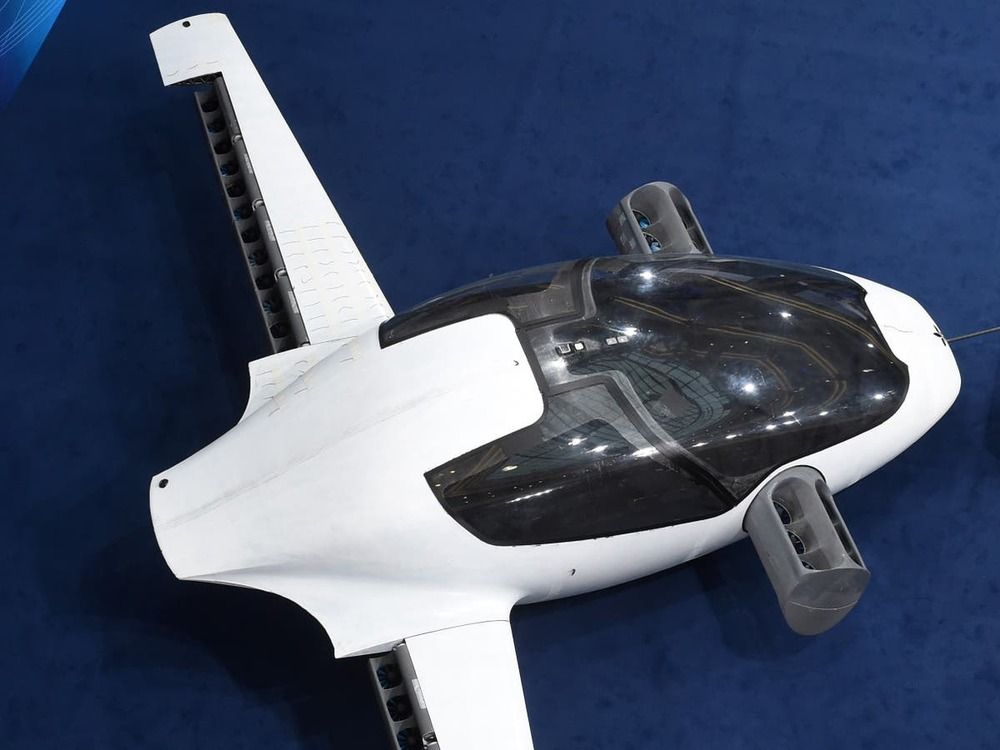
‘I would expect these vehicles to make 15 trips, twice a day during rush hour to justify the cost of the vehicles,’ says researcher.
The key is to rapidly heat the battery to a certain temperature using a nickel foil, which then allows for ultra quick charging without causing any damage.
“I think flying cars have the potential to eliminate a lot of time and increase productivity and open the sky corridors to transportation,” Dr Wang said.
“Commercially, I would expect these vehicles to make 15 trips, twice a day during rush hour to justify the cost of the vehicles. The first use will probably be from a city to an airport carrying three to four people about 50 miles.”
Watch the #ISOCELLUnroll 2021 event introducing the new #ISOCELL JN1, #Samsung’s 50MP image sensor with 0.64μm pixels. Equipped with innovative pixel technologies, the ISOCELL JN1 delivers awesome detail and colors in an ultra-slim package.
The behind-the-scenes tales of hit products and creations from Japan: this is Japan’s Top Inventions. This time, an invention that uses magnetic force to help freeze food without destroying its cell structure: a “fresh freezing” system. It was developed by a Japanese venture firm in 1995 as a technology that would help freeze food without altering its flavor. We look into the story behind its creation, inspired in part by microwaves, and learn about the latest versions.
Scientists in the Netherlands say they are close to a breakthrough which will allow crops to be grown in deserts. Many say this could completely alter life on the African continent and even end hunger.
World leaders meeting at the climate talks in Germany are being urged to commit to more funding for new agricultural projects in drought-stricken parts of the world.
Al Jazeera’s Laurence Lee reports from the Netherlands.
An XPRIZE Rapid COVID test from U smell it honored Scratch n Sniff can detect COVID-19 by Smell.
Guilford, CT, USA; U-Smell-It™ LLC, a Guilford-based company specializing in innovative COVID detection techniques, has announced that it has won the $6M XPRIZE Rapid Covid Testing, a global effort to develop breakthrough COVID testing methods.
XPRIZE Rapid COVID Testing is a $6 million dollar, 6-month competition to develop faster, cheaper, and easier to use COVID-19 testing methods at scale.
Chosen from more than 700 international companies, the XPRIZE judges awarded U-Smell-It™ the award based on scalability, ease of use, and cost.
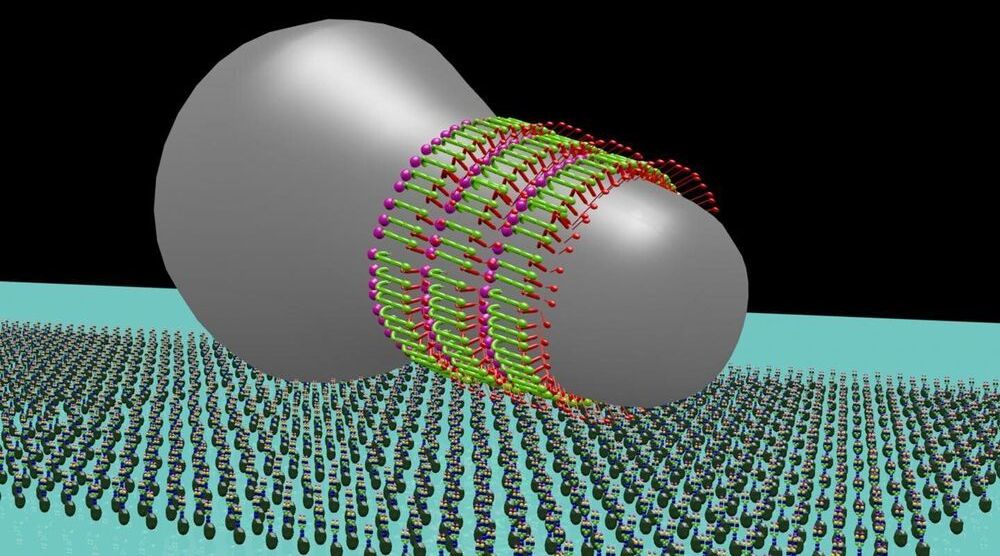
Much of human invention and innovation has been the result of our discovery and replication of natural phenomena, from birds in flight to whales that dive deep into the ocean. For the first time, researchers have captured at the nanometer level the gliding machinery of the bacterium Mycoplasma mobile. Their findings were published in mBio. It illuminates the origin and operating principle of motility, which could serve as a basis for the next generation of nanoscale devices and pharmaceuticals.
“My lab has been studying the molecular nature of bacteria from the Mycoplasma genus for years,” states Professor Makoto Miyata from the Graduate School of Science, Osaka City University and lead of the research group. “And we have developed a conceptualization of how some of these parasitic bacteria ‘glide’ around their hosts.”
For example, Mycoplasma mobile forms a protrusion at one end giving the bacterium a flask shape. At the tapered end are external appendages that bind to solid surfaces, and in concert with an internal mechanism, cause the bacterium to glide across the surface of its host to find nutrient-rich sites and escape the host’s immune response.
Deepmind, Co-founder and CEO, Demis Hassabis discusses how we can avoid bias being built into AI systems and what’s next for DeepMind, including the future of protein folding, at WIRED Live 2020.
“If we build it right, AI systems could be less biased than we are.”
ABOUT WIRED LIVE WIRED Live – the inspirational festival bringing the WIRED brand to life. Hear top-level talks from a curated smorgasbord of scientists, artists, innovators, disruptors and influencers. As we settle into a post-COVID world, WIRED Live will retain the rare combination of WIRED’s journalistic eye, diverse programme, and connections with innovators, designers, strategists and entrepreneurs whilst designed to reach our community remotely, around the world.