I never get tired of reading about the glass energy solutions.
Harnessing Big Data Power Promises Greater Rewards for Environment & Businesses
‘Ideal’ energy storage material for electric vehicles developed.
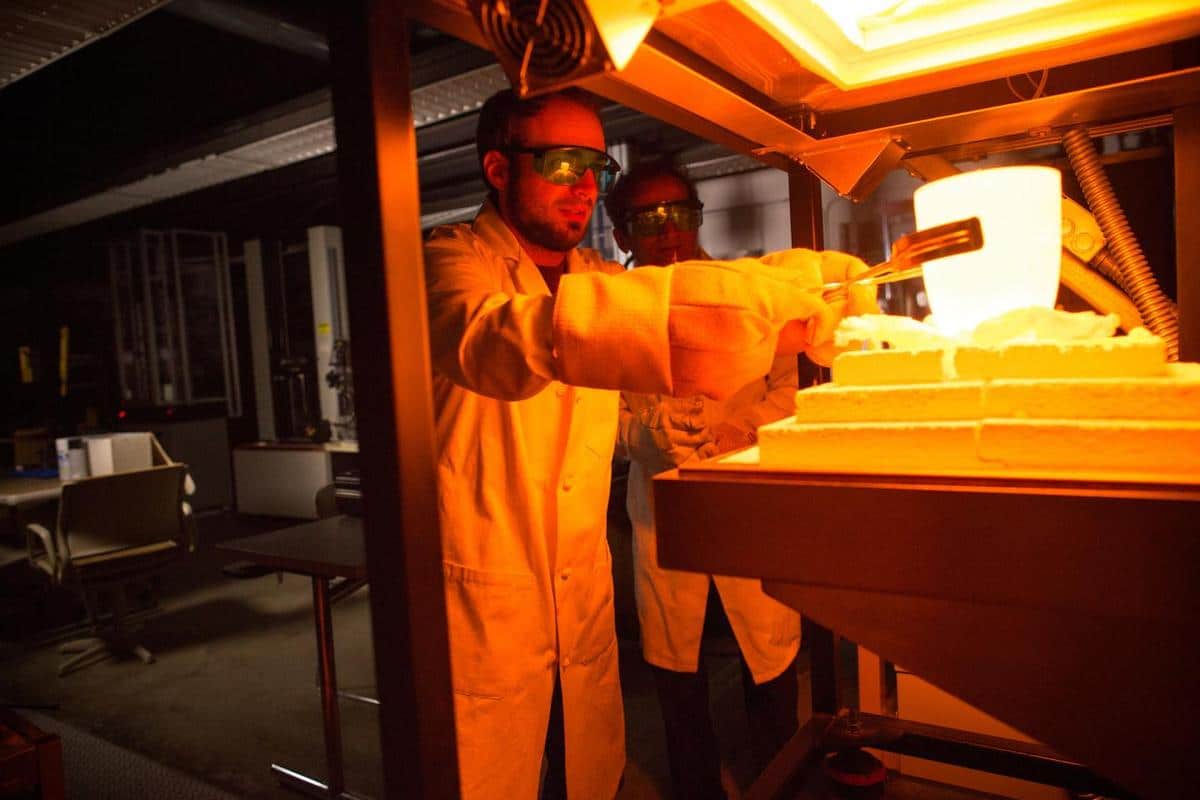
I never get tired of reading about the glass energy solutions.
Harnessing Big Data Power Promises Greater Rewards for Environment & Businesses
‘Ideal’ energy storage material for electric vehicles developed.
Hope they’re working with QC researchers in Los Alamos and DARPA; it is the US Government which is known for its silos and multi-layer bureaucracies.
Quantum computing is a novel way to build computers — one that takes advantage of the quantum properties of particles to perform operations on data in a very different way than traditional computers. In some cases, the algorithm speedups are extraordinary.
Specifically, a quantum computer using something called Shor’s algorithm can efficiently factor numbers, breaking RSA. A variant can break Diffie-Hellman and other discrete log-based cryptosystems, including those that use elliptic curves. This could potentially render all modern public-key algorithms insecure. Before you panic, note that the largest number to date that has been factored by a quantum computer is 143. So while a practical quantum computer is still science fiction, it’s not stupid science fiction.
(Note that this is completely different from quantum cryptography, which is a way of passing bits between two parties that relies on physical quantum properties for security. The only thing quantum computation and quantum cryptography have to do with each other is their first words. It is also completely different from the NSA’s QUANTUM program, which is its code name for a packet-injection system that works directly in the Internet backbone.)

Another spin on AI in how it eradicates poverty; hmmm.
Eradicating extreme poverty, measured as people living on less than $1.25 US a day, by 2030 is among the sustainable development goals adopted by United Nations member states last year.
A team of computer scientists and satellite experts created a self-updating world map to locate poverty, said Marshall Burke, assistant professor in Stanford’s Department of Earth System Science.
It uses a computer algorithm that recognizes signs of poverty through a process called machine learning, a type of artificial intelligence, he said. Results of the two-year research effort have been published in the journal Science.
Is Market Capitalism simply an accident of certain factors that came together in the 19th and 20th centuries? Does the innovation of economics require a new economics of innovation? Is the study of economics deeply affected by the incentive structures faced by economists themselves, necessitating a study of the “economics of economics”? In this broad ranging interview INET Senior Economist Pia Malaney sits down with Eric Weinstein — mathematician, economist, Managing Director of Thiel Capital (as well as her co-author and husband) to discuss these and other issues.
Underlying the seismic shifts in the economy in the last ten years, Dr. Weinstein sees not just a temporary recession brought on by a housing crisis, but rather deep and fundamental shifts in the very factors that made market capitalism the driving force of economic growth for the past two centuries. The most profound of these shifts as Dr. Weinstein sees it, is an end to 20th century style capitalism brought about not by a competing ideology, as many had once feared, but instead by changing technology. As production is driven increasingly by bits rather than atoms, he sees the importance of private goods give way to public goods, undermining a basic requirement of market models. In a different line of thinking, as software becomes increasingly sophisticated it takes on the ability to replace humans not only in low level repetitive tasks but also, with the use of deep learning algorithms, in arbitrarily complex repetitive tasks such as medical diagnosis.
# Physics # Theories – This New Equation Could Unite The Two Biggest Theories in Physics : In a recent paper, a Stanford theoretical physicist develops a new equation, one which indicates that the key to finally connecting general relativity and quantum mechanics is found in bizarre spacetime tunnels called wormholes.
One of the most stubborn problems in physics today is the fact that our two best theories to explain the Universe – general relativity and quantum mechanics – function perfectly well on their own, but as soon as you try to combine them, the maths just doesn’t work out.
But a Stanford theoretical physicist has just come up with a new equation that suggests the key to finally connecting the two could be found in bizarre spacetime tunnels called wormholes.
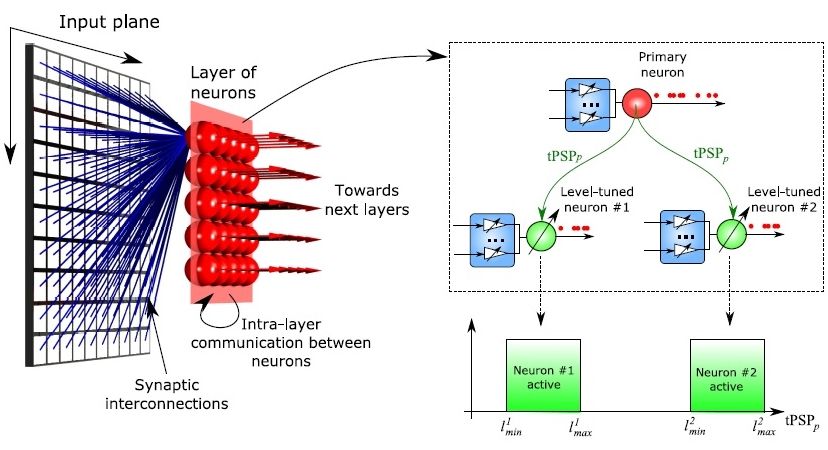
(Phys.org)—When you hear a sound, only some of the neurons in the auditory cortex of your brain are activated. This is because every auditory neuron is tuned to a certain range of sound, so that each neuron is more sensitive to particular types and levels of sound than others. In a new study, researchers have designed a neuromorphic (“brain-inspired”) computing system that mimics this neural selectivity by using artificial level-tuned neurons that preferentially respond to specific types of stimuli.
In the future, level-tuned neurons may help enable neuromorphic computing systems to perform tasks that traditional computers cannot, such as learning from their environment, pattern recognition, and knowledge extraction from big data sources.
The researchers, Angeliki Pantazi et al., at IBM Research-Zurich and École Polytechnique Fédérale de Lausanne, both in Switzerland, have published a paper on the new neuromorphic architecture in a recent issue of Nanotechnology.
Will artificial intelligence solve doctor shortages? Will it be able to replace the art of making a correct diagnosis? Not anytime soon.
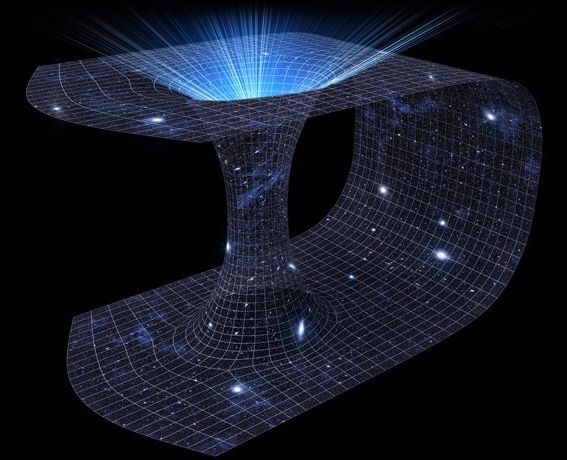
There’s a new equation floating around the world of physics these days that would make Einstein proud.
It’s pretty easy to remember: ER=EPR.
You might suspect that to make this equation work, P must be equal to 1. But the symbols in this equation stand not for numbers, but for names. E, you probably guessed, stands for Einstein. R and P are initials — for collaborators on two of Einstein’s most intriguing papers. Combined in this equation, these letters express a possible path to reconciling Einstein’s general relativity with quantum mechanics.
From time to time, the Singularity Hub editorial team unearths a gem from the archives and wants to share it all over again. It’s usually a piece that was popular back then and we think is still relevant now. This is one of those articles. It was originally published August 10, 2010. We hope you enjoy it!
You don’t have a flying car, jetpack, or ray gun, but this is still the future. How do I know? Because we’re all surrounded by artificial intelligence. I love when friends ask me when we’ll develop smart computers…because they’re usually holding one in their hands. Your phone calls are routed with artificial intelligence.
Every time you use a search engine you’re taking advantage of data collected by ‘smart’ algorithms. When you call the bank and talk to an automated voice you are probably talking to an AI…just a very annoying one. Our world is full of these limited AI programs which we classify as “weak” or “narrow” or “applied.”
Classic tv will never be the same.
Remember that amazing automatic colorizing algorithm we told you about back in March? It was just put to an interesting test. As a fun “what if?” hobbyist Amir Avni tried the neural network-powered colorizer on a B&W video.
It should be obvious that this isn’t a simple transition. To go from colorizing a still image by learning from thousands of other images online is one thing, to do it 24 times per second, smoothly, is entirely another.
“As a bonus, I took the bot’s algorithm and started testing it on some video-clips,” writes Avni. “Of course the results aren’t perfect since it was trained on photos and not on a batch of photos, but the results are still interesting.”
