Toggle light / dark theme

Holographic Breakthrough: Scientists Create Full-Color 3D Holographic Displays with Ordinary Smartphone Screen

In science fiction, holograms are used for anything from basic communications to advanced military weaponry. In the real world, 3D holographic displays have yet to break through to everyday products and devices. That’s because creating holograms that look real and have significant fidelity requires laser emitters or other advanced pieces of optical equipment. This situation has stymied commercial development, as these components are complex and expensive.

More recently, research scientists were able to create realistic 3D holographic images without lasers by using a white chip-on-board light-emitting diode. Unfortunately, that method required two spatial light modulators to control the wave fronts of the emitted light, adding a prohibitive amount of complexity and cost.

Now, those same scientists say they have created a simpler, more cost-effective way to create realistic-looking 3D holographic displays using only one spatial light modulator and new software algorithms. The result is a simpler and cheaper method for creating holograms that an everyday technology like a smartphone screen can emit.

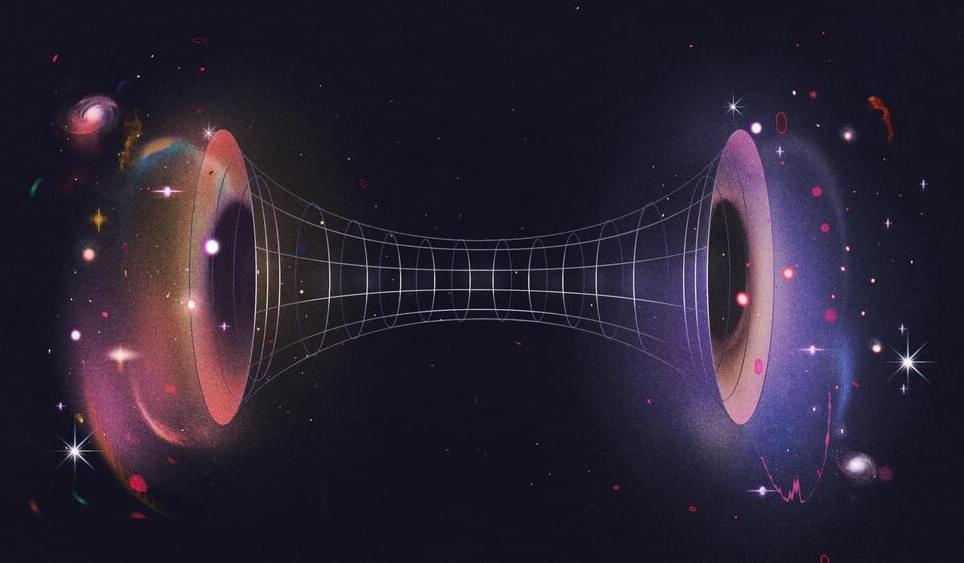
Physicists Successfully Create Holographic Wormhole with Quantum Computer

In an experiment reported in the journal Nature, physicists have achieved a remarkable feat by creating the world’s first quantum holographic wormhole. The experiment delves into the profound connection between quantum information and space-time, challenging traditional theories and shedding light on the complex relationship between quantum mechanics and general relativity.

The team, led by Maria Spiropulu from the California Institute of Technology, utilized Google’s quantum computer, Sycamore, to implement the groundbreaking “wormhole teleportation protocol.” This quantum gravity experiment on a chip surpassed competitors using IBM and Quantinuum’s quantum computers, marking a significant leap in the exploration of quantum phenomena.

The holographic wormhole emerged as a hologram from manipulated quantum bits, or “qubits,” stored in minute superconducting circuits. This achievement brings us closer to realizing a tunnel, theorized by Albert Einstein and Nathan Rosen in 1935, that traverses an extra dimension of space. The team successfully transmitted information through this quantum tunnel, further validating the experiment’s success.

Metasurface Magic Unlocks the Future of Holographic Displays

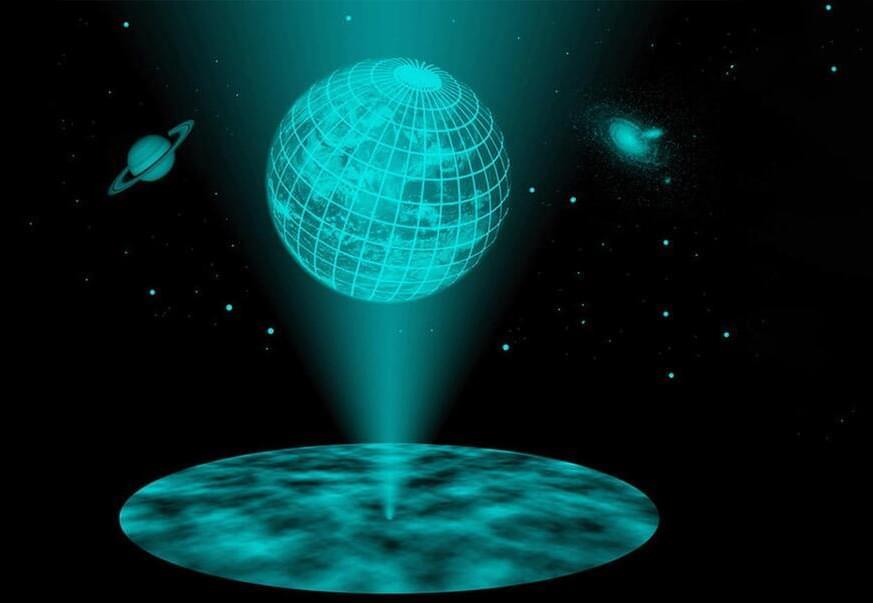
POSTECH’s new metasurface display technology projects angle-dependent holograms, enhancing virtual and augmented reality experiences.

The expression “flawless from every angle” is commonly used to characterize a celebrity’s appearance. This doesn’t simply imply that they appear attractive from a specific viewpoint, but rather that their appeal remains consistent and appealing from various angles and perspectives. Recently, a research team from Pohang University of Science and Technology (POSTECH) has employed metasurface to fabricate angle-dependent holograms with multiple functions, capturing significant interest within the academic community.

Breakthrough in display technology by POSTECH.

Angle-dependent holograms made possible by metasurfaces

Recently, a research team from Pohang University of Science and Technology (POSTECH) has employed metasurfaces to fabricate angle-dependent holograms with multiple functions. This technology allows holograms to display multiple images based on the observer’s viewing angle. The findings were published in Nano Letters.

Objects can appear distinct depending on the viewer’s position, a concept that can be harnessed in to generate cinematic and realistic 3D holograms presenting different images based on the viewing angle. However, the current challenge lies in controlling light dispersion according to the angle, making the application of nano-optics in this context a complex endeavor.

The team addressed this challenge by leveraging metasurfaces, artificial nanostructures capable of precisely manipulating the characteristics of light. These metasurfaces are incredibly thin and lightweight, approximately one-hundredth the thickness of a human hair, making them promising for applications in miniaturized displays such as virtual and augmented reality devices.

Lifelike Einstein, Hawking could be college lecturers thanks to groundbreaking hologram technology

College students may soon be able to attend lectures given by long-dead pioneers like Albert Einstein and Coco Chanel thanks to groundbreaking hologram technology, according to a report.

Some universities have already begun using the holographic technology to bring some of the world’s greatest innovators and artists, like Michael Jackson, to the classroom, The Guardian reported.

The technology can also beam in 3D images of speakers from across the world.

World’s first ‘retina resolution’ holograms are here, startup claims

UK startup VividQ claims to have created the first-ever holograms with a “retina resolution.”

The milestone means holography can now match the resolution and real-life focus cues expected by the human eye, according to VividQ. The result is a “more natural viewing experience than ever before,” the company said. It now plans to deploy the tech in next-generation VR headsets.

To create the holograms, the company engineers light waves to render objects in 3D space. The technique mirrors the way we see objects because they reflect light into our eyes. In holography, software sets the light pathways.

/* */