
Category: health – Page 502
What Will the Automated City of the Future Look Like?
Many large cities (Seoul, Tokyo, Shenzhen, Singapore, Dubai, London, San Francisco) serve as test beds for autonomous vehicle trials in a competitive race to develop “self-driving” cars. Automated ports and warehouses are also increasingly automated and robotized. Testing of delivery robots and drones is gathering pace beyond the warehouse gates. Automated control systems are monitoring, regulating and optimizing traffic flows. Automated vertical farms are innovating production of food in “non-agricultural” urban areas around the world. New mobile health technologies carry promise of healthcare “beyond the hospital.” Social robots in many guises – from police officers to restaurant waiters – are appearing in urban public and commercial spaces.
Tokyo, Singapore and Dubai are becoming prototype ‘robot cities,’ as governments start to see automation as the key to urban living.
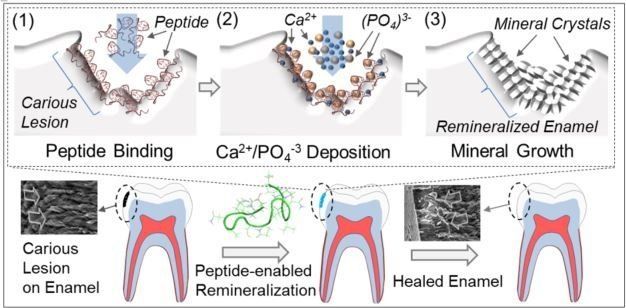
Peptide-based biogenic dental product may cure cavities
Researchers at the University of Washington have designed a convenient and natural product that uses proteins to rebuild tooth enamel and treat dental cavities.
The research finding was first published in ACS Biomaterials Science and Engineering.
“Remineralization guided by peptides is a healthy alternative to current dental health care,” said lead author Mehmet Sarikaya, professor of materials science and engineering and adjunct professor in the Department of Chemical Engineering and Department of Oral Health Sciences.

Fart gas may help prevent dementia, heart disease: study
Farts may stink to high heaven, but a new study suggests that the gas responsible for that foul odor may actually extend a person’s time on earth.
Scientists in the UK claim that hydrogen sulfide, the stinky compound that smells like rotten eggs which contributes to the flatulence stench, could have amazing health benefits.
Hydrogen sulfide can be toxic, but tiny amounts have been shown to help protect the mitochondria, which are known as the “powerhouses” of cells.

Video Gaming as a Geroprotective Strategy
Contrary to certain sensationalist articles declaring that video games are harmful, there is, in fact, growing evidence that playing video games may have a positive effect on cognitive health, particularly in older people [1].
Today, we will be taking a look at the scientific evidence to see if brain training or hitting your favorite video game titles could help keep you healthy as you age.
Using Sound To Levitate And Move Things In Three Dimensions

Japanese researchers have developed a way of not only levitating, but also moving objects three dimensionally using sound waves. The device uses four arrays of speakers to make soundwaves that intersect at a focal point that can be moved up, down, left, and right using external controls. And to human ears the device is completely quiet, as it uses ultrasound.
Occupational exposure to ultrasound in excess of 120 dB may lead to hearing loss. Exposure in excess of 155 dB may produce heating effects that are harmful to the human body, and it has been calculated that exposures above 180 dB may lead to death.[45] The UK’s independent Advisory Group on Non-ionising Radiation (AGNIR) produced a report in 2010, which was published by the UK Health Protection Agency (HPA). This report recommended an exposure limit for the general public to airborne ultrasound sound pressure levels (SPL) of 70 dB (at 20 kHz), and 100 dB (at 25 kHz and above).

Sensors Lead A New Age Of Man-Machine Collaboration
“We shape our tools”, the old maxim goes, “and thereafter our tools shape us.” But what if both man and tools could shape and guide each other — as equals?
That’s the dream of the Senior Director of Advanced Technology at InvenSense, a TDK Group Company, Dr. Peter G. Hartwell, who believes we are heading into a profound new age of man-machine collaboration, led by breakthroughs in sensor technology. “Some problems simply can’t be solved using human senses or machine capabilities alone; we need a fusion of the two,” says Hartwell.
The problems which Hartwell targets are at the very core of a life well lived: customized health care, more energy-efficient infrastructure, productive workplaces, safer cities, and improved environmental monitoring.

The CDC is terrified of these germs, so it’s trying to contain them
As might be expected, the CDC is spooked by these bacteria. If they spread, as infections are want to do, the agency is tasked with stopping them, and that’s no easy task.
On April 3, CDC Principal Deputy Director Anne Schuchat announced the agency’s latest containment strategy, which recommends an aggressive response to the appearance of even a single case of drug-resistant infection. The germs usually appear in hospital settings, so the CDC says health care workers should be prepared to contain the drug-resistant microbes before they can travel beyond a hospital’s doors.
“When there’s a fire somebody needs to put it out,” said Schuchat.