A former Canadian government employee pleaded guilty in the U.S. to charges related to his involvement with the NetWalker ransomware syndicate.


Eric KlienAdmin.
The U.S. government discouraging the opening of new mines is duplicating the problem that Europe had with energy and Russia. (It takes 10 years to get a new mine approved in the U.S.)
Omuterema AkhahendaAdmin.
I dunno if this rare earth is worth anything.
Astronomers spot signs of planets forming around dying stars.
Leading bipartisan moonshots for health, national security & functional government — senator joe lieberman, bipartisan commission on biodefense, no labels, and the centre for responsible leadership.
Senator Joe Lieberman, is senior counsel at the law firm of Kasowitz Benson Torres (https://www.kasowitz.com/people/joseph-i-lieberman) where he currently advises clients on a wide range of issues, including homeland and national security, defense, health, energy, environmental policy, intellectual property matters, as well as international expansion initiatives and business plans.
Prior to joining Kasowitz, Senator Lieberman, the Democratic Vice-Presidential nominee in 2000, served 24 years in the United States Senate where he helped shape legislation in virtually every major area of public policy, including national and homeland security, foreign policy, fiscal policy, environmental protection, human rights, health care, trade, energy, cyber security and taxes, as well as serving in many leadership roles including as chairman of the Committee on Homeland Security and Government Affairs.
Prior to being elected to the Senate, Senator Lieberman served as the Attorney General of the State of Connecticut for six years. He also served 10 years in the Connecticut State Senate, including three terms as majority leader.
In addition to practicing law, Senator Lieberman is honorary national founding chair of No Labels (https://www.nolabels.org/), an American political organization composed of Republicans, Democrats and Independents whose mission is to “usher in a new era of focused problem solving in American politics.”

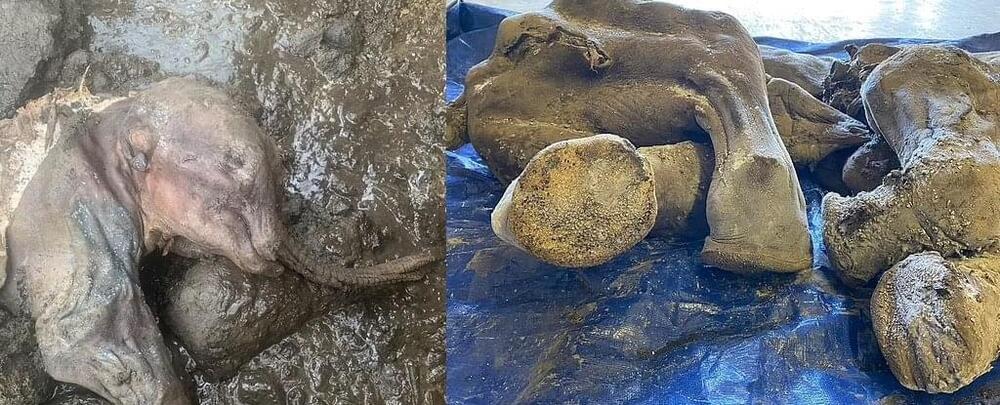
The most complete found in North America.
According to a press release from the local government, the female baby mammoth has been named Nun cho ga by the First Nation Tr’ondëk Hwëch’in elders, which translates to “big baby animal” in the Hän language.
Nun cho ga is the most complete mummified mammoth discovered in North America.
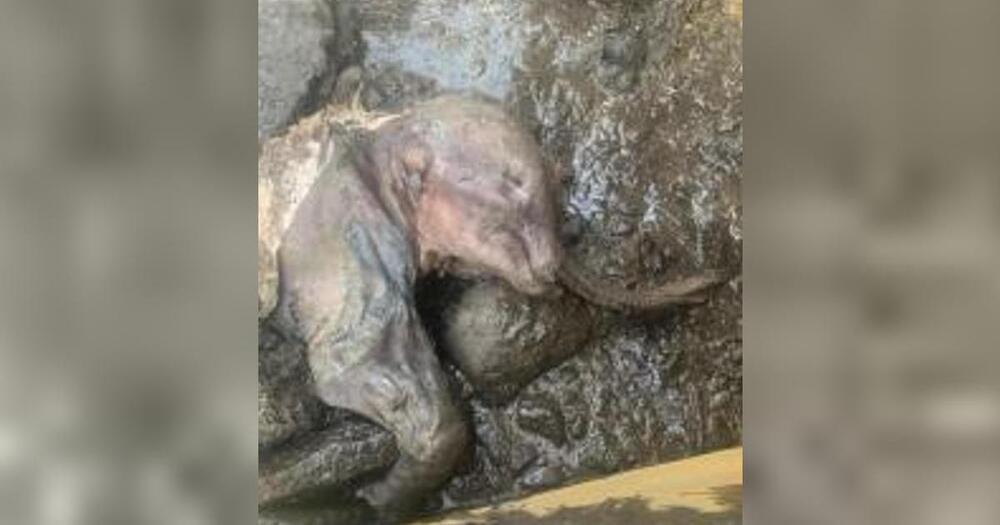
A gold miner in Canada discovered a near complete mummified baby woolly mammoth Tuesday, according to the Yukon government and Trʼondëk Hwëchʼin, a local traditional territory. The female baby was named Nun cho ga, which means “big baby animal” in the Hän language.
the government’s press release said. She’s estimated to have frozen during the Ice Age, over 30,000 years ago. While alive, she likely roamed the Yukon with wild horses, cave lions and giant steppe bison.
It added that the discovery was “significant” and rare, even for an area like Yukon, which has “a world-renowned fossil record of ice age animals.”

As cyberattacks on medical networks continue to affect healthcare institutions across the country, organizations who are directly at risk of these attacks are seeking government assistance.
From January through June, the Office of Civil Rights tallied 256 hacks and information breaches, up from 149 for the same period a year ago. It’s a continuing trend from last year: Cybersecurity outfit Sophos reports that in 2021, attacks on health systems were up 66 percent over 2020.
Now some health systems are asking the federal government to step in and provide more security for what they consider critical national infrastructure.

WASHINGTON — The Space Development Agency wants to buy 10 satellites to support a new on-orbit experimentation effort.
The agency released a draft solicitation June 3 for the National Defense Space Architecture Experimental Testbed, or NExT, seeking a satellite provider to integrate government-provided payloads onto 10 satellites that SDA will use to test new capabilities.
The testbed will support SDA’s vision of creating a constellation of hundreds of satellites operating in low Earth orbit and is on track to launch the first of those systems this fall. While the initial solicitation will be for 10 satellites, an SDA official told C4ISRNET June 14 the agency expects NExT to provide an “enduring” test and experimentation capability. The official spoke on background to freely discuss the program.

Oh joy. I’d ask snarkaly what could possibly go wrong, but in this case going right IS going wrong, so… 🤯
Chinese scientists have reportedly developed and tested a device that aims to help online censors better police pornography in the country.
Researchers at Beijing Jiaotong University in China created a helmet that can track the brain waves of its wearers. The scientists published their findings in the domestic peer-reviewed Journal of Electronic Measurement and Instrumentation earlier this month.
In China, where watching porn is illegal, the government employs mostly women as so-called porn appraisers, or “jian huang shi,” who screen online photo and video content. These human censors make use of artificial intelligence (A.I.) to help them in flagging explicit content faster.