Toggle light / dark theme

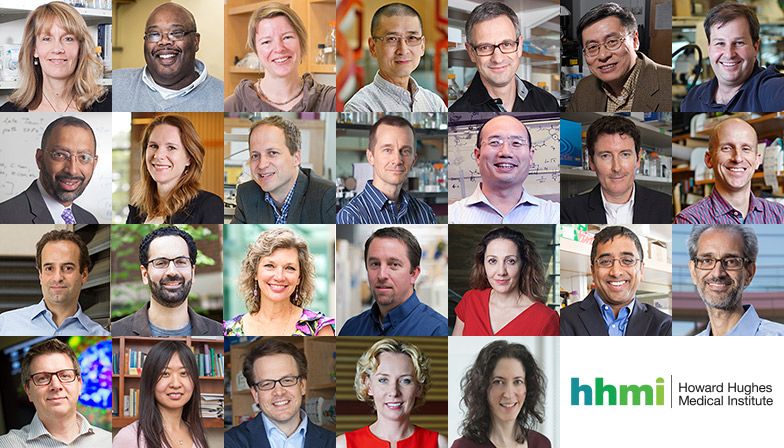
Howard Hughes Medical Institute Selects 2015 Investigators

“The Howard Hughes Medical Institute (HHMI) announced today that 26 of the nation’s top biomedical researchers will become HHMI investigators and will receive the flexible support necessary to move their research in creative new directions. The initiative represents an investment in basic biomedical research of $153 million over the next five years.”

Read more

Chinese scientists genetically modify human embryos

David Cyranosk & Sara Reardon  - Nature.com

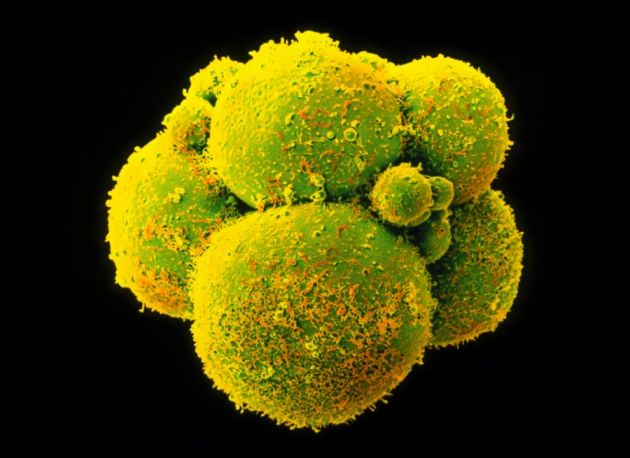
In a world first, Chinese scientists have reported editing the genomes of human embryos. The results are published1 in the online journal Protein & Cell and confirm widespread rumours that such experiments had been conducted — rumours that sparked a high-profile debate last month2, 3 about the ethical implications of such work. Read more

Engineering the Perfect Baby

By Antonio Regalado — MIT Technology Review

If anyone had devised a way to create a genetically engineered baby, I figured George Church would know about it.

At his labyrinthine laboratory on the Harvard Medical School campus, you can find researchers giving E. Coli a novel genetic code never seen in nature. Around another bend, others are carrying out a plan to use DNA engineering to resurrect the woolly mammoth. His lab, Church likes to say, is the center of a new technological genesis—one in which man rebuilds creation to suit himself.
Read more

Is DNA the Language of the Book of Life?

Posted By Regan Penaluna — Nautilus

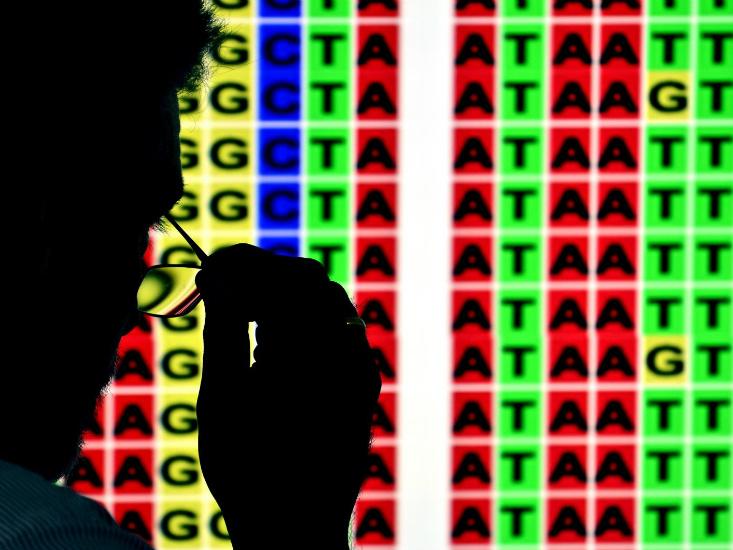
When we talk about genes, we often use expressions inherited from a few influential geneticists and evolutionary biologists, including Francis Crick, James Watson, and Richard Dawkins. These expressions depict DNA as a kind of code telling bodies how to form. We speak about genes similarly to how we speak about language, as symbolic and imbued with meaning. There is “gene-editing,” and there are “translation tables” for decoding sequences of nucleic acid. When DNA replicates, it is said to “transcribe” itself. We speak about a message—such as, build a tiger! or construct a female!—being communicated between microscopic materials. But this view of DNA has come with a price, argue some thinkers. It is philosophically misguided, they say, and has even led to scientific blunders. Scratch the surface of this idea, and below you’ll find a key contradiction.

Since the earliest days of molecular biology, scientists describe genetic material to be unlike all other biological material, because it supposedly carries something that more workaday molecules don’t: information. In a 1958 paper, Crick presented his ideas on the importance of proteins for inheritance, and said that they were composed of energy, matter, and information. Watson called DNA the “repository” of information.
Read more

Researchers generate a reference map of the human epigenome

Helen Knight | MIT News correspondent

The sequencing of the human genome laid the foundation for the study of genetic variation and its links to a wide range of diseases. But the genome itself is only part of the story, as genes can be switched on and off by a range of chemical modifications, known as “epigenetic marks.”

Now, a decade after the human genome was sequenced, the National Institutes of Health’s Roadmap Epigenomics Consortium has created a similar map of the human epigenome.
Read more

New Book: An Irreverent Singularity Funcyclopedia, by Mondo 2000’s R.U. Sirius.

Quoted: “Legendary cyberculture icon (and iconoclast) R.U. Sirius and Jay Cornell have written a delicious funcyclopedia of the Singularity, transhumanism, and radical futurism, just published on January 1.” And: “The book, “Transcendence – The Disinformation Encyclopedia of Transhumanism and the Singularity,” is a collection of alphabetically-ordered short chapters about artificial intelligence, cognitive science, genomics, information technology, nanotechnology, neuroscience, space exploration, synthetic biology, robotics, and virtual worlds. Entries range from Cloning and Cyborg Feminism to Designer Babies and Memory-Editing Drugs.” And: “If you are young and don’t remember the 1980s you should know that, before Wired magazine, the cyberculture magazine Mondo 2000 edited by R.U. Sirius covered dangerous hacking, new media and cyberpunk topics such as virtual reality and smart drugs, with an anarchic and subversive slant. As it often happens the more sedate Wired, a watered-down later version of Mondo 2000, was much more successful and went mainstream.”

Read the article here >https://hacked.com/irreverent-singularity-funcyclopedia-mondo-2000s-r-u-sirius/

The Blockchain is the New Database, Get Ready to Rewrite Everything

Quoted: “If you understand the core innovations around the blockchain idea, you’ll realize that the technology concept behind it is similar to that of a database, except that the way you interact with that database is very different.

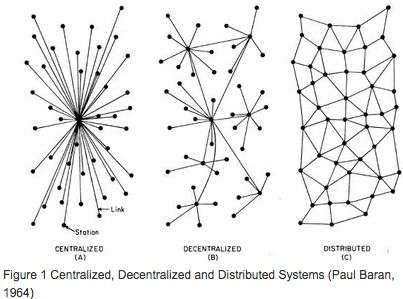
The blockchain concept represents a paradigm shift in how software engineers will write software applications in the future, and it is one of the key concepts behind the Bitcoin revolution that need to be well understood. In this post, I’d like to explain 5 of these concepts, and how they interrelate to one another in the context of this new computing paradigm that is unravelling in front of us. They are: the blockchain, decentralized consensus, trusted computing, smart contracts and proof of work / stake. This computing paradigm is important, because it is a catalyst for the creation of decentralized applications, a next-step evolution from distributed computing architectural constructs.

Read the article here > http://startupmanagement.org/2014/12/27/the-blockchain-is-th…verything/

2014 Longevity and Genetics Conference – Keynote Aubrey de Grey

Western Canada’s most futurist-oriented longevity organization, the Lifespan Society of British Columbia, has organized a first-class life extension conference, which will take place later this fall in the heart of downtown Vancouver. The Longevity and Genetics Conference 2014 offers a full-day of expert presentations, made accessible to a general audience, with keynote on the latest developments in biorejuvination by Aubrey de Grey of SENS Research Foundation. The conference will be interactive, with a panel session for audience questions, and VIP options for further interaction with speakers.

Aubrey de Grey

Who will be there? In addition to Aubrey de Grey, there are four other speakers confirmed thus far: Dr. Angela Brooks-Wilson, Head of Cancer Genetics at the Michael Smith Genome Sciences Centre at the BC Cancer Agency, Dr. S. Jay Olshansky, Board of Directors of the American Federation of Aging Research, and co-author of The Quest for Immortality: Science at the Frontiers of Aging, Dr. Clinton Mielke, former Mayo Clinic researcher and founder of the quantified self platform “infino.me”, and lastly, one of futurism’s most experienced and dedicated radical longevity advocates, Benjamin Best, who is currently Director of Research Oversight at the Life Extension Foundation. This conference is a multi-disciplinary event, engaging several points of interest and relevance in the longevity space, from the cellular, genetic science of aging, to the latest epidemiological and even demographic research. You can also expect discussion on personalized medicine and quantified self technologies, as well as big picture, sociological and philosophical, longevity-specific topics.

All around, the 2014 Longevity and Genetics conference, set to take place Saturday November 15, has a lot to offer, as does the host city of Vancouver. A recent study has indicated that a majority of Canadians, 59%, are in favor of life extension technology, with 47% expecting that science and technology will enable living until 120 by 2050. The Lifespan Society of British Columbia is keeping that momentum and enthusiasm alive and growing, and I’m glad they have organized such a high-calliber event. Tickets are currently still available. Learn more about the event and purchase tickets here.

ImageofVancouver
Vancouver B.C.

The Abolition of Medicine as a Goal for Humanity 2.0

What follows is my position piece for London’s FutureFest 2013, the website for which no longer exists.

Medicine is a very ancient practice. In fact, it is so ancient that it may have become obsolete. Medicine aims to restore the mind and body to their natural state relative to an individual’s stage in the life cycle. The idea has been to live as well as possible but also die well when the time came. The sense of what is ‘natural’ was tied to statistically normal ways of living in particular cultures. Past conceptions of health dictated future medical practice. In this respect, medical practitioners may have been wise but they certainly were not progressive.

However, this began to change in the mid-19th century when the great medical experimenter, Claude Bernard, began to champion the idea that medicine should be about the indefinite delaying, if not outright overcoming, of death. Bernard saw organisms as perpetual motion machines in an endless struggle to bring order to an environment that always threatens to consume them. That ‘order’ consists in sustaining the conditions needed to maintain an organism’s indefinite existence. Toward this end, Bernard enthusiastically used animals as living laboratories for testing his various hypotheses.

Historians identify Bernard’s sensibility with the advent of ‘modern medicine’, an increasingly high-tech and aspirational enterprise, dedicated to extending the full panoply of human capacities indefinitely. On this view, scientific training trumps practitioner experience, radically invasive and reconstructive procedures become the norm, and death on a physician’s watch is taken to be the ultimate failure. Humanity 2.0 takes this way of thinking to the next level, which involves the abolition of medicine itself. But what exactly would that mean – and what would replace it?

The short answer is bioengineering, the leading edge of which is ‘synthetic biology’. The molecular revolution in the life sciences, which began in earnest with the discovery of DNA’s function in 1953, came about when scientists trained in physics and chemistry entered biology. What is sometimes called ‘genomic medicine’ now promises to bring an engineer’s eye to improving the human condition without presuming any limits to what might count as optimal performance. In that case, ‘standards’ do not refer to some natural norm of health, but to features of an organism’s design that enable its parts to be ‘interoperable’ in service of its life processes.

In this brave new ‘post-medical’ world, there is always room for improvement and, in that sense, everyone may be seen as ‘underperforming’ if not outright disabled. The prospect suggests a series of questions for both the individual and society: (1) Which dimensions of the human condition are worth extending – and how far should we go? (2) Can we afford to allow everyone a free choice in the matter, given the likely skew of the risky decisions that people might take? (3) How shall these improvements be implemented? While bioengineering is popularly associated with nano-interventions inside the body, of course similarly targeted interventions can be made outside the body, or indeed many bodies, to produce ‘smart habitats’ that channel and reinforce desirable emergent traits and behaviours that may even leave long-term genetic traces.

However these questions are answered, it is clear that people will be encouraged, if not legally required, to learn more about how their minds and bodies work. At the same time, there will no longer be any pressure to place one’s fate in the hands of a physician, who instead will function as a paid consultant on a need-to-know and take-it-or-leave-it basis. People will take greater responsibility for the regular maintenance and upgrading of their minds and bodies – and society will learn to tolerate the diversity of human conditions that will result from this newfound sense of autonomy.